Article:
Revealed: How does a tempered screen protector been produced?
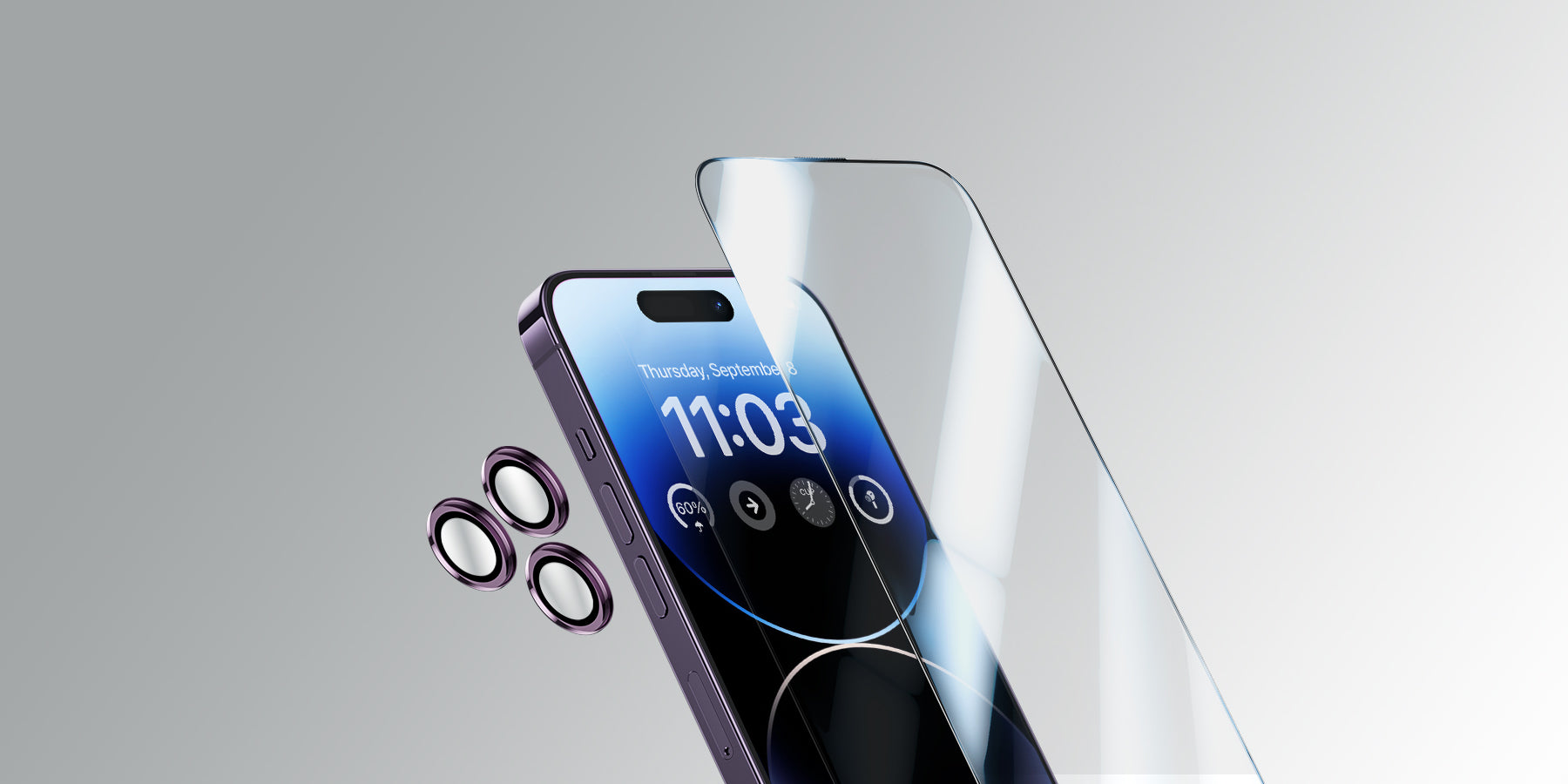
Revealed: How does a tempered screen protector been produced?
Have you ever wondered how tempered glass screen protectors are produced? As a leading producer of high-quality screen protectors, Benks prides itself on three outstanding features: excellent impact resistance, great anti-fingerprint technology, and ease of application. These features are achieved through a rigorous production process that utilizes high-quality materials, including sapphire coating and Corning glass, and various testing methods. Let's delve into the production process to understand how these great screen protectors are made.
Excellent Impact Resistance
One of the key features of Benks screen protectors is their excellent impact resistance. This is achieved through a series of strict quality control processes, including drop testing, fracture testing, and edge pressure testing.
Fracture testing assesses the elasticity of the tempered glass by subjecting it to an external force. For example, a piece of tempered glass is bent under stress and then returned to its original state after the external force is removed. With the edge pressure test, product stability and consistency are verified, and the risk of breakage is reduced.

Anti-Fingerprint
It is annoying to have dizzy fingerprints on the screen of your phone. So you need to choose an anti-fingerprint screen protector.
There are two main oil coating methods on the market: spray coating and vacuum coating. Spray coating uses a spraying machine to spray onto the glass. However, the durability of the spray coating is lower and less uniform. In reality, after about 20 days of use, the anti-fingerprint effect will significantly decrease because the anti-fingerprint oil has been worn away.
In order to avoid the disadvantage above, Benks decided to use a better coating technology: vacuum coating. With the electroplated anti-fingerprint oil process, Benks tempered glass film will be smoother to the touch, and easy to remove fingerprints left on the screen and providing super-smooth touch sensitivity.

Ease of Application
Besides the impact resistance and the anti-fingerprint ability, a great screen protector also should be easy to apply for no bubbles and no warping edges.
To achieve that, choosing a superior AB glue material will be necessary. Someone may wonder what is AB glue. Simply, AB glue is a thin layer of flexible double-sided adhesive that needs to be applied to the inner layer of the glass film. The quality of AB glue directly determines the adhesion effect and exhaust effect of tempered glass film.
Benks screen protectors have adopted the qualified AB glue to avoid quality issues, such as high thickness, poor light transmittance, easy generation of bubbles, snowflake patterns, warping edges, and so on. And with the patented installation kit, the screen protector will be easier to apply to your phone.

In summary, the production process of the best screen protectors is rigorous, utilizing high-quality materials and testing methods. The resulting product boasts excellent impact resistance, anti-fingerprint technology, and ease of application, making it an excellent choice for phone screen protection.
<div class="dynamic-checkout__content" id="dynamic-checkout-cart" data-shopify="dynamic-checkout-cart"> <shopify-accelerated-checkout-cart wallet-configs="[{"supports_subs":true,"supports_def_opts":false,"name":"shop_pay","wallet_params":{"shopId":47053930645,"merchantName":"Benks","personalized":true}},{"supports_subs":false,"supports_def_opts":false,"name":"paypal","wallet_params":{"shopId":47053930645,"countryCode":"HK","merchantName":"Benks","phoneRequired":true,"companyRequired":false,"shippingType":"shipping","shopifyPaymentsEnabled":true,"hasManagedSellingPlanState":false,"requiresBillingAgreement":false,"gatewayType":"CONNECTED","merchantId":"ESZRRAH2DLBQ2","sdkUrl":"https://www.paypal.com/sdk/js?components=buttons\u0026commit=false\u0026currency=USD\u0026locale=en_US\u0026client-id=AexZEtAxk09Ncgj6FSWFFyGKbxxAZ_LTyJ2DPdJWl1YUlecinmc5AfIaRF2qYjWlusWahlzz6SVkY5Ci\u0026merchant-id=ESZRRAH2DLBQ2\u0026intent=authorize","serviceableCountryCodes":["AE","AL","AO","AR","AT","AU","AZ","BA","BE","BG","BH","BN","BR","BY","CA","CH","CL","CN","CO","CR","CY","CZ","DE","DK","DZ","EE","EG","ES","FI","FR","GB","GH","GR","HK","HR","HU","ID","IE","IL","IN","IS","IT","JO","JP","KE","KH","KR","KW","KZ","LK","LT","LU","LV","MA","MC","MD","MM","MO","MT","MX","MY","NG","NL","NO","NZ","OM","PE","PH","PK","PL","PT","QA","RO","RS","RU","RW","SA","SE","SG","SI","SK","TH","TW","TZ","UA","UG","US","VA","VN","ZA"]}}]" access-token="56b154c2f9adbcff9e5af72e4c299297" buyer-country="US" buyer-locale="en" buyer-currency="USD" shop-id="47053930645" cart-id="b02cc8752466eda0d330c713fa148e3e" enabled-flags="["a1d1f9a1"]" > <div class="wallet-button-wrapper"> <ul class='wallet-cart-grid wallet-cart-grid--skeleton' role="list" data-shopify-buttoncontainer="true"> <li data-testid='grid-cell' class='wallet-cart-button-container'><div class='wallet-cart-button wallet-cart-button__skeleton' role='button' disabled aria-hidden='true'> </div></li><li data-testid='grid-cell' class='wallet-cart-button-container'><div class='wallet-cart-button wallet-cart-button__skeleton' role='button' disabled aria-hidden='true'> </div></li> </ul> </div> </shopify-accelerated-checkout-cart> </div>



Leave a comment
This site is protected by hCaptcha and the hCaptcha Privacy Policy and Terms of Service apply.