Article:
Which material is best for phone case?
Which material is best for phone case?
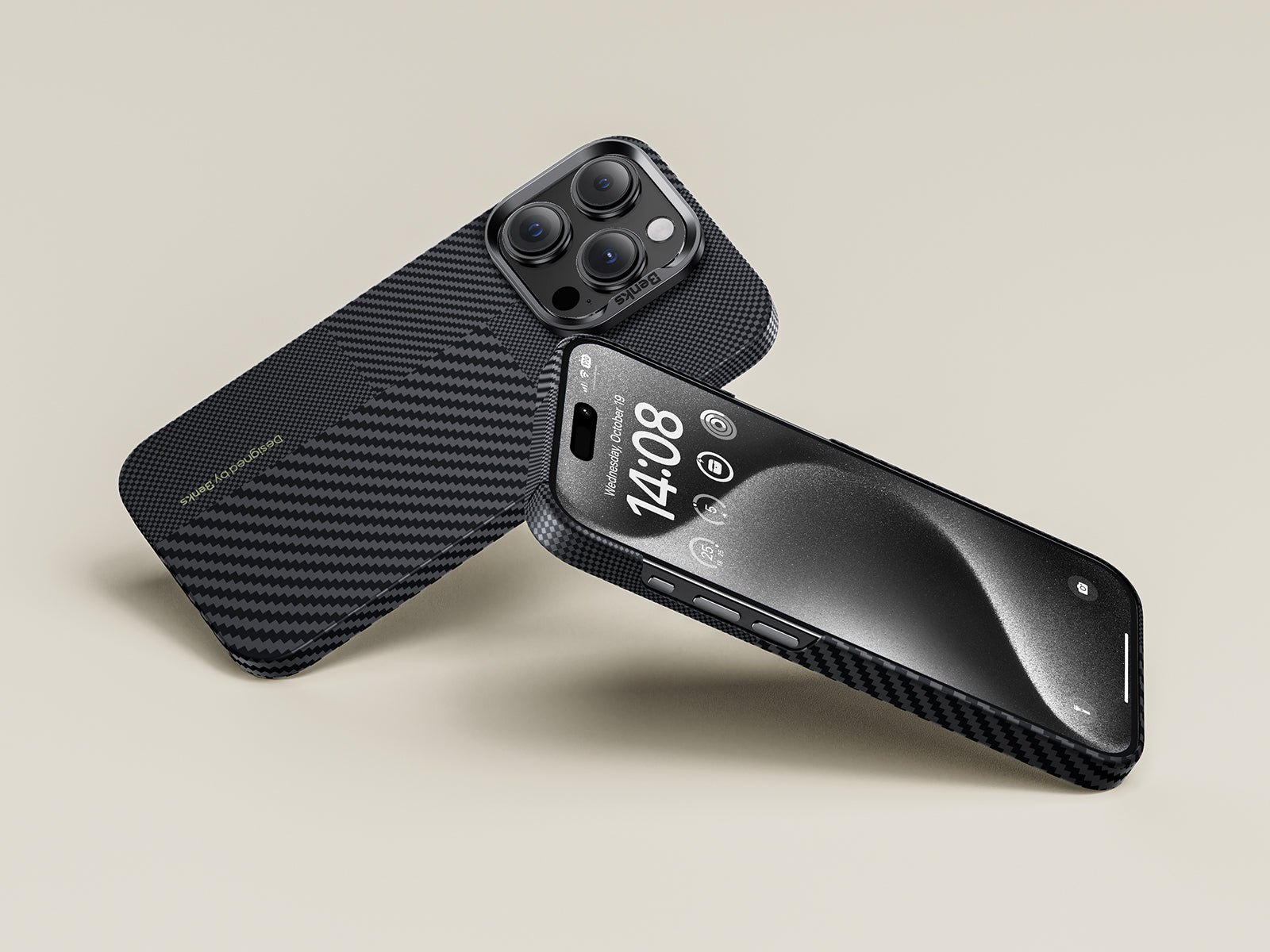
Choosing the right material for your phone case is crucial not only for protecting your device but also for matching your lifestyle and aesthetic preferences. From plastic and silicone to leather and metal, each material offers different benefits. In this article, we explore these options and introduce Kevlar®, particularly in the form of the MagClap ArmorPro Case for the iPhone 15 Pro Max, as a premier choice for optimal protection and style.
Overview of Common Phone Case Materials
Plastic Cases: Plastic is one of the most common materials used for phone cases. It’s inexpensive and offers a wide range of designs and colors. However, while plastic cases can prevent scratches, they often fail to provide adequate protection against serious drops.
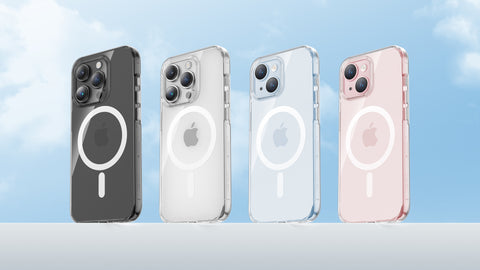
Silicone Cases: Silicone cases are renowned for their shock absorption and non-slip grip. They are also soft to the touch, which makes them comfortable to hold. The downside? They can attract lint and dust and may tear over time.
Leather Cases: Leather offers a classic look that ages well and can provide decent protection against bumps. However, it is not the best against high-impact drops and can be susceptible to water damage.
Metal Cases: Metal cases are durable and offer a sleek, modern aesthetic. They’re typically very protective against impacts but can be heavy and might interfere with wireless signals, such as GPS, Wi-Fi, or cellular.
Composite Cases: Composite materials like carbon fiber are known for their strength and lightweight properties, providing good protection without adding bulk.
Spotlight on Kevlar® as a Phone Case Material
Kevlar® is a synthetic fiber known for its use in ballistic and stab-resistant body armor. Its incredible tensile strength—five times stronger than steel on an equal-weight basis—makes it an ideal material for phone cases.
Benefits for Phone Cases:
-
Durability and Strength: Kevlar® cases are extremely durable, capable of withstanding high levels of stress and sharp objects.
-
Lightweight: Despite its strength, Kevlar® is lightweight, which means it doesn’t add unnecessary weight to your device.
-
Heat Resistance: It is thermally stable, offering protection in environments that would damage other materials.
Case Study: MagClap ArmorPro Case
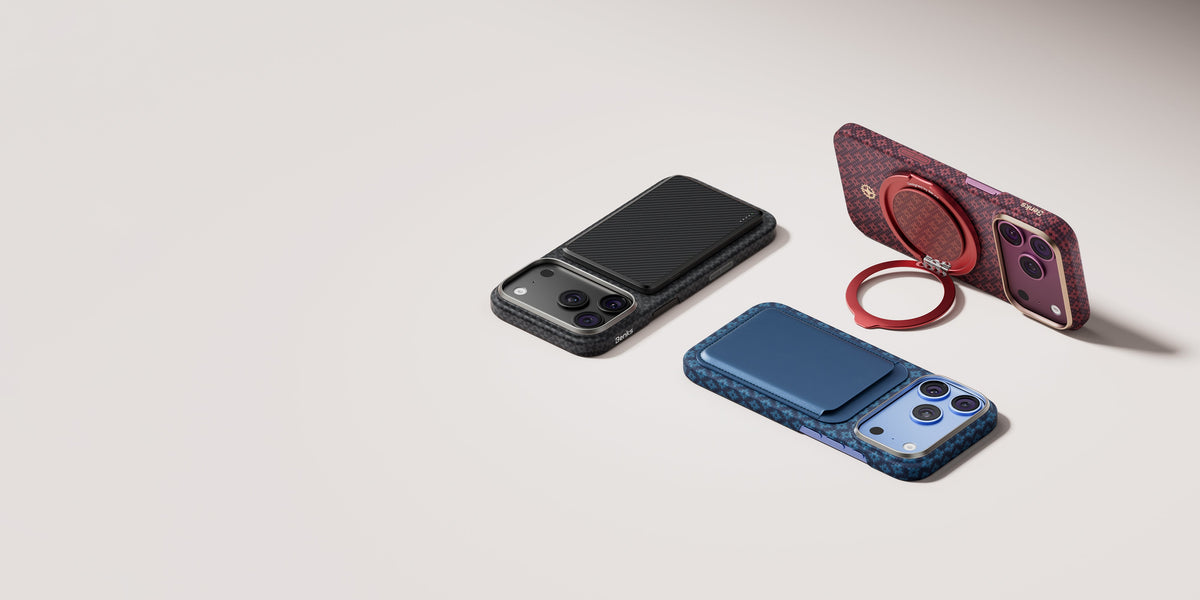
The MagClap ArmorPro Case, built with Kevlar® 600D for the iPhone 15 Pro Max, exemplifies the benefits of this material. This case is not only tough and durable but also features a sleek design that complements the aesthetic of the latest iPhone.
Key Features:
-
Built with Kevlar® 600D: This material ensures that your phone can withstand drops and scratches far better than traditional materials.
-
MagSafe Compatibility: The case supports MagSafe accessories, making it highly functional for iPhone users.
-
Slim Profile: It offers all these benefits while maintaining a slim profile, which does not bulk up your phone.

Conclusion
When it comes to phone cases, the material matters as much as the design. While plastics and metals have their place, Kevlar® offers a unique combination of durability, light weight, and aesthetic flexibility that makes it ideal for high-end protective cases like the MagClap ArmorPro Case for the iPhone 15 Pro Max. Choosing the right material can significantly extend the life of your phone and enhance your usage experience. For those looking for the best in protection and style, Kevlar® is the clear choice.
<div class="dynamic-checkout__content" id="dynamic-checkout-cart" data-shopify="dynamic-checkout-cart"> <shopify-accelerated-checkout-cart wallet-configs="[{"supports_subs":true,"supports_def_opts":false,"name":"shop_pay","wallet_params":{"shopId":47053930645,"merchantName":"Benks","personalized":true}},{"supports_subs":true,"supports_def_opts":false,"name":"paypal","wallet_params":{"shopId":47053930645,"countryCode":"HK","merchantName":"Benks","phoneRequired":true,"companyRequired":false,"shippingType":"shipping","shopifyPaymentsEnabled":true,"hasManagedSellingPlanState":false,"requiresBillingAgreement":false,"gatewayType":"CONNECTED","merchantId":"ESZRRAH2DLBQ2","sdkUrl":"https://www.paypal.com/sdk/js?components=buttons\u0026commit=false\u0026currency=USD\u0026locale=en_US\u0026client-id=AexZEtAxk09Ncgj6FSWFFyGKbxxAZ_LTyJ2DPdJWl1YUlecinmc5AfIaRF2qYjWlusWahlzz6SVkY5Ci\u0026merchant-id=ESZRRAH2DLBQ2\u0026intent=authorize","serviceableCountryCodes":["AE","AL","AO","AR","AT","AU","AZ","BA","BE","BG","BH","BN","BR","BY","CA","CH","CL","CN","CO","CR","CY","CZ","DE","DK","DZ","EE","EG","ES","FI","FR","GB","GH","GR","HK","HR","HU","ID","IE","IL","IN","IS","IT","JO","JP","KE","KH","KR","KW","KZ","LK","LT","LU","LV","MA","MC","MD","MM","MO","MT","MX","MY","NG","NL","NO","NZ","OM","PE","PH","PK","PL","PT","QA","RO","RS","RU","RW","SA","SE","SG","SI","SK","TH","TW","TZ","UA","UG","US","VA","VN","ZA"]}}]" access-token="56b154c2f9adbcff9e5af72e4c299297" buyer-country="MX" buyer-locale="en" buyer-currency="USD" shop-id="47053930645" cart-id="a6809f8b35e04e1379859d32b21cc036" enabled-flags="["1172c16a","a1d1f9a1","f5afabb3","370070f3"]" > <div class="wallet-button-wrapper"> <ul class='wallet-cart-grid wallet-cart-grid--skeleton' role="list" data-shopify-buttoncontainer="true"> <li data-testid='grid-cell' class='wallet-cart-button-container'><div class='wallet-cart-button wallet-cart-button__skeleton' role='button' disabled aria-hidden='true'> </div></li><li data-testid='grid-cell' class='wallet-cart-button-container'><div class='wallet-cart-button wallet-cart-button__skeleton' role='button' disabled aria-hidden='true'> </div></li> </ul> </div> </shopify-accelerated-checkout-cart> </div>



Leave a comment
This site is protected by hCaptcha and the hCaptcha Privacy Policy and Terms of Service apply.