
Clear Phone Cases Turning Yellow? Here's Why
Quick Answer Most clear cases turn yellow because UV light permanently breaks down the TPU material they're made from. The discoloration forms inside the plastic — no cleaning reverses it. But not all clear cases are equal: cases built with proper anti-yellowing technology can stay transparent significantly longer. The difference isn't luck. It's materials engineering.
You bought a clear case specifically to show off your phone.
Six months later, it looks like it's been soaking in tea.
Here's what frustrates most people: you kept it clean. You wiped it down. You treated it carefully. And it still turned yellow.
That's because the problem was never your habits. It was the material — and what the manufacturer did, or didn't do, about a known chemical weakness before the case ever left the factory.
Part 1: Why Clear Cases Turn Yellow — The Actual Science
 "New clear phone case next to yellowed TPU case after 6 months of use"
It's not dirt. It's a chemical reaction inside the material.
Almost every clear phone case is made from TPU — thermoplastic polyurethane. It's soft, flexible, and cheap to produce. That's why it dominates the market.
But TPU has a structural weakness: UV radiation breaks it down.
When sunlight hits a TPU case, the UV photons carry enough energy to snap the molecular chains inside the plastic. Those broken fragments react with oxygen in the air and form new molecules called chromophores — tiny structures that absorb visible light and give the material a yellow tint.
This isn't surface staining. The chromophores form inside the polymer matrix. Once they're there, they're stable. No soap, alcohol, baking soda, or peroxide reverses structural molecular damage.
Why cleaning doesn't work: You're trying to wash off something that happened inside the material. It's like trying to clean rust out of steel. The rust is the material. Same idea here.
The second culprit: plasticizers migrating to the surface
There's another mechanism most people don't know about.
Pure TPU is actually too rigid to use in a phone case. So manufacturers add plasticizers — chemical softeners that give the material its flexibility and grip. The problem: plasticizers aren't bonded into the polymer permanently. They sit between the molecular chains, and over time, they slowly migrate toward the surface.
When they reach the surface, they change how light passes through the material — adding to the yellow tint, and creating that slightly greasy feel older cases develop.
Heat accelerates both processes. So does pressure (tight pockets), and ironically, alcohol-based cleaners — which strip the outer layer and speed up migration from underneath.
The result: a case that yellows from the inside out, starting months before you notice it, and nothing cleaning will change it.
💡 Related reading:
What makes some clear cases yellow faster than others
Part 2: Not All Clear Cases Yellow the Same Way — And This Is Where Most Buyers Get It Wrong
Here's what the market doesn't want you to know: the yellowing problem is well understood, and it's solvable at the manufacturing level.
It's just that solving it costs more. So most brands don't bother.
Ordinary TPU vs. treated TPU — a real difference
Standard TPU has no protection against the UV degradation process described above. First visible yellowing typically appears within 3 to 9 months under normal use.
But TPU can be modified:
- UV absorbers (such as benzotriazoles) can be blended into the polymer during manufacturing. They intercept UV photons before they reach the polymer chains — absorbing the energy and releasing it as harmless heat instead.
- HALS (Hindered Amine Light Stabilizers) are a second class of additive that disrupt the oxidation chain reactions after UV impact, slowing the formation of chromophores even if some chain cleavage occurs.
Done well, a combination of these additives can extend visible clarity from 3–9 months to 18–24+ months under the same conditions.
Done poorly — low concentrations, surface-only application, weak additive grades — the benefit is marginal. Maybe two or three extra months. That's why two cases that both claim "anti-yellowing" can perform completely differently over a year.
Why PC-dominant construction makes a difference
Polycarbonate (PC) is a harder, more rigid plastic than TPU. Its molecular structure is more resistant to UV-induced chain cleavage.
Cases with a PC back panel instead of an all-TPU shell yellow significantly slower — typically 12 to 24 months before meaningful discoloration, versus 3 to 9 for standard TPU.
Many well-designed clear cases use PC for the back (the surface most exposed to UV) and TPU for the bumper edges (where impact absorption matters). This hybrid construction plays to the strengths of each material.
| Material | First Yellow Tint | Reversible? | Notes |
|---|---|---|---|
| Standard TPU | 3–9 months | ❌ No | No UV protection built in |
| TPU + UV stabilizers | 12–18 months | ❌ No | Quality varies widely |
| Standard PC | 12–24 months | ⚠️ Surface only | Better UV resistance |
| PC + anti-UV coating | 24+ months | ❌ No | Best performance in clear materials |
| TPU + PC hybrid (treated) | Depends on treatment | ❌ No | Construction + additives both matter |
All timelines based on mixed indoor/outdoor use. Direct sunlight, heat above 30°C, and alcohol-based cleaners accelerate yellowing in all categories.
💡 Related reading:
Phone Case Materials Guide: Kevlar, TPU & More (2026)
Why some clear cases last longer than others?
Part 3: How to Choose a Clear Case That Won't Yellow in Six Months
Most buyers focus on price and look. That's exactly why they're replacing cases every six months.
Here's what to actually evaluate:
1. Look for a named anti-yellowing technology — not just a label
"Anti-yellowing" costs nothing to print on a product page. It requires no certification, no testing, and no minimum standard.
The signal to look for: a named, consistently applied technology across a product line. A brand that has actually invested in solving the yellowing problem will give their solution a name and use it across multiple products — not just add a feature bullet to whatever clear case they're releasing this quarter.
Ask: what specifically does the anti-yellowing claim mean? If the answer isn't on the product page, assume it's a label, not a solution.
✅ Stronger signals:
- A named technology used consistently across a product line
- Material specs disclosed — UV stabilizer type, whether the back panel is PC or TPU
- Third-party aging test data referenced
⚠️ Weaker signals:
- "Anti-yellowing" as a feature bullet with zero explanation
- "Premium materials" with no specification
- Before/after images with no test methodology
2. Check the material construction — not just "clear case"
Two things to look for in the specs:
- Is the back panel PC or TPU? PC resists yellowing significantly longer.
- Is a UV stabilizer or coating mentioned? If the brand invested in it, they'll say so.
If the material spec is absent from the product page entirely, that absence is itself a signal.
3. For foldable phones, the requirement is higher
A flat phone case has one main yellowing surface: the back panel.
A foldable case has three: the outer back shell, the front frame, and the hinge area. The hinge is the most vulnerable — repeated mechanical flexing creates stress points in the TPU where UV degradation spreads fastest.
Anti-yellowing treatment needs to be consistent across all components. A case where the back stays clear but the front frame yellows in six months hasn't solved the problem — it's just moved it.
The screen protector (glass) doesn't yellow. Glass is UV-inert. Everything else needs attention.
4. Ignore the price floor
A clear case with genuinely effective anti-yellowing additives costs more to make. If a case is priced at $8–12 and claims "premium anti-yellowing technology," one of those claims isn't true.
This isn't about brand prestige. It's about manufacturing economics. UV stabilizers at effective concentrations cost money. Skipping them is one of the first places a low-margin manufacturer cuts.
💡 Related reading:
Transparent cases with verified anti-yellowing performance
Part 4: How Benks Approaches This Problem
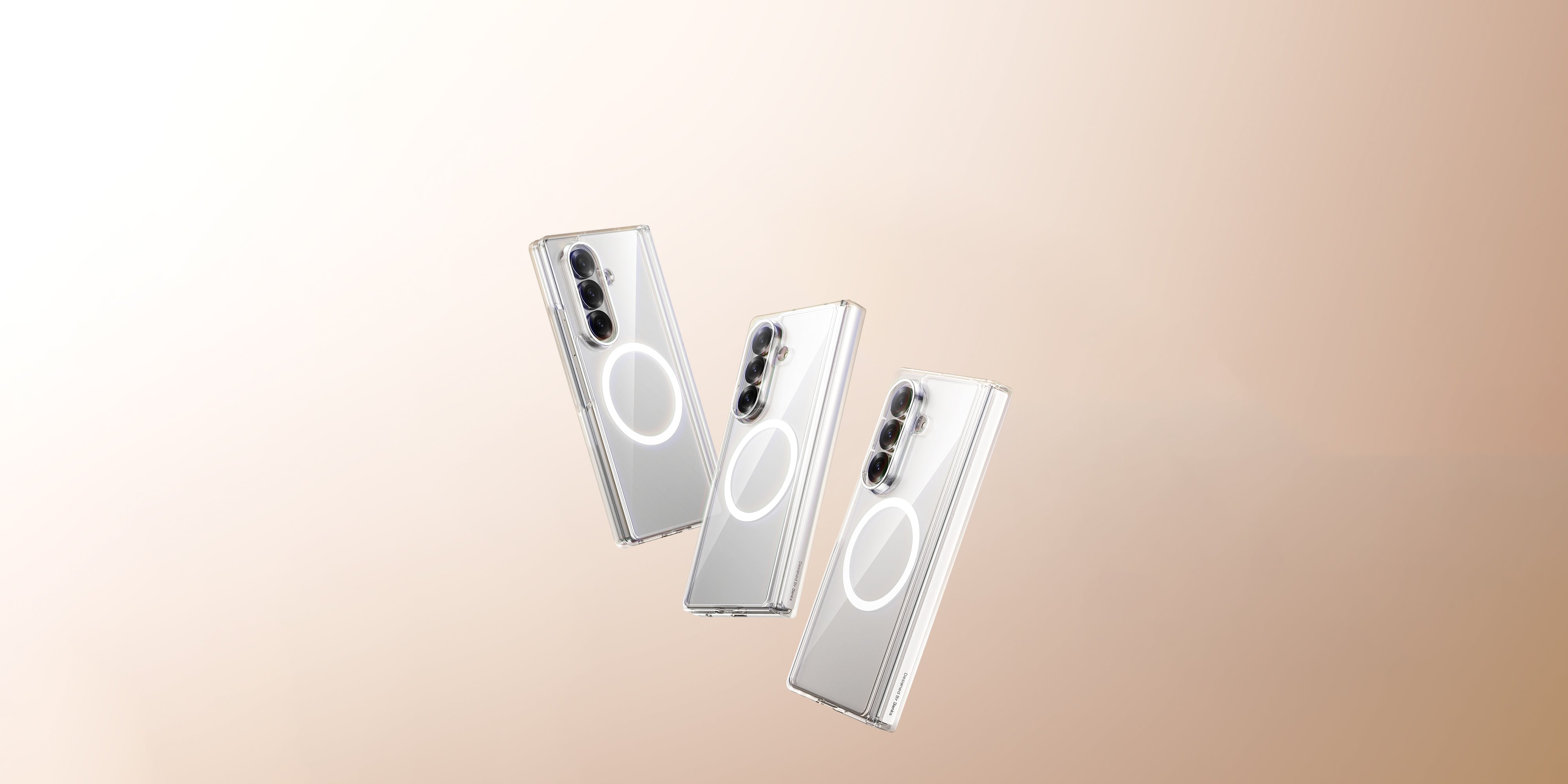
 "Benks Crystal Series clear phone case"
Benks's Crystal Series was built around a specific premise: a clear case should stay clear for the life of the phone, not the first season.
💡 Related reading:
Non-yellowing clear case options from Benks
That required solving the yellowing problem at the material level, not just applying a coating and hoping.
The Crystal Series uses Anti-Yellowing Technology — applied consistently across the entire product line, not case by case. For the Galaxy Z Fold 7 specifically, the construction addresses the three-surface challenge directly.
The Grand Combo Crystal Case for Galaxy Z Fold 7 uses TPU + PC + aluminum alloy. The aluminum alloy handles the hinge zone — replacing UV-vulnerable polymer at the highest-stress point entirely. The PC frame resists yellowing significantly longer than a TPU alternative. The back shell applies Anti-Yellowing Technology throughout, not just at the surface.
The full set includes the back shell, front frame, and screen protector. MagSafe compatible — no need to remove the case for charging.
For iPhone 17 Pro Max and Samsung Galaxy S26 Ultra, the Crystal Case applies the same anti-yellowing approach on the back panel where UV exposure is highest, with PC construction where it matters most.
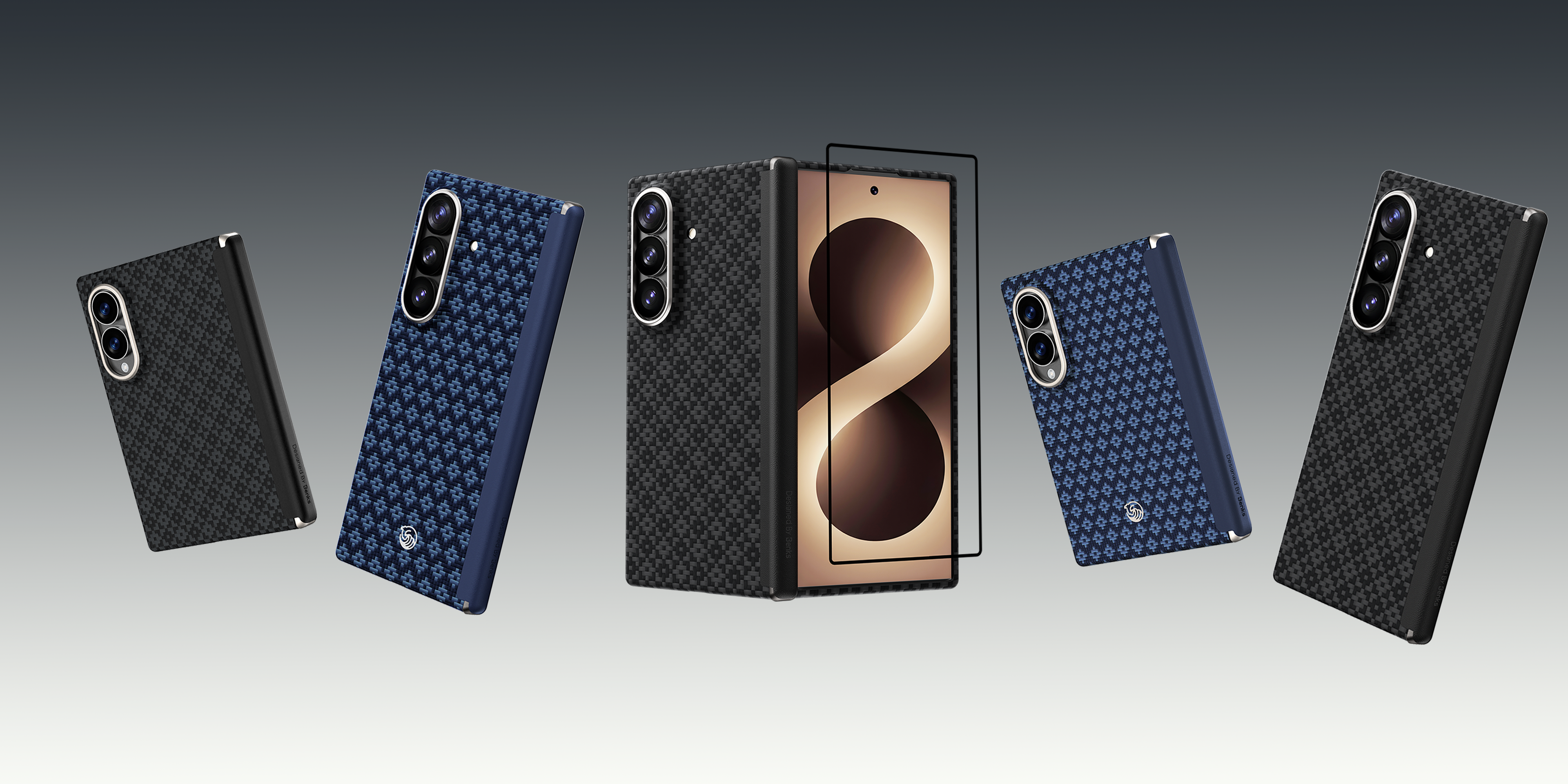
 Benks Grand Combo Crystal Case for Galaxy Z Fold 7 — back shell, front frame, and screen protector
- 👉Benks Crystal Case for iPhone 17 Pro Max
- 👉Benks Crystal Case for Samsung Galaxy S26 Ultra
- 👉Benks Grand Combo Crystal Case for Galaxy Z Fold 7
The Short Version: What to Remember When Buying a Clear Case
- Yellowing is permanent. Once chromophores form inside the TPU, no cleaning reverses it.
- Standard TPU will yellow. Usually within 3–9 months. That's not a defect — it's what standard TPU does.
- "Anti-yellowing" on a label means nothing. A named technology applied consistently across a product line means something.
- PC construction yellows slower than TPU. Hybrid cases with PC backs outperform all-TPU cases by months.
- Foldable cases need consistent treatment across all three surfaces — back, frame, and hinge — not just the most visible one.
- Price correlates with investment. Effective UV stabilizers at meaningful concentrations cost money. They don't appear in $9 cases.
The chemistry of yellowing is well understood. The materials that slow it are available. A brand that takes optical longevity seriously will show you exactly how they've addressed it. One that doesn't will sell you another yellowed case in six months.
FAQ
Why is my clear case yellowing so fast?
UV exposure is the main driver — especially direct sunlight and light through windows. Heat accelerates it. Alcohol-based cleaners strip the outer layer and speed up the underlying process. Standard TPU without UV treatment typically shows visible yellowing within 3–6 months under regular outdoor use. If your case is yellowing faster than expected, check its UV exposure — charging next to a window counts.
Can I fix a yellowed phone case?
For bulk yellowing — where the discoloration is inside the material — no. The chemical change is permanent. A quick test: hold the case up to bright light with nothing behind it. If the yellow tint is still there, that's inside the polymer. Irreversible. Mild surface residue (grey-brown tinge from grime) can sometimes be cleaned, but the warm yellow tint from UV degradation cannot.
What phone case material doesn't turn yellow?
Aramid fiber (Kevlar®) doesn't yellow — it's chemically inert to the UV wavelengths that degrade TPU and PC. For transparent cases, optical-grade PC with quality UV coating provides the best long-term clarity. The key is consistent UV protection throughout the material, not just on the surface.
Does anti-yellowing technology actually work?
Yes — when properly implemented. Good UV stabilizers can extend clarity from 3–9 months to 18–24+ months under the same conditions. Poor implementation (low concentration, surface-only, weak additive grades) adds weeks, not months. The difference is whether the manufacturer treated it as an engineering priority or a marketing line.
💡 Related reading:
Why Clear Phone Cases Turn Yellow and How to Prevent It
Published by Remy · June 9, 2026


Dejar un comentario
Este sitio está protegido por hCaptcha y se aplican la Política de privacidad de hCaptcha y los Términos del servicio.