
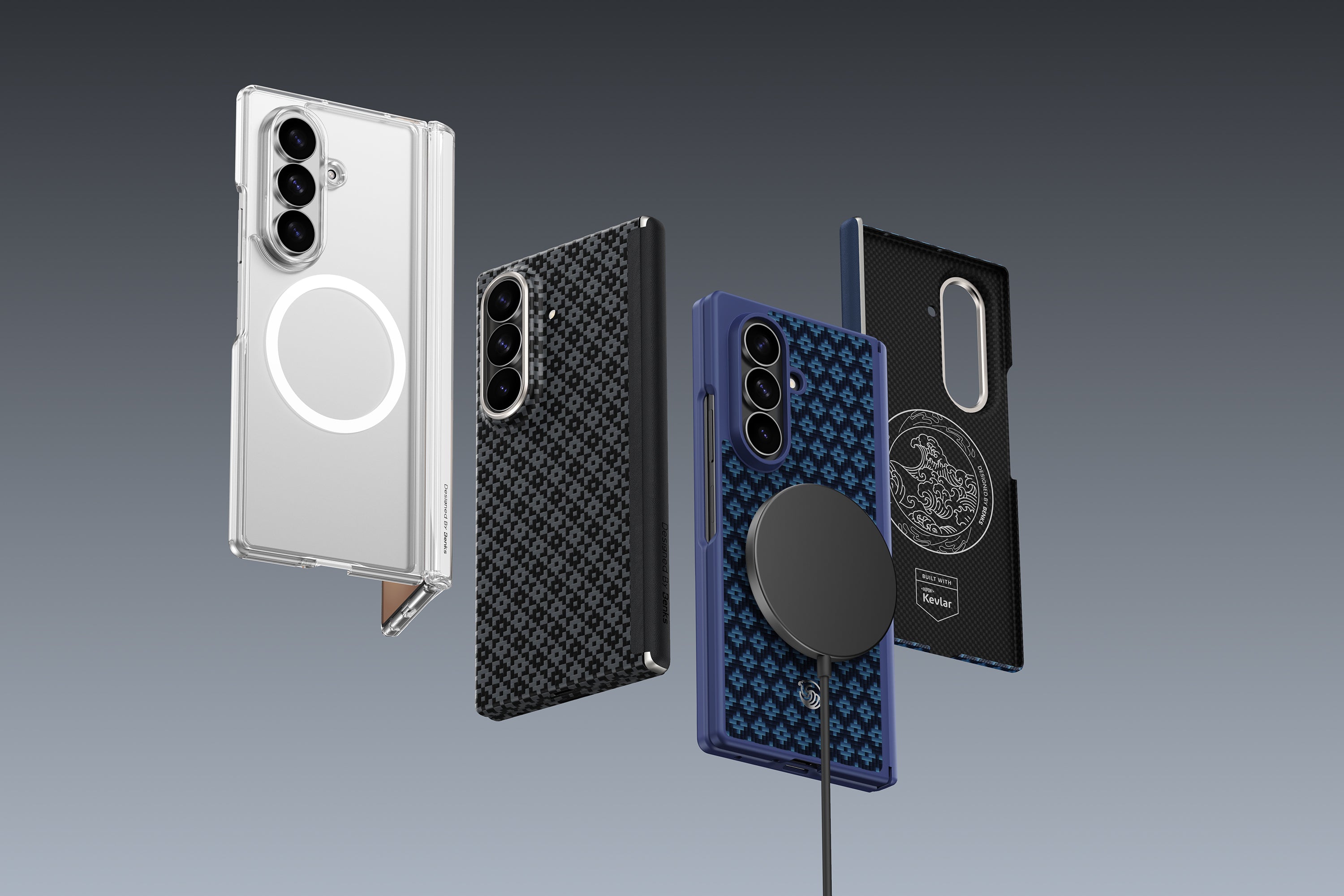
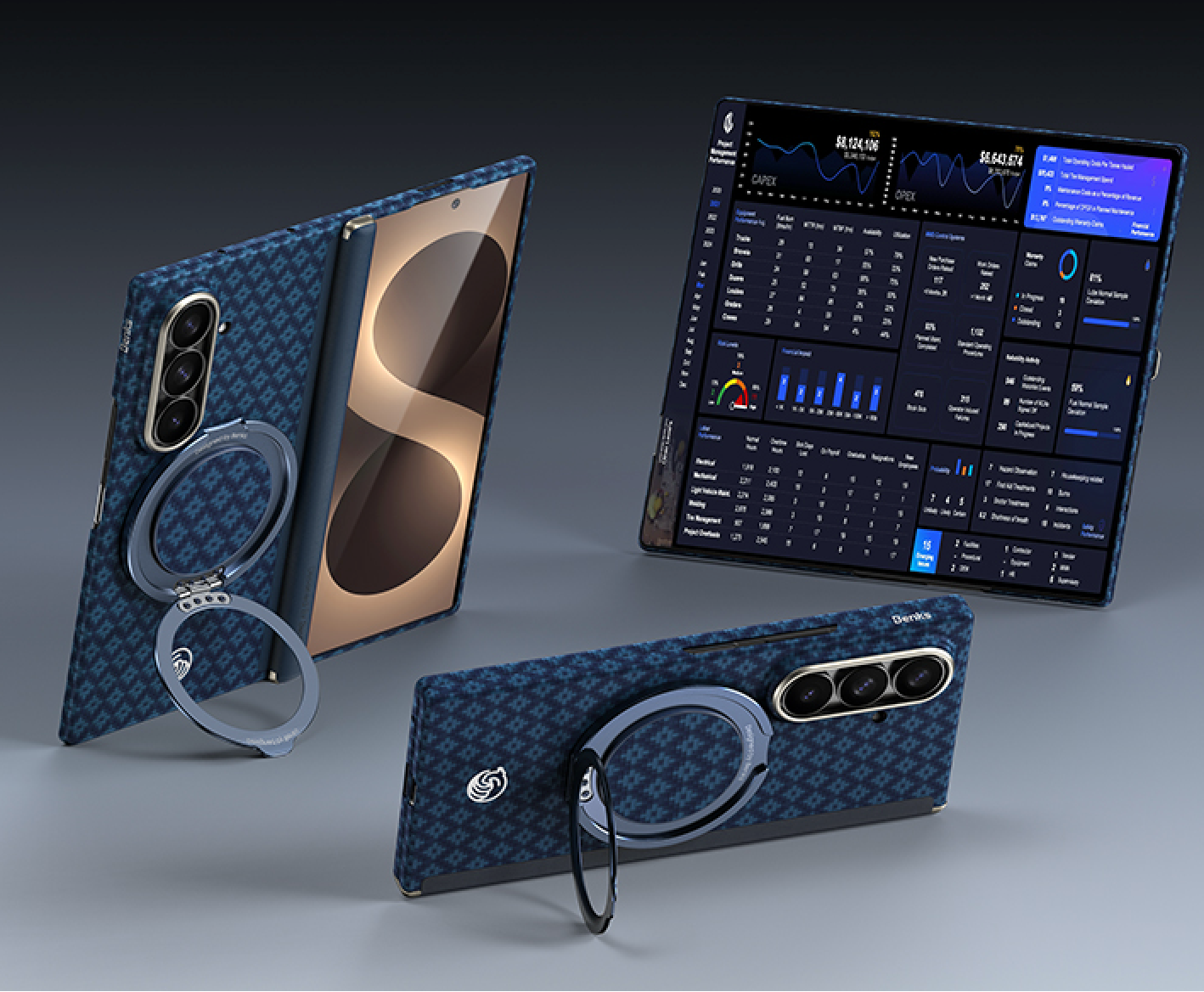

That “D-Shaped” Screen Protector Was a Clue: What Apple’s iPhone Duo Actually Looks Like
Before Apple officially unveiled its first foldable iPhone, one surprisingly small accessory detail was already getting people talking: the shape of its screen protector.
A discussion on Reddit’s iPhone foldable community focused on cases and screen protectors apparently designed for Apple’s then-rumored device. Among the reactions, one observation stood out:
“Interesting to see the ‘D’ shaped screen protector there.”
At the time, the device was widely referred to in rumors as the “iPhone Ultra,” and the unusual protector raised a bigger question: would Apple’s first foldable really have an asymmetrical front display?

Now we have an answer.
Apple officially introduced the device on September 9 under a different name: iPhone Duo. And with the final hardware revealed, that strange pre-launch accessory looks less like an odd rumor and more like a useful clue about how Apple engineered the front of its first foldable.
Why Did the iPhone Duo Screen Protector Look D-Shaped?

The leaked protector appeared to have squarer corners along the hinge side and more rounded corners along the outside edge. Viewed on its own, that geometry resembled a capital “D.”
Before launch, it was easy to assume that the protector was revealing the exact shape of the active display underneath. But that was always the risky part of reading too much into an accessory leak.
A screen protector has to fit the phone’s physical front surface. On a book-style foldable, the hinge side and outside edge do not have the same structural requirements. That means the protective glass can follow an asymmetrical exterior even when the display itself is designed to feel visually balanced in normal use.
With iPhone Duo now official, the important takeaway is clearer: the protector was giving us information about the device’s front geometry, not necessarily a pixel-perfect map of the display.
The Biggest Surprise: It Isn’t Called iPhone Ultra
One part of the pre-launch story changed at the last minute.
For months, Apple’s first foldable was commonly discussed as the “iPhone Ultra.” That name appeared throughout the rumor cycle and naturally made its way into accessory discussions as well.
Apple ultimately chose iPhone Duo.

The name fits the product more directly. This is an iPhone built around two connected display experiences: a compact outer screen when closed and a much larger inner canvas when opened.
So while the accessory itself was pointing toward real hardware, the branding surrounding it was still speculative — a useful reminder that even accurate physical leaks do not necessarily reveal Apple’s final product name.
Apple Confirmed a 5.4-Inch Outer Display and 7.6-Inch Inner Display
Pre-launch reports generally pointed toward a compact outer display paired with a tablet-like inner screen. Apple’s official specifications now put numbers on that idea.
The iPhone Duo uses a 5.4-inch outer display when closed and opens to a 7.6-inch inner display.
Apple says the outer screen provides about 90 percent of the screen area of the iPhone 18 Pro while keeping the closed device compact and pocketable. The company also designed both displays around the same aspect ratio so content can scale more naturally as the phone moves between closed and open states.
That makes the unusual front-glass geometry easier to understand. Apple was not simply trying to attach a hinge to a conventional iPhone silhouette. The entire device had to balance compact closed dimensions, a usable cover screen, the folding mechanism and a much larger internal display.
The Hinge Really Did Change the Rules of iPhone Design
One of the strongest conclusions from the pre-launch protector was also one of the simplest: a foldable iPhone could not be designed exactly like a normal iPhone.
The hinge occupies real physical space. The two halves have to close precisely. The cover display, inner folding display, batteries, antennas, cameras and protective glass all have to coexist inside a much more complicated mechanical structure.
Apple’s final iPhone Duo confirms how central that engineering challenge is. The company highlights a precision hinge and a folding architecture designed to create a smooth opening and closing experience, while the unfolded device becomes Apple’s thinnest iPhone yet.
Seen in that context, the D-shaped protector makes much more sense. The squared hinge-side geometry was not necessarily an aesthetic statement. It was a clue that the hinge was influencing the physical shape of the front glass.
The Touch ID Rumor Was Right
The screen protector leaks also drew attention because they appeared to show a much simpler front-camera opening than the Dynamic Island used on recent flagship iPhones.
That fed another major pre-launch rumor: Apple could drop Face ID on its foldable and use Touch ID instead.
Apple has now confirmed that iPhone Duo uses Touch ID.
For foldable hardware, the decision is easier to understand than it initially sounded. Face ID requires a collection of front-facing components, while a fingerprint sensor can move authentication away from the display area and free up valuable internal space.
In other words, what sounded like a surprising return to an older authentication method was really part of a broader packaging strategy for an extremely thin folding device.
The Final Product Also Explains Why Accessory Leaks Matter
The original Reddit discussion was interesting because it showed how much information can hide inside something as ordinary as a screen protector.
Cases and protectors need physical measurements. Camera openings have to line up. Buttons need to be accessible. Folding accessories need to account for the hinge. Screen protectors need to match the shape of the front glass.
That does not make every accessory leak correct. Manufacturers can still work from incomplete CAD files, prototypes, supply-chain information or outdated dimensions.
But when multiple accessories begin converging around the same geometry close to launch, they can become useful evidence.
The iPhone Duo is a good example. The protector did not tell us the final product name, and it could not fully explain how Apple would render the display or software. But it did point toward a real physical characteristic: the hinge side of Apple’s foldable required a different design treatment from the outer edge.
What the Pre-Launch Rumors Got Right — and Wrong
Looking back, the accessory leak was directionally strong even though several surrounding details were still uncertain.
What held up:
- Apple was preparing a book-style foldable iPhone.
- The hinge materially affected the front geometry.
- The outer display would be compact rather than extremely tall and narrow.
- The device would use Touch ID instead of Face ID.
- The final hardware would require a front design unlike a conventional iPhone.
What changed or needed correction:
- The final name is iPhone Duo, not iPhone Ultra.
- Apple’s official display sizes are 5.4 inches outside and 7.6 inches inside, rather than the slightly different figures circulated before launch.
- A D-shaped protector should never have been treated as proof of a D-shaped active display.
That last point is the most important one. Accessories are excellent at revealing physical boundaries. They are much less reliable at telling us exactly what happens underneath the glass.
The iPhone Duo Is More Than a Normal iPhone That Folds
Apple’s official announcement makes clear that the company designed iPhone Duo as a distinct product rather than simply stretching the existing iPhone interface across a folding screen.
The 7.6-inch inner display is built for a larger canvas, including viewing content, gaming and multitasking. Apple has also reworked the software experience so the phone can take advantage of the extra space when opened while maintaining continuity with the outer display when closed.
That matters when looking back at early leaks. The unusual screen protector was one small piece of a much larger redesign involving hardware, software and ergonomics.
The strange corners were never the whole story. They were simply one of the first visible signs that Apple’s foldable would force the familiar iPhone shape to change.
Could We Have Predicted the Final iPhone Duo From the Protector Alone?
Not completely.
The protector gave us a strong clue about the front surface. It suggested that the hinge side would be structurally different from the outer side, and that proved to be a meaningful way to think about the device.
But it could not confirm the final name, exact display dimensions, authentication system, software behavior or the way the finished hardware would feel in person.
That is the right way to read accessory leaks in general: as physical clues, not complete product specifications.
Final Thoughts: The D Shape Made More Sense After the Launch
Before September 9, the D-shaped protector looked strange enough to trigger a full debate about whether Apple was about to ship an asymmetrical iPhone display.
After the iPhone Duo reveal, the better interpretation is much simpler.
The protector was reflecting the physical realities of a foldable iPhone: one edge meets a hinge, the other remains the outside edge, and those two sides do not have to be engineered identically.
Apple has now confirmed the details that matter most. Its first foldable is called iPhone Duo, it pairs a 5.4-inch outer display with a 7.6-inch inner display, and it uses Touch ID as part of a design built around the demands of folding hardware.
So yes, that odd-looking accessory really was telling us something.
We just had to wait for the finished iPhone to understand exactly what.


Leave a comment
This site is protected by hCaptcha and the hCaptcha Privacy Policy and Terms of Service apply.