
Artikel: How to Choose the Best iPhone Duo Case: Kevlar®, Materials & Design Guide
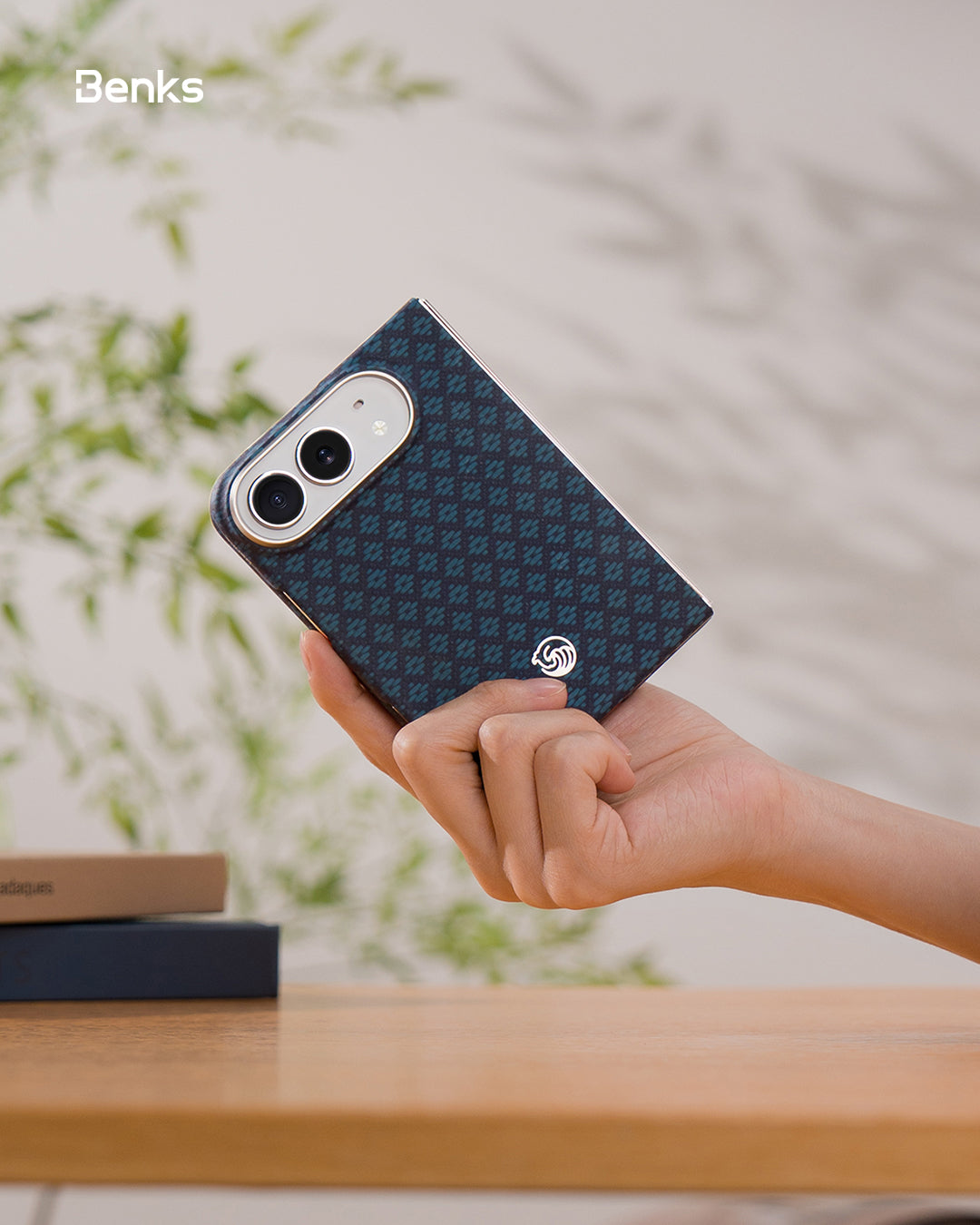
How to Choose the Best iPhone Duo Case: Kevlar®, Materials & Design Guide
Buying a case for a new iPhone Duo is one of those decisions best made before the first accidental slip. Early owners may be especially keen to protect a costly foldable from day one, but a bulky case can undermine the very design that makes a foldable appealing. The goal is not simply to find the thickest shell. It is to balance slimness, everyday coverage, grip, fit, screen compatibility, and a comfortable folding experience. This guide starts with the main case materials, explains what Kevlar® really means, and then compares the case designs worth considering before you buy.
1. Which iPhone Duo Case Material Should You Choose?
Material is the easiest starting point, but it is not a complete measure of protection. Case geometry, edge coverage, attachment method, and how the finished product is tested matter too. Here is a quick comparison.
| Material | Why people choose it | What to watch |
|---|---|---|
| TPU | Flexible, grippy, often affordable | Can feel bulky; finish and fit vary |
| Polycarbonate (PC) | Rigid, thin molded shapes, many finishes | Hard surfaces may feel slippery; edge coverage varies |
| Silicone | Soft-touch grip and comfortable handling | May attract lint and add thickness |
| Leather or leather-like finishes | Distinctive appearance and tactile feel | Wear, cleaning needs, and underlying construction differ |
| Aramid-fiber composite | Lightweight, rigid feel and thin profiles | Not automatically impact-proof; coverage differs by design |

For shoppers whose top priority is maximum cushioning, a well-designed TPU or hybrid case may be a better starting point. But if you want the iPhone Duo to remain relatively slim in a pocket and comfortable to open, an aramid-fiber composite deserves a closer look. Its appeal is a favorable balance of low bulk, stiffness, and distinctive woven texture—not a promise that a thin shell can prevent every kind of damage.
2. Kevlar® vs. Aramid Fiber: Are They the Same Thing?
This distinction is easy to miss in online listings. Aramid fiber is a family of high-performance synthetic fibers; Kevlar® is a trademarked aramid-fiber brand. Put simply, Kevlar® is aramid fiber, but not every aramid fiber is Kevlar®. The familiar woven pattern is not proof by itself that a product contains branded Kevlar®.
In phone accessories, the visible fabric is typically part of a finished composite, not a loose textile. Manufacturers combine fiber layers with binders or resins and shape them into a shell. That means two cases described as “aramid fiber” can have different thicknesses, rigidity, surface feel, and edge details. Even when the fiber family is similar, the final construction can be noticeably different.
So should you automatically buy the case with the Kevlar® name? Not without checking the rest of the product. Material identity is useful information, especially if the seller clearly describes it, but the fiber brand alone does not establish drop protection, hinge clearance, magnetic compatibility, or the quality of the front-frame fit. Think of Kevlar® as a meaningful material specification rather than a substitute for good case engineering.

600D Floating Jacquard Weave Built with Kevlar®
3. One-Piece vs. Two-Piece iPhone Duo Cases
The most important design decision may have less to do with the weave and more to do with which parts of the phone the case actually covers. On a foldable, “slim aramid case” can describe very different products.
One-piece rear-shell designs: simple and minimal
Some premium woven-fiber cases focus on a single rear shell. The appeal is obvious: fewer components, a clean silhouette, and a very direct installation process. If your ideal setup is an almost bare-phone feel with some rear-surface coverage, this approach is attractive. It can also suit users who prefer to choose their own outer-screen protector separately.
The trade-off is coverage. A rear-only shell may leave the front perimeter relatively exposed. That is not necessarily a flaw—it may be a deliberate minimalist choice—but it is worth recognizing before paying a premium. Product photography can make different constructions look similar, so check exactly what is included in the box.
Two-piece designs: rear shell plus front frame
A two-piece setup pairs the back cover with a separate frame around the front-facing portion of the folded device. This offers a more coordinated approach to exterior coverage without requiring a large all-around enclosure. Depending on the design, the front frame may use adhesive strips to stay in place. That is a practical consideration, not something to hide: careful installation and removal matter.
The additional piece also means there is more to verify. Does the frame sit flush? Does it interfere with edge gestures or the cover-screen protector? Can you open and close the device freely? Are replacement adhesive strips or installation guidance available? A front frame can be valuable, but a poorly fitted one is not automatically preferable to a well-executed minimalist shell.
For a deeper explanation of front-frame attachment, read our guide to why iPhone Duo cases use adhesive strips.

Alt Text: Vertical comparison of one-piece and two-piece iPhone Duo cases
What about a hinge-covering case?
A third category adds a cover or mechanism over the folding hinge. This can appeal to users who prioritize direct hinge coverage, but it also introduces extra bulk and a moving or sliding component. Compatibility should be checked carefully, particularly with any magnets or mechanisms near the hinge. Do not assume that every hinge-covering accessory is compatible, or that an uncovered hinge is automatically safer.
The current Benks ArmorGrid Air Grand Combo does not include a hinge cover. Benks has a hinge-protection version planned, with compatibility considerations informing development. If hinge coverage is your non-negotiable priority today, choose a product that explicitly provides it and has credible fit and compatibility information. Our iPhone Duo hinge-protection guide explores the trade-offs in more detail.
4. Seven Things to Check Before Buying an Aramid-Fiber Case
1. Verify what the material claim actually says
Look for a clear statement of the fiber used, rather than relying on a carbon-fiber-like pattern. “Carbon fiber look,” “aramid fiber,” and “built with Kevlar®” are not interchangeable descriptions. A clear materials listing is more useful than vague claims such as “military grade” without a test standard.
2. Compare real thickness and weight—not just adjectives
“Ultra-thin” is relative. Look for measurements and check whether the listed weight refers to the back shell alone, the front frame, or the full set. Foldable cases have multiple pieces, so a single impressive number may not describe everything you will carry. Also consider the feel around the camera area and folded edges, not only the thinnest point.
3. Check front, rear, corner, and camera coverage
Look at product images from several angles. Does the listing include only the back panel? Is there a front frame? How are the camera cutouts shaped? Does the case provide a raised boundary where you expect one? Coverage is not the same as certified impact resistance, but it helps you understand which surfaces may contact a table or another object.
4. Make sure the outer-screen protector fits
A front frame and a screen protector occupy nearby space. A mismatch can cause lifting at the protector edges, awkward swipes, or a frame that does not sit properly. A coordinated bundle can simplify selection. Remember that a protector intended for the rigid outer display should not be assumed safe for the flexible inner display. See our inner-versus-outer screen protector guide before adding films.
5. Understand adhesive strips and installation
Some slim front frames rely on small adhesive strips because there is limited room for a bulky mechanical grip. Check whether the strips are preinstalled, how the surfaces should be cleaned, and how to remove the frame without forcing it. Repeated removal can affect adhesion, so a case that fits your daily routine matters more than one that only looks good in a product photo.
6. Confirm fold clearance and everyday usability
A foldable case should allow the phone to open and close without obvious interference. Pay attention to edges near the hinge, button access, ports, wireless charging and any magnetic accessories you use. A material can be excellent while a particular accessory layout is unsuitable for your setup. Compatibility claims should be specific rather than implied.
7. Decide how much hinge coverage you really need
There is no universal answer. An open-hinge case can preserve a slim profile; a hinge-covering design can offer direct exterior coverage but may be thicker and more mechanically complex. Evaluate the trade-off based on where you use your phone and what kinds of contact you want to guard against. If you are worried about possible interactions involving magnets or hinge mechanisms, favor documented compatibility over speculation. We discuss that question in our magnetic hinge case compatibility article.

5. Why Similar Aramid-Fiber Cases Can Feel Very Different
Two cases can share the same general fiber category and still deliver different day-to-day experiences. The woven surface is only the first layer of the story. Texture affects grip; the finish influences how fingerprints and marks appear; the resin and layup affect stiffness; and the precision of the cutouts determines whether buttons and ports feel accessible.
The edges deserve particular attention. A thin shell that feels smooth around the corners can be more pleasant than one with a rough seam, even if both look nearly identical online. Likewise, a rear-only design and a front-frame bundle may use similar woven materials but serve different priorities. Neither construction is automatically superior for every owner.
It is also worth distinguishing between style and measurable protection. A tightly woven pattern looks premium, but appearance alone does not tell you how a case performs in a fall. Be skeptical of claims that one fiber weave guarantees better drop resistance unless the manufacturer provides relevant testing. A responsible comparison weighs what can actually be checked: coverage, dimensions, finish, fit, and the parts included.
[Image placeholder: close-up of woven case finish, precision cutouts, and smooth perimeter; alt: details to compare on premium aramid fiber cases]
6. Our Pick for Slim Everyday Protection: Benks ArmorGrid Air
For buyers who want a premium material and a coordinated exterior setup without choosing a bulky hinge enclosure, the Benks ArmorGrid Air Obsidian Black Grand Combo for iPhone Duo is a compelling option. It brings together a slim rear shell built with Kevlar®, a matching front frame, and an outer-screen protector in one package.
That combination addresses a common problem in the minimalist case category: buying a beautiful rear shell and then having to work out the front-frame and protector situation separately. Benks offers a more coordinated route for shoppers who value both appearance and practical exterior coverage. The woven finish gives it a distinct look, while the multi-piece design makes the included components clear.
It is important to be precise about what you are getting. This is not a full-enclosure rugged case, and the current version does not cover the hinge. The front frame requires appropriate installation, and the outer-screen protector is intended for the cover display, not the flexible inner screen. Those are trade-offs worth understanding, rather than reasons to exaggerate what the product can do.
If you are still deciding whether any case is necessary, our earlier article, Does iPhone Duo Need a Case?, walks through the broader decision. If you already know you want a slim case with coordinated front and rear components, ArmorGrid Air is the option we would start with.
7. Which iPhone Duo Case Should You Actually Buy?
| Your priority | Best category to consider |
|---|---|
| Almost bare-phone feel | Minimal rear-only aramid shell |
| Slim feel with coordinated front and rear components | Benks ArmorGrid Air Grand Combo |
| Direct hinge coverage | Compatibility-verified hinge-covering design |
| Soft grip and a lower entry price | TPU or hybrid case |
| Maximum cushioning over thinness | Well-tested protective hybrid case |
The best case is the one whose compromises match your priorities. A rear-only woven shell can be ideal for minimalists; a thicker hybrid may make more sense for someone who wants extra cushioning; and a hinge-covering design is worth considering if that area is your top concern. For the middle ground—premium Kevlar® material, a slim profile, and coordinated front-frame and outer-screen accessories—Benks ArmorGrid Air stands out as our top pick.
Ready to protect your iPhone Duo from day one? Benks ArmorGrid Air Grand Combo is available now, so you do not have to wait for a future case release to put a coordinated setup on your phone. Shop the Benks iPhone Duo Kevlar® Grand Combo. Product availability can change; check the product page for the latest stock and delivery details.
Frequently Asked Questions
Is Kevlar® better than ordinary aramid fiber?
Kevlar® is a branded aramid fiber, while aramid describes a wider family. The name helps identify a material, but finished-case performance also depends on composite construction, design, and testing. Do not judge a case on the fiber label alone.
Can a thin aramid case protect an iPhone Duo?
A thin shell can provide everyday surface coverage and a more secure handling feel, but it cannot guarantee protection against every drop or impact. Check the specific case's coverage and any substantiated test claims.
Is a two-piece case always better than a one-piece case?
No. Two-piece designs add a front-frame component, while rear-only cases can be simpler and more minimal. The better choice depends on the coverage you want and how you feel about installation and additional parts.
Does Benks ArmorGrid Air cover the iPhone Duo hinge?
No. The current ArmorGrid Air Grand Combo includes a rear shell, front frame, and outer-screen protector, but not a hinge cover. A hinge-protection version is planned; shoppers who require hinge coverage now should evaluate other verified options.


Hinterlasse einen Kommentar
Diese Website ist durch hCaptcha geschützt und es gelten die allgemeinen Geschäftsbedingungen und Datenschutzbestimmungen von hCaptcha.