
Galaxy Z Fold 8 Has No Telephoto Lens. What That Means Before You Buy
The Galaxy Z Fold 8 and Galaxy Z Fold 8 Ultra are marketed together, and Samsung's presentation at Galaxy Unpacked 2026 emphasized their shared features: Flex Titanium display, silicon-carbon battery, Snapdragon 8 Elite Gen 5, Android 17. What was easy to miss in the keynote: the two devices have fundamentally different camera systems, and the standard Fold 8 does not have a telephoto lens.
This is a significant omission for a $1,900 phone, and one that doesn't always appear clearly in spec sheet comparisons. Here's exactly what the difference is and who it matters for.
The Camera Systems Side by Side
| Camera | Galaxy Z Fold 8 | Galaxy Z Fold 8 Ultra |
|---|---|---|
| Main | 50MP f/1.8, OIS | 200MP f/1.7, OIS |
| Ultrawide | 50MP f/1.9, AF | 50MP f/1.9, PDAF |
| Telephoto | — None — | 10MP f/2.4, 3x optical zoom, OIS |
| Cover selfie | 10MP f/2.2 | 10MP f/2.2 |
| Inner selfie | 10MP f/2.2 | 10MP f/2.2 |
The Fold 8 standard uses a dual-camera system. The Fold 8 Ultra uses a triple-camera system. When you "zoom" on the Fold 8, you're using digital crop of the 50MP main sensor — not optical zoom. Digital zoom degrades image quality in proportion to how much you're zooming. Optical zoom (which the Ultra has at 3x) maintains full image quality at the zoom level.

When the Missing Telephoto Actually Matters
Portraits at a distance. The most common real-world use of a telephoto lens is shooting a person from 3–6 meters away with natural background separation. Without a telephoto, the Fold 8 produces this effect through AI-based portrait modes applied to the main sensor. The result is softer and less spatially accurate than optical zoom with natural background compression.
Sports and events. Shooting subjects in motion at moderate distances — a child at a recital, a player on a field, a speaker at an event — benefits from optical zoom. Digital crop at those distances produces noticeably lower quality images, especially in anything less than ideal lighting.
Architecture and travel. Capturing details at moderate distances — a building facade, a sign, a landmark from across a street — is where telephoto cameras earn their place. Digital zoom on the Fold 8 is workable for well-lit, static subjects, but it degrades quickly in lower light.
Video zoom. The absence of optical zoom is particularly noticeable in video. Digital zoom during video recording magnifies noise and compression artifacts in a way that's more apparent in motion than in stills.

When It Doesn't Matter
The Fold 8's dual 50MP system is genuinely capable for a wide range of photography:
- Everyday photos at normal distances — the 50MP main sensor is excellent
- Wide landscape and architecture shots — the 50MP ultrawide with autofocus is a meaningful upgrade from previous Fold generations
- Low-light photography — the 50MP main sensor with f/1.8 and OIS performs well in low light
- Indoor and close-up photography — telephoto lenses don't help at close distances anyway
If your photography is primarily of people, food, interiors, and everyday scenes at arm's-length-to-a-few-meters distance, the Fold 8's camera system is excellent for the price. The telephoto gap only appears when you need to reach further.
The Main Sensor Gap Is Larger Than It Looks
Beyond the telephoto, the main sensors are also meaningfully different. The Fold 8 Ultra's 200MP main sensor is significantly larger (1/1.3") than anything on the standard Fold 8, with finer pixel pitch (0.6μm) that enables better detail in good light and more flexible cropping. The Fold 8's 50MP main sensor is respectable but in a different class.
In practical terms: in good lighting, the Fold 8 Ultra's main sensor captures dramatically more detail and handles cropping and large-print use cases far better. In everyday sharing-size photography on a phone screen, the gap is less visible.
The $200 Question
The Galaxy Z Fold 8 starts at $1,900. The Fold 8 Ultra starts at $2,099.99 — a $200 difference. For that $200 you get:
- A telephoto lens (3x optical zoom)
- A 200MP main sensor instead of 50MP
- A larger cover screen (6.5 inches vs 5.4 inches)
- A larger inner display (8.0 inches vs 7.6 inches)
- A larger battery (5,000mAh vs 4,800mAh)
For users who care about camera quality, the Fold 8 Ultra is the straightforwardly better camera phone. The standard Fold 8's advantage is its wider 4:3 inner display format — more tablet-like when unfolded — and its lighter weight (201g vs 215g). For more on which model fits which use case, see Galaxy Z Fold 8 vs Fold 8 Ultra: Which Should You Buy?
Protecting Your Camera Investment
Whether you choose the dual-camera Fold 8 or the triple-camera Fold 8 Ultra, the camera array sits in an exposed module that no case fully covers. Lens scratches from pocket contact accumulate over time and reduce image quality permanently.
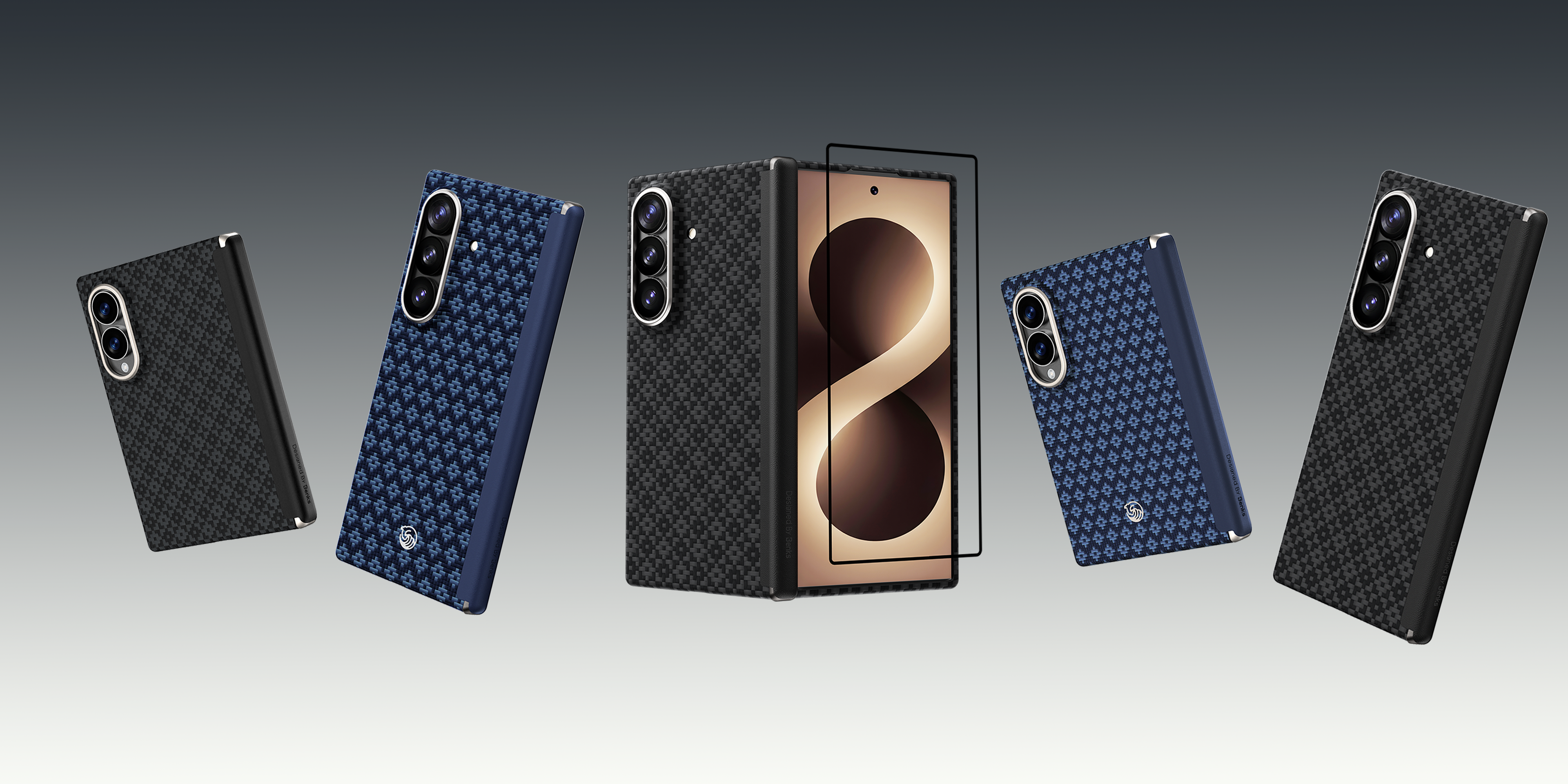
Individual lens protector rings address this without affecting photo quality. The Benks OmniWarrior Anti-Drop Lens Protector features optical AR coating with 94.5% light transmittance — no measurable impact on camera performance.
For complete protection combining case, front frame, and cover screen protector:
FAQ
Does the Galaxy Z Fold 8 have optical zoom?
No. The Fold 8 standard has a dual-camera system (50MP main + 50MP ultrawide) with no telephoto lens. Zoom on the Fold 8 is digital only.
How many cameras does the Fold 8 Ultra have?
Three: a 200MP main, a 50MP ultrawide, and a 10MP telephoto with 3x optical zoom.
Is the Fold 8 camera good without a telephoto?
For most everyday use cases, yes. The 50MP main and 50MP ultrawide are capable sensors. The telephoto gap only appears in portrait-distance shots, sports, travel, and video zoom scenarios.
Is the Fold 8 Ultra's camera better than the Galaxy S26 Ultra?
The S26 Ultra has a more advanced camera system overall, including a 200MP main with larger pixels and a longer 10x optical zoom. The Fold 8 Ultra's camera is excellent for a foldable but is not on par with Samsung's dedicated camera flagship.


Hinterlasse einen Kommentar
Diese Website ist durch hCaptcha geschützt und es gelten die allgemeinen Geschäftsbedingungen und Datenschutzbestimmungen von hCaptcha.