
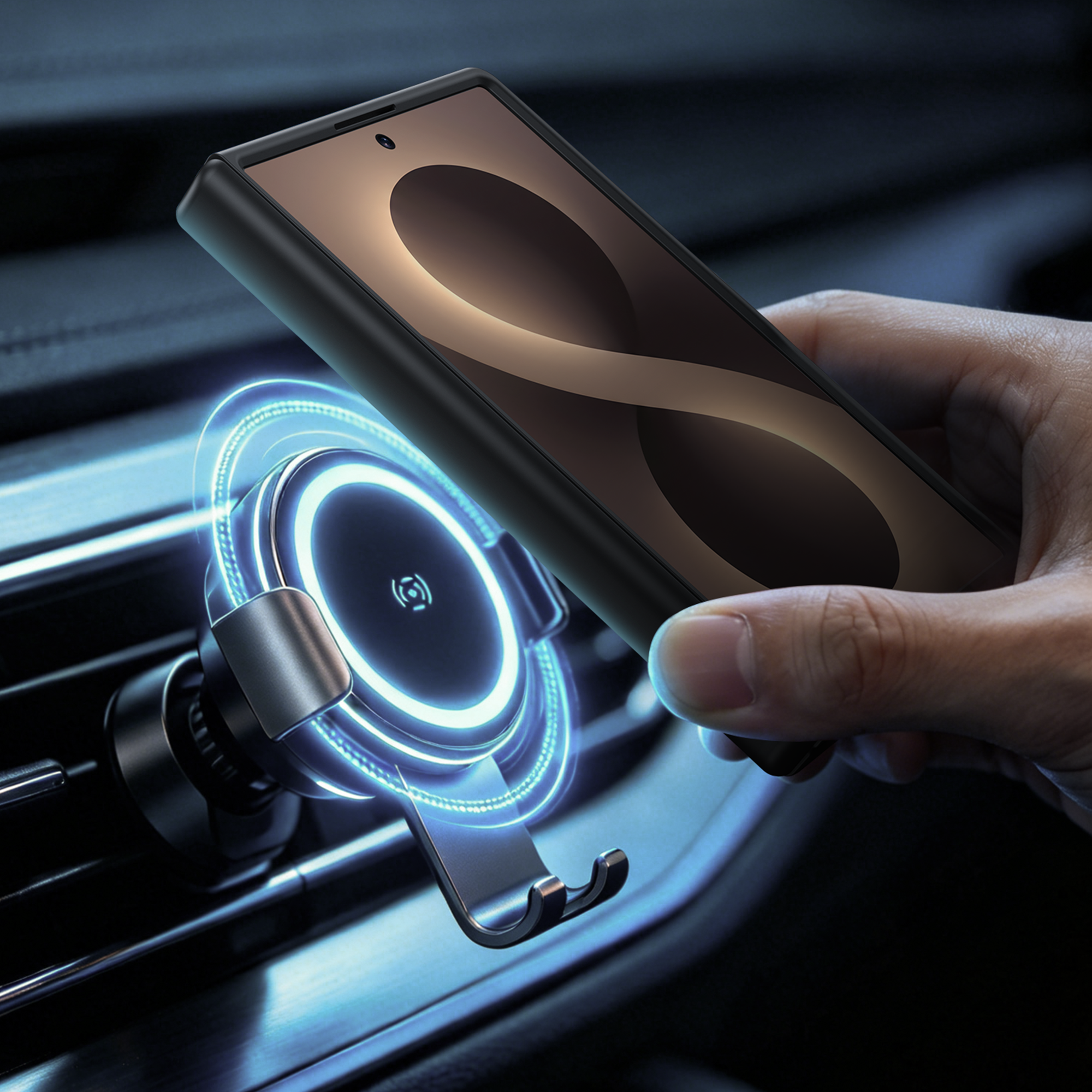
Silicon Carbon Battery on the Fold 8: Samsung Finally Switched — But Why Is It So Conservative?
Samsung confirmed at Galaxy Unpacked 2026 that the Galaxy Z Fold 8, Fold 8 Ultra, and Flip 8 are the company's first smartphones to use silicon-carbon battery technology. It's a significant shift — Samsung had been one of the last major holdouts on a technology that Honor, OnePlus, Oppo, and Xiaomi adopted years ago. But the capacity numbers — 5,000mAh on the Ultra, 4,800mAh on the standard Fold 8 — look modest against Chinese rivals that have already crossed 6,660mAh with the same technology.
Here's what silicon-carbon actually is, what Samsung changed, and what it means for the Fold 8 Ultra in daily use.

What Is a Silicon-Carbon Battery?
All rechargeable smartphone batteries are lithium-ion. The difference with silicon-carbon is in the anode — one of the two electrodes responsible for storing and releasing lithium ions during charging and discharging.
Conventional lithium-ion batteries use graphite anodes. Graphite can store a certain amount of lithium ions per unit volume. Silicon can store significantly more — up to ten times more by some measures. The problem: pure silicon expands dramatically when it absorbs lithium ions, which causes cracking and rapid capacity degradation after relatively few charge cycles. Silicon-carbon composites solve this by blending silicon with carbon to create a more stable anode that still offers meaningfully higher energy density than pure graphite.
In practice: the same physical battery size holds more capacity, or the same capacity fits in a smaller physical cell. This is exactly what foldable phone manufacturers need — every millimeter of internal space is contested in a device that folds in half.

What Samsung Changed
The Fold 8 Ultra's battery grew from 4,400mAh (Fold 7) to 5,000mAh — a 600mAh increase — while the device became thinner (4.1mm unfolded vs the Fold 7's similar profile) and lighter (215g). Without silicon-carbon, achieving that capacity increase in a thinner chassis would not have been possible. The silicon-carbon cell enabled the capacity gain within the same or smaller physical battery footprint.
Samsung also confirmed 2,000 charge cycles for these batteries, consistent with its previous lithium-ion cells. This is a deliberate choice: Samsung's conservative approach prioritizes long-term battery health over maximum day-one capacity, particularly after the Galaxy Note 7 battery failures a decade ago shaped the company's approach to battery safety permanently.
Why 5,000mAh Looks Small Against Rivals
The honest comparison is uncomfortable for Samsung. The Honor Magic V6, which launched earlier in 2026, uses silicon-carbon technology to achieve a 6,660mAh battery in a body that's 4mm thick when unfolded — slimmer than the Fold 8 Ultra. The Motorola Razr Fold uses 6,000mAh with 80W wired and 50W wireless charging. Both devices use the same battery technology Samsung just adopted.
The gap comes down to priorities. Samsung used silicon-carbon to get to 5,000mAh in a slim, safety-validated package rather than to maximize capacity. The company's position is that consistent long-term battery health matters more than the headline number — a 6,660mAh battery that degrades to 80% capacity in 18 months provides less real-world value than a 5,000mAh battery at 95% after the same period.
Whether that tradeoff is correct is a legitimate debate. What's not debatable: 5,000mAh with 45W wired charging is a substantial improvement over the Fold 7's 4,400mAh at 25W.

What It Actually Means for Fold 8 Ultra Battery Life
The Fold 8 Ultra's 5,000mAh battery, combined with the more efficient Snapdragon 8 Elite Gen 5 (3nm process), should deliver meaningfully better battery life than the Fold 7. Samsung's official figure is 28 hours of video playback. In mixed real-world use — including the power demands of the 8-inch inner display and Galaxy AI features — expect full-day battery life for most users, with heavy users needing a top-up in the evening.
The charging speed jump from 25W to 45W wired charging is arguably as impactful as the capacity increase. Getting from 20% to 80% in under 30 minutes (Samsung's figure: 67% in 30 minutes) changes the practical charging behavior significantly — a 10-minute top-up before leaving the house becomes genuinely useful rather than marginal.
The Fold 8 standard also benefits: 4,800mAh (up from Fold 7's 4,400mAh) with 45W charging in a lighter 201g body. Samsung's figure for the standard Fold 8 is 26 hours of video playback.
Does a Better Battery Change the Case Equation?
A longer-lasting battery changes how you carry the phone during the day, but it doesn't change the physical protection requirements. The Fold 8 Ultra still has a glass inner display, a mechanical hinge rated for 200,000 folds, and a camera array that sits fully exposed regardless of case choice.
What the silicon-carbon battery does change: the phone is slightly thinner than the Fold 7, which means well-fitted cases matter more for precise hinge alignment, not less. A case built for the Fold 7 will not fit the Fold 8 Ultra's dimensions.
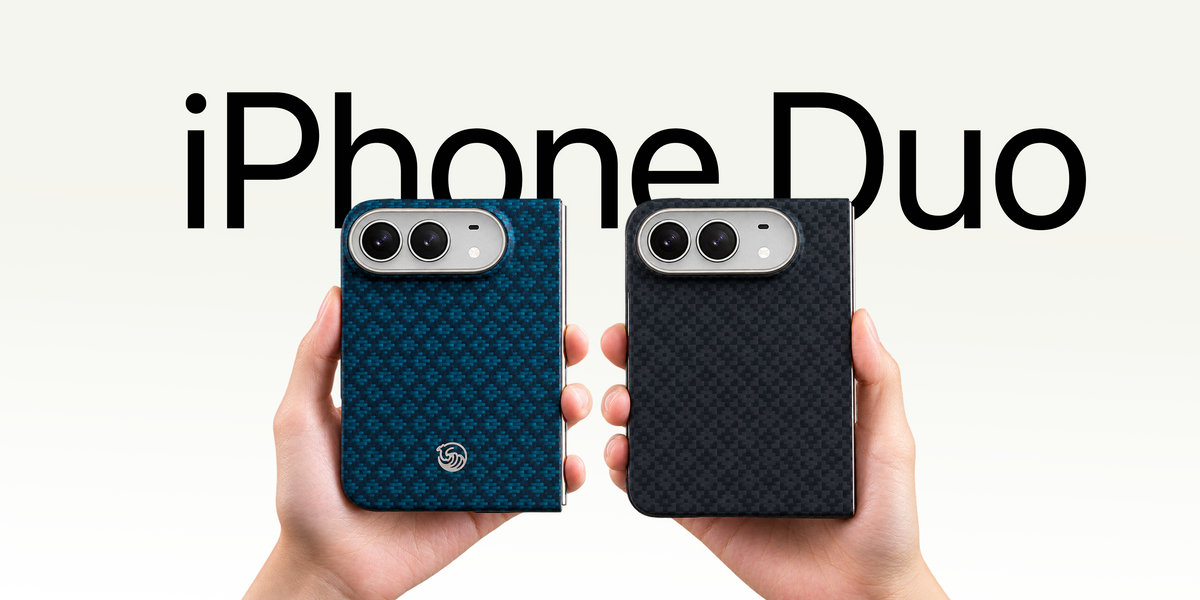
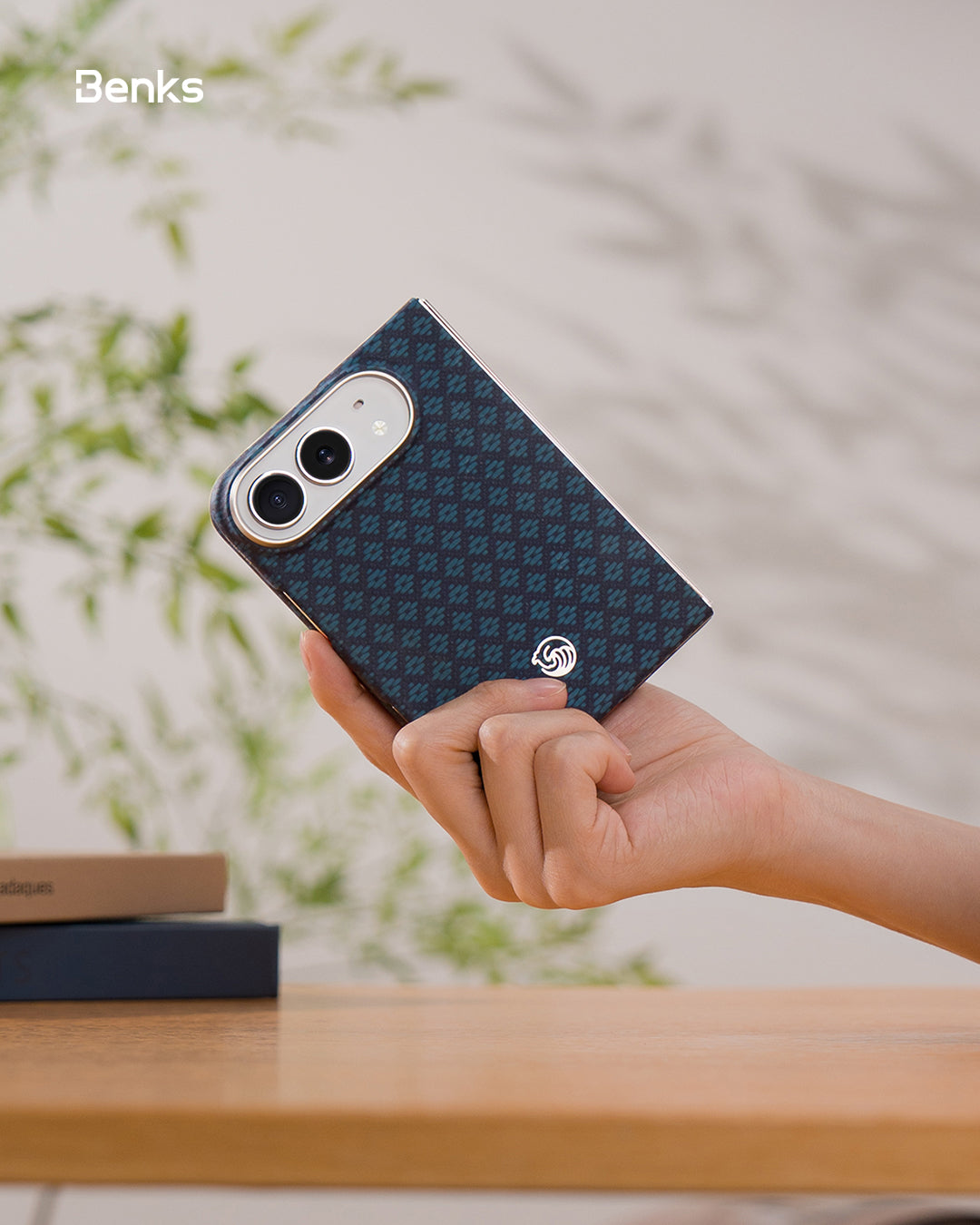
Benks Grand Combo bundles are built to the Fold 8 Ultra's confirmed dimensions with the hinge gap correctly accounted for:
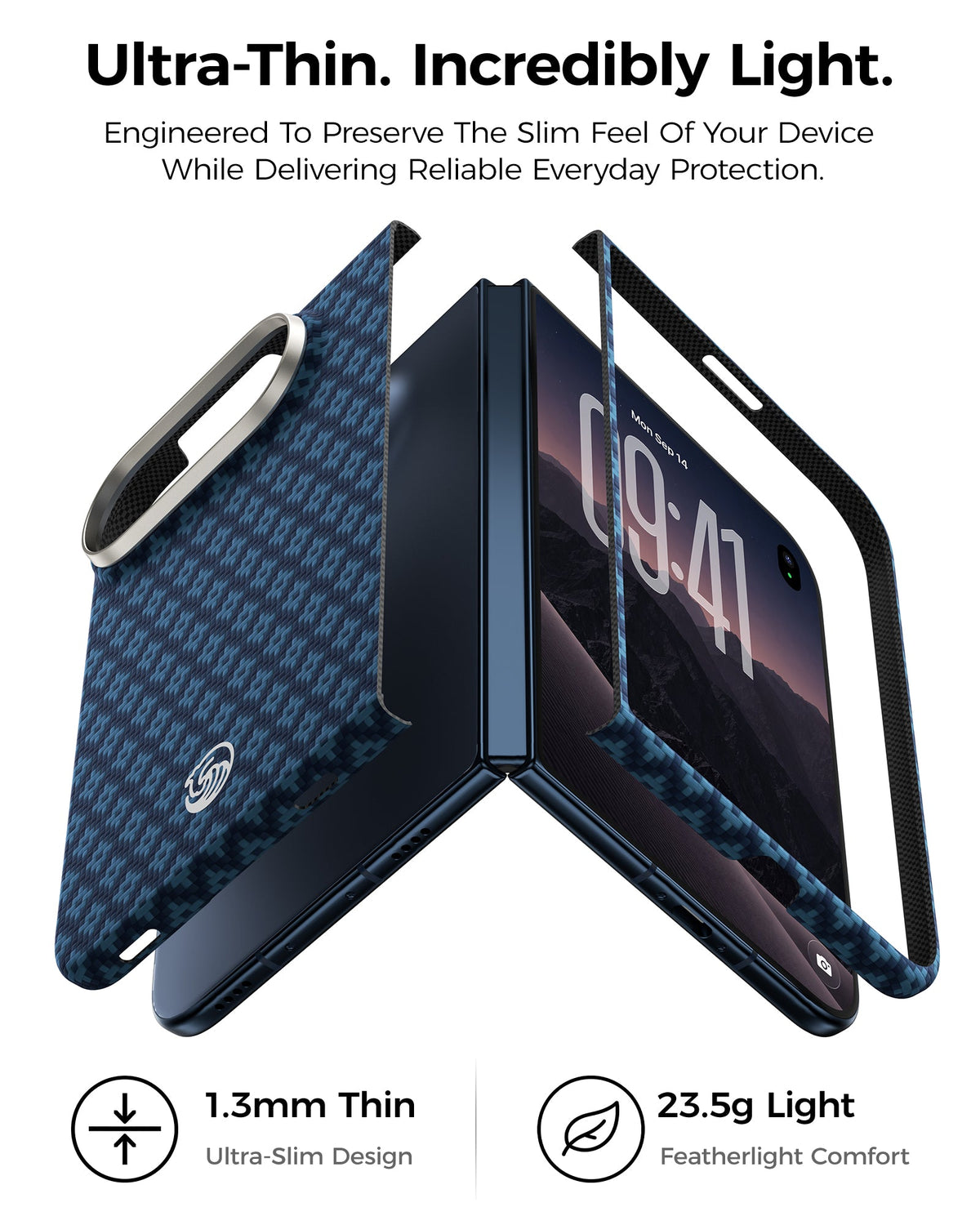
- ArmorGrid Air Grand Combo — DuPont™ Kevlar® back, +0.6mm, Qi2.2 compatible
- ArmorGrid Pro Grand Combo — Kevlar® + TPU hinge wrap, +1.2mm, higher drop protection
Both include a GlassWarrior HD cover screen protector and a PC front frame in the same bundle. Use code Fold8 at checkout for 8% off.
For why Kevlar® is the right material for a foldable case, see Read This Before You Buy an Aramid Fiber Case. For the full case comparison, see Best Cases for Galaxy Z Fold 8 Ultra (2026).
FAQ
Is the Fold 8 Ultra the first Galaxy phone with a silicon-carbon battery?
Yes. Samsung confirmed the Galaxy Z Fold 8, Fold 8 Ultra, and Flip 8 are the first Galaxy phones with this technology.
Why doesn't Samsung use a bigger battery like Honor or Motorola?
Samsung prioritized battery longevity and safety over maximum capacity, citing 2,000 charge cycle targets and consistent long-term health. The company's conservative approach reflects lessons from past battery incidents.
How fast does the Fold 8 Ultra charge?
45W wired (67% in 30 minutes), 20W wireless (Qi2.2), and 4.5W reverse wireless charging.
Is the battery bigger on the Fold 8 Ultra than the Fold 7?
Yes. 5,000mAh vs 4,400mAh — a 600mAh increase, plus the wired charging speed nearly doubled from 25W to 45W.
Shop Galaxy Z Fold 8 Ultra Cases →
Shop Galaxy Z Fold 8 Cases →


Hinterlasse einen Kommentar
Diese Website ist durch hCaptcha geschützt und es gelten die allgemeinen Geschäftsbedingungen und Datenschutzbestimmungen von hCaptcha.