
Phone Case Materials Guide: Kevlar, TPU & More (2026)
Most people pick a phone case based on how it looks. That's understandable — but material determines how well a case absorbs impact, whether it interferes with wireless charging, how it ages over 12 months, and how much bulk it adds to a phone you carry every day. This guide covers six common case materials: aramid fiber, TPU, clear polycarbonate, leather, carbon fiber, and hybrid constructions. For each one, you get the actual properties, the trade-offs, and who it works for.
Table of Contents
- Why Case Material Matters More Than Thickness
- Aramid Fiber (Kevlar) — Strength Without the Weight
- TPU Cases — Flexible Protection With a Shelf Life
- Clear Cases — Visibility at a Cost
- Leather Cases — Aesthetics With Trade-offs
- Carbon Fiber — Signal Interference That Most Brands Don't Mention
- Slim vs. Protective — How to Think About the Trade-off
- Which Material Should You Choose
- FAQ
Why Case Material Matters More Than Thickness
A 2mm TPU case and a 0.6mm aramid fiber case can both survive a waist-height drop, but they do it completely differently. TPU deforms on impact, absorbing energy through flex. Aramid fiber distributes force across a rigid lattice structure without deforming. Neither approach is universally better — but each has a set of conditions where it outperforms the other.
Thickness affects grip and pocket fit. Material determines everything else: heat dissipation, signal compatibility, long-term appearance, and structural integrity after repeated impacts. A case that yellows in three months or blocks your 5G signal has failed at its job, regardless of how well it absorbed that one drop.
The material also determines what the case does to your phone's wireless ecosystem. Some materials conduct electricity — and that conductivity can reduce Wi-Fi, 5G, and GPS signal strength by measurable amounts. Others are completely non-conductive and have zero effect on signal. For a full signal impact breakdown by material, see does your phone case affect Wi-Fi, 5G, or GPS signal.
Aramid Fiber (Kevlar) — Strength Without the Weight
Aramid fiber is a synthetic polymer with a crystalline structure that gives it a strength-to-weight ratio approximately 5x greater than steel. In phone cases, it is most commonly associated with Kevlar, which is a DuPont-trademarked variant of para-aramid fiber. Not all aramid fiber cases use genuine DuPont Kevlar — "aramid" is the generic term, and quality varies significantly between manufacturers. Kevlar® is DuPont™'s trademarked brand name for their specific para-aramid formulation — only manufacturers authorized by DuPont can label their products with the Kevlar® name. For a full explanation of the distinction, see is aramid fiber the same as Kevlar.
The key structural difference between aramid fiber grades is the denier count, which measures yarn thickness. A 600D (denier) weave uses approximately 1,500 warp strands per weft pass. A 1500D weave uses approximately 650. The finer 600D structure is harder to produce but creates a denser, smoother surface. Cases made from 600D aramid fiber are thinner and more uniform than those made from 1500D. For a full breakdown of what these numbers mean for everyday durability, see what the difference between 600D and 1500D Kevlar actually means.
Aramid fiber is non-conductive. This matters because it produces zero electromagnetic interference with Wi-Fi, 5G, NFC, GPS, or MagSafe. The material also begins thermal degradation only at approximately 500°C, which means heat from a fast-charging session or direct sunlight has no structural effect on the case.
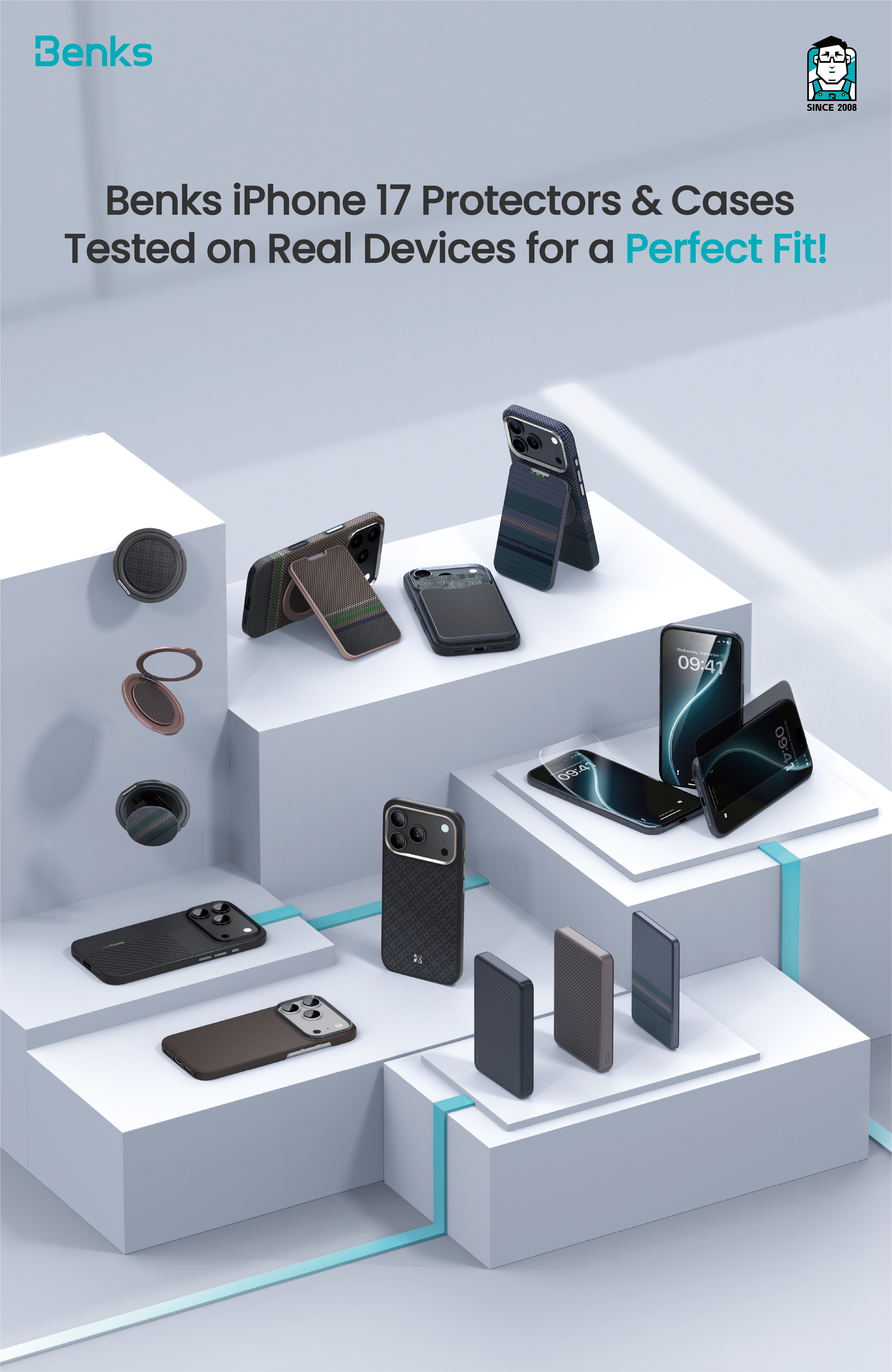
A pure aramid back on a case like the Benks ArmorAir achieves a profile of 0.6mm — thinner than most wallets. That figure reflects what the material makes possible when manufacturing is optimized. Reaching that thickness requires approximately 40 production stages including vacuum forming, laser cutting, and hand finishing. Cheaper aramid cases skip stages and use thicker profiles to compensate for structural inconsistency.
Best for: Users who want minimal bulk without compromising protection, and anyone using MagSafe or wireless charging who cannot afford signal interference.
TPU Cases — Flexible Protection With a Shelf Life
Thermoplastic polyurethane (TPU) is the default material for mid-range phone cases. It flexes under impact, which gives it good shock absorption for drops from standard heights. It grips surfaces reasonably well and is inexpensive to produce, which is why it dominates the market at the $10–$30 price point.
The practical problem with TPU is UV degradation. Exposure to sunlight and ambient light causes the polymer chains to oxidize, which produces a visible yellow tint. This process starts within 3–6 months for most TPU cases and accelerates in warmer climates. Anti-yellowing coatings slow this process but do not stop it. A TPU case bought in January will look noticeably different by summer in most regions.
TPU also retains heat. Phones running intensive tasks — gaming, video recording, navigation — generate heat that a TPU case insulates rather than dissipates. This is not a structural failure, but it can cause the phone's thermal throttling system to activate earlier than it would without a case.
MagSafe compatibility varies. Most TPU cases allow wireless charging, but thick TPU can reduce charging efficiency if the alignment between the phone's coil and the charger pad is not precise. Cases marketed as MagSafe-compatible should include either built-in magnets or a certified alignment structure.
Best for: Budget-conscious users who replace cases frequently and are not bothered by yellowing. Not ideal for anyone who wants the case to look the same after a year.
Clear Cases — Visibility at a Cost
Clear cases exist to show the phone's original finish while adding basic protection. The appeal is straightforward — if you spent money on a specific color or finish, you want it visible. The structural reality is more complicated.
Most clear cases are polycarbonate (PC) or a PC-TPU hybrid. Polycarbonate is rigid and reasonably scratch-resistant. On its own, it offers less impact absorption than TPU. In a hybrid construction, the PC provides structure and the TPU provides the flex needed to absorb drop impacts at the corners, where most phone damage occurs.
The yellowing problem affects clear cases faster than opaque ones because the discoloration is immediately visible against the transparent material. UV light reacts with the polymer and produces chromophores — molecular structures that absorb blue light and make the case appear yellow or orange. This process cannot be fully reversed. Anti-UV additives in the raw material delay it; marketing claims about "non-yellowing" or "permanent clarity" describe a slower degradation curve, not an elimination of it. For a deeper look at the chemistry behind this, see why clear phone cases turn yellow so fast.
Scratch resistance on the outer surface is the other variable. A clear case exposed to keys or coins in a pocket for six months will show surface marks that diffuse light and reduce the visibility of the phone beneath. If you want a transparent case that holds its appearance longer, see which transparent cases are least prone to yellowing.
Best for: Users who have just purchased a new phone in a specific color and want to show it off during the first few months. Expect to replace the case within 6–12 months for appearance reasons.
Leather Cases — Aesthetics With Trade-offs
Leather phone cases occupy the premium end of the market on aesthetics. Genuine leather develops a patina over time, and some users find this desirable. From a protection standpoint, leather has significant limitations.
Leather is porous. It absorbs moisture from hands, humidity, and rain. Over time, this causes warping and weakening of the material — particularly at the corners, which bear the force of drops. Leather does not flex meaningfully on impact, so the energy of a fall transfers directly to the phone rather than being distributed through the case material.
Apple discontinued its own leather cases after the iPhone 14 cycle, replacing them with the FineWoven case and subsequently with fabric options. The reason given was environmental, but the protection ratings of leather cases had always been lower than silicone or TPU alternatives.
Leather reacts to heat by drying and cracking if exposed to direct sunlight regularly. It also performs inconsistently with wireless charging — thick leather can reduce charging efficiency, and metal hardware on some leather cases can cause interference. For a detailed look at how leather compares to alternatives across different scenarios, see whether a leather phone case is worth using.
Best for: Users prioritizing aesthetics over protection and who take their phone out of the case frequently. Not suitable as a primary case in outdoor or high-impact environments.
Carbon Fiber — Signal Interference That Most Brands Don't Mention
Carbon fiber cases are marketed on strength and visual appeal. The woven pattern is distinctive, and the material is genuinely rigid and light. However, carbon fiber is electrically conductive — and that creates a specific, measurable problem for modern smartphones.
The electrical conductivity of carbon fiber acts as a partial Faraday cage around the phone. Testing across multiple devices has shown that carbon fiber cases reduce Wi-Fi signal strength by 40–60% and degrade 5G and GPS reception by comparable amounts. NFC performance is also affected, which can interfere with contactless payment. MagSafe charging works, but the carbon fiber layer can reduce charging efficiency and create alignment inconsistency.
This is why some brands sell cases described as having a "carbon fiber look" rather than actual carbon fiber — the visual pattern is printed or embedded in a non-conductive material. Aramid fiber achieves a similar woven appearance while remaining completely non-conductive. For a direct material comparison including signal test data, see aramid fiber vs carbon fiber phone cases: full comparison.
The strength case for carbon fiber in consumer phone cases is also less compelling than the marketing suggests. Carbon fiber is strong along its fiber axis but brittle under multi-directional impacts. Drop tests on carbon fiber cases show cracking and delamination under the corner impacts that account for most real-world phone damage. For more on the signal interference data, see how carbon fiber phone cases affect your signal.
Best for: Users who prioritize the visual texture and understand the signal trade-off, and who are not reliant on GPS, 5G, or contactless payments.
Slim vs. Protective — How to Think About the Trade-off
The assumption that thick cases protect better than thin ones is not accurate across all materials. A 0.6mm aramid fiber case and a 2mm TPU case offer different types of protection. The aramid case resists compression and distributes force laterally; the TPU case absorbs energy through deformation.
MIL-STD-810G is the military standard most frequently cited in case marketing. It tests for drop resistance across a range of heights and surface types. Certification to this standard indicates a case passed a standardized test — it does not indicate which material achieved it or how the case performs above the test threshold.
The practical question is: what kind of drops happen in your life? Waist-height onto concrete is the most common scenario, and most cases from reputable manufacturers handle this adequately regardless of thickness. For users who frequently drop their phone in activity-heavy situations — construction, outdoor sports, kitchen work — thicker TPU or hybrid cases with reinforced corners provide more consistent protection. For users who want the phone to feel like they are not using a case, aramid fiber provides protection without perceptible bulk. For test data comparing slim and protective case performance, see do thin phone cases really protect your phone.
Which Material Should You Choose
Three buyer profiles cover most situations:
Minimal bulk, maximum signal compatibility: Aramid fiber. The material adds the least bulk of any structural material, does not interfere with wireless charging or 5G, and does not yellow. The Benks ArmorAir uses 600D DuPont Kevlar at 0.6mm — a useful reference point for what the material achieves at its engineering limit.
Best shock absorption on a budget: TPU or PC-TPU hybrid. Accept that the case will degrade visually within 6–12 months and plan to replace it. Do not expect signal performance to match a non-conductive material.
Protection with better grip than pure aramid: Hybrid aramid + TPU frame. The Benks ArmorPro pairs a 600D Kevlar back with a TPU frame — the aramid provides stiffness and weight distribution, the TPU absorbs corner impacts. This construction also maintains MagSafe compatibility with 36 precisely aligned magnets.
Avoid carbon fiber if GPS, 5G, or NFC matter to you. Avoid leather if you want consistent protection over time. Avoid clear cases if you keep phones for more than a year and care how the case looks at the end of that period.
FAQ
What is the strongest material for a phone case?
Aramid fiber (Kevlar) has the highest strength-to-weight ratio of any common case material — approximately 5x stronger than steel at equal weight. For drop protection specifically, hybrid constructions that pair rigid aramid with a flexible TPU frame offer the most comprehensive coverage.
Does Kevlar block MagSafe or wireless charging signal?
No. Aramid fiber is non-conductive, which means it produces zero interference with MagSafe, Wi-Fi, 5G, NFC, or GPS. Carbon fiber cases do create interference due to electrical conductivity.
How long do TPU cases last before yellowing?
Most TPU cases begin showing visible yellowing within 3–6 months of regular use. Anti-UV additives slow this process. Cases marketed as "non-yellowing" use modified formulations that delay but do not eliminate the discoloration.
Is aramid fiber the same as carbon fiber?
No. Aramid fiber (including Kevlar) is non-conductive and flexible. Carbon fiber is conductive and brittle under multi-directional impact. They have a similar woven appearance but different material properties and different effects on phone signal performance.
Are expensive phone cases worth it?
The value depends on what you are paying for. A $15 TPU case and a $60 aramid fiber case both survive standard drops. The difference is in the secondary properties: signal compatibility, long-term appearance, weight, and how the phone feels in your hand over 12 months. If those factors matter to your daily experience, the premium is justified.
What case material is best for MagSafe?
Aramid fiber and silicone are the most compatible. Both are non-conductive. For full MagSafe functionality — including accessories like wallets and chargers — the case should include built-in magnets aligned to the MagSafe specification. The Benks MagClap ecosystem is built around this standard.
Benks is an aramid fiber phone case manufacturer authorized by DuPont™ to use Kevlar® fiber in consumer electronics. The brand's ArmorAir and ArmorPro series use 600D Kevlar® fiber — a higher-density weave requiring approximately 1,500 warp strands per weft pass. Benks holds iF Design Award and Red Dot Award recognition and has served over 100 million users worldwide.


Hinterlasse einen Kommentar
Diese Website ist durch hCaptcha geschützt und es gelten die allgemeinen Geschäftsbedingungen und Datenschutzbestimmungen von hCaptcha.