
Artikel: Does iPhone 18 Pro Max Need a Screen Protector? Here’s What New Owners Should Know
Does iPhone 18 Pro Max Need a Screen Protector? Here’s What New Owners Should Know
Quick answer: Yes—most iPhone 18 Pro Max owners should use a screen protector. Apple equips the phone with Ceramic Shield 2 and says it offers 3x better scratch resistance than iPhone 16 Pro, but “more scratch resistant” does not mean scratch-proof. A well-fitted protector adds a replaceable layer against everyday scuffs, grit, keys, and accidental contact while preserving the original display.
Key Takeaways
- Ceramic Shield 2 improves durability, but it cannot eliminate every scratch.
- A screen protector is most useful for preventing cosmetic wear. It can also take the damage from some direct impacts, although no protector can guarantee an unbroken screen.
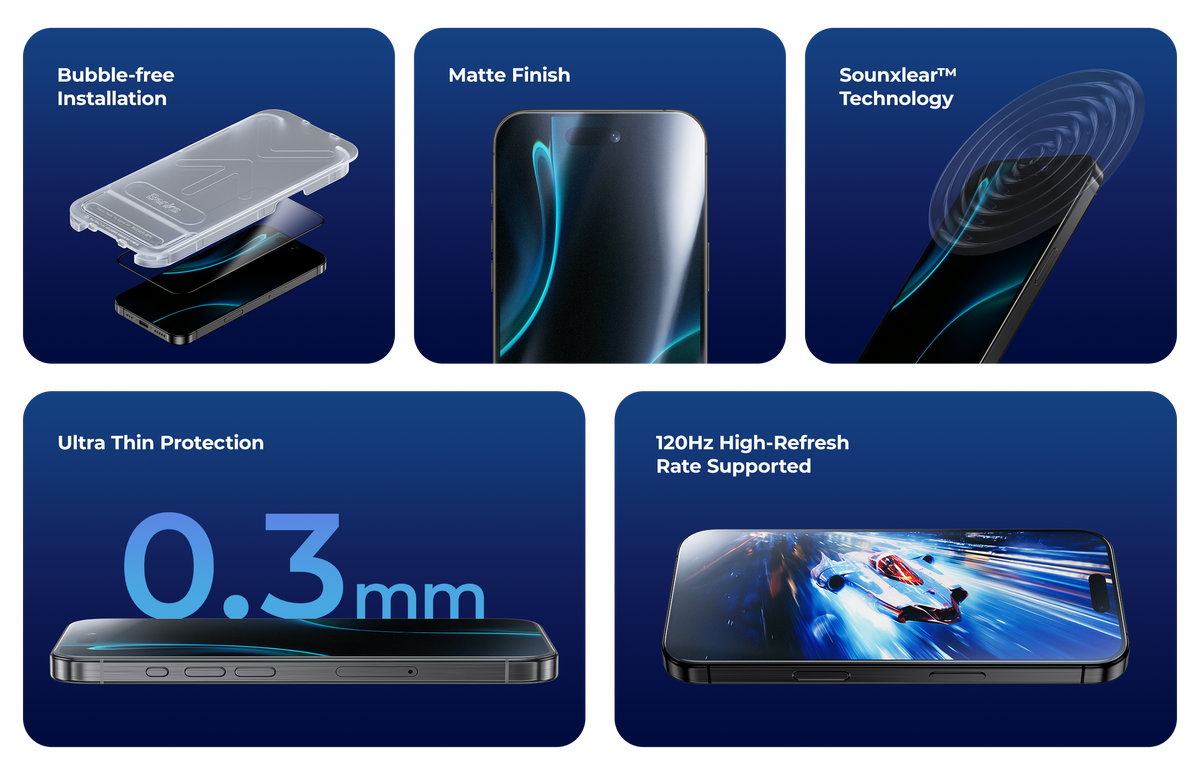
- Choose by use case: clear or sapphire for maximum clarity, privacy for crowded places, and matte for glare and fingerprint control.
- A case and a screen protector solve different problems. The protector covers the display; the case helps protect the frame, corners, and camera area.
Does iPhone 18 Pro Max Need a Screen Protector?
For most people, yes. The strongest reason is not that the iPhone 18 Pro Max display is fragile. It is that the display is expensive, exposed, and used constantly. A protector gives daily wear a replaceable surface to damage first.
You may reasonably skip one if you strongly prefer the bare-screen feel, keep the phone away from hard particles, and accept the possibility of cosmetic marks. But if you commute, travel, share a bag or pocket with other objects, work outdoors, or plan to keep the phone for several years, a protector is a sensible low-effort precaution.
What Ceramic Shield 2 Does—and Does Not Do
Apple lists a Ceramic Shield 2 front on both iPhone 18 Pro and iPhone 18 Pro Max. Apple also states that the front offers 3x better scratch resistance than iPhone 16 Pro. That is a meaningful improvement, but it is a comparative durability claim—not a promise that the display cannot be marked.
In everyday use, scratch resistance and impact protection are related but different. A surface can resist many ordinary scuffs and still be vulnerable when a hard particle is pressed or dragged across it. It can also survive many small drops yet crack after one unlucky impact on an edge or raised object.
The practical conclusion is simple: Ceramic Shield 2 reduces risk; a screen protector reduces the amount of that risk borne by the original display.

How Micro-Scratches Happen in Normal Use
Visible damage does not always come from dramatic drops. Fine marks can build gradually through normal routines:
- Dust or grit trapped between the phone and another object
- Placing the phone face-down on rough tables or counters
- Sliding the phone into a bag with cables, metal hardware, or other devices
- Repeated cleaning when hard particles remain on the surface
- Outdoor, workshop, travel, or commuting environments where debris is harder to avoid
A protector cannot make careless use harmless, but it turns many of these marks into damage on a replaceable accessory rather than on the factory display.
Will a Screen Protector Prevent Cracks?
It can help, but it cannot guarantee that the screen will not crack. A quality protector can absorb abrasion and may spread or take the force from some direct impacts. Drop outcomes still depend on height, angle, landing surface, and whether the impact reaches the glass, frame, edge, or corner.
For broader protection, pair the protector with a case that has a raised screen edge and secure corner coverage. Our guide to choosing an iPhone 18 Pro Max case explains how weight, grip, camera clearance, MagSafe alignment, and screen-protector compatibility affect the setup. You can also compare all iPhone 18 Pro Max cases.
Clear, Sapphire, Privacy, or Matte: Which Type Should You Choose?
Clear glass: best for most owners
Choose clear glass if you want the display to look and feel close to the original. It is the most straightforward option for everyday scratch protection, color clarity, and smooth touch.
Sapphire: best for premium scratch resistance
Sapphire-based protection is designed for owners who prioritize a harder, more premium protective surface. The GlassWarrior Sapphire Screen Protector for iPhone 18 Pro Max is the most relevant choice when scratch resistance and optical clarity are the main concerns.
Privacy: best for commuting and shared spaces
A privacy protector narrows the side viewing angle, helping reduce casual viewing by people nearby. That makes it useful on trains, planes, in offices, and in other crowded environments. The tradeoff is that privacy layers can make the display look darker from an angle. See the OmniWarrior Privacy Screen Protector for iPhone 18 Pro Max.
Matte or anti-glare: best for bright environments
Matte protectors reduce reflections and visible fingerprints, which can improve comfort under strong indoor lights or outdoors. The tradeoff is a slightly softer-looking image compared with high-clarity glass.
| Priority | Best starting choice | Main tradeoff |
|---|---|---|
| Original display look | Clear glass | Does not add privacy or reduce glare as much |
| Premium scratch resistance | Sapphire | Typically costs more |
| Screen privacy | Privacy glass | Darker or narrower side viewing |
| Glare and fingerprint control | Matte / anti-glare | Slightly reduced visual crispness |
To compare the available fits and finishes in one place, browse the iPhone 18 Pro Max screen protector collection.
Who Can Skip a Screen Protector?
You may decide to go without one if all of the following are true:
- You prefer the uncoated display feel above everything else
- You rarely place the phone face-down or carry it with other objects
- Your typical environment has low exposure to grit or debris
- You are comfortable with cosmetic wear and possible repair costs
Skipping a protector is a preference, not a mistake. The important part is understanding that Apple’s durability improvement lowers risk rather than removing it.
Best Protection Setup for a New iPhone 18 Pro Max
- Install the protector early. Applying it before daily use reduces the chance of trapping debris or covering an existing mark.
- Choose a compatible case. The case lip should protect the front without pressing against the protector’s edges.
- Clean carefully. Remove loose particles before wiping the screen.
- Replace damaged protection. A chipped or lifting protector can collect debris and reduce touch comfort.
If the phone’s size and weight are also part of your decision, read what the lightest case materials are for iPhone 18 Pro Max. Owners upgrading from last year’s model may also find our iPhone 18 Pro Max vs. iPhone 17 Pro Max comparison useful.
Frequently Asked Questions
Is Ceramic Shield 2 scratch-proof?
No. Apple describes improved scratch resistance, not immunity from scratches. Hard debris, pressure, and repeated contact can still mark an exposed display.
Does Apple recommend a screen protector for iPhone 18 Pro Max?
Apple specifies the phone’s Ceramic Shield 2 front but does not make a screen protector a requirement. Whether you add one depends on your environment, risk tolerance, and preference for the bare-screen feel.
Will a screen protector affect display quality?
A well-made clear protector should preserve sharpness and color closely. Privacy and matte protectors intentionally change viewing behavior: privacy narrows side visibility, while matte reduces reflections at the cost of some crispness.
Can I use a screen protector with an iPhone 18 Pro Max case?
Yes, provided both are designed for the model and the case does not push against the protector’s edges. Case compatibility matters most with edge-to-edge protectors.
Should I choose sapphire or privacy glass?
Choose sapphire when premium scratch resistance and clarity are the priority. Choose privacy glass when preventing side-angle viewing in public spaces matters more.
When should I replace the protector?
Replace it when it is cracked, chipped, lifting at the edges, interfering with touch response, or visibly worn enough to reduce viewing comfort.
The Bottom Line
The iPhone 18 Pro Max has a more scratch-resistant Ceramic Shield 2 front, but the original display is still the one surface you cannot replace cheaply or casually. For most owners, a screen protector is worthwhile because it preserves that display with a replaceable layer and lets you choose extra benefits such as privacy or glare reduction.


Hinterlasse einen Kommentar
Diese Website ist durch hCaptcha geschützt und es gelten die allgemeinen Geschäftsbedingungen und Datenschutzbestimmungen von hCaptcha.