
Is It Really Worth the Upgrade? What Early Users Are Getting Right—and Wrong
The Galaxy Z Fold 8 has arrived, and not everyone is impressed.
Some users are praising the slimmer design, wider cover display, and refined software. Others are calling it a marginal upgrade, a gimmick, or worse — a reason to hold onto the Fold 7 for another year.
So is the criticism fair? Or are expectations for foldable phones simply changing faster than the hardware can keep up?
In this guide, we break down the five biggest debates around the Fold 8, compare them with what early hands-on reviews actually found, and explain what genuinely matters before you decide to upgrade.

Criticism #1: "It Looks Too Similar to Last Year's Fold."
This one comes up in almost every thread. "Where's the redesign? It's the same phone."
For the Fold 8 Ultra — the traditional tall-format model — this is partially true. The form factor is recognizable. Samsung refined the hinge, thinned the profile to 4.1mm unfolded, and upgraded the displays. But if you're looking for a dramatically different silhouette, you won't find one.
Here's what that criticism misses.
Fold users historically care most about the things you can't photograph: weight, thickness, software fluency, hinge feel. The Fold 7 was already thinner than any previous Fold. The Fold 8 Ultra goes further. At 4.1mm unfolded, it's the thinnest book-style foldable Samsung has ever shipped. That number doesn't read as dramatic in a headline — but it's noticeable after a week in the hand.
The Ultra also upgrades the battery from 4,400mAh to 5,000mAh and charging from 25W to 45W. The Fold 7 took close to 90 minutes for a full charge. The Fold 8 Ultra cuts that roughly in half. For daily users, that's a quality-of-life change that gets felt every morning.

Is the criticism fair? For Fold 7 owners: partially. It's an evolution, not a redesign. For Fold 6 owners and earlier: the Flex Titanium display alone changes the daily experience enough to make the upgrade meaningful.
Criticism #2: Are the Camera Upgrades Enough?
The camera debate is more complicated this year because Samsung made two different decisions for two different devices.
On the Fold 8 Ultra: the main camera stays at 200MP, but the ultrawide jumps from 12MP to 50MP — a genuine and significant upgrade. Video capabilities across all cameras improve. Trusted Reviews called the Ultra's camera system a "meaningful step forward" over the Fold 7 in their hands-on.
On the Fold 8 (wide): dual 50MP cameras. No telephoto. This is where the community frustration concentrates.
The argument that keeps coming up: "A $1,899 phone should have flagship cameras." It's a reasonable position. The Fold 8 costs as much as a Galaxy S26 Ultra. The S26 Ultra has a 200MP main sensor and a 10MP periscope telephoto. The Fold 8 does not.
Samsung's counter-argument is architectural. Foldable phones have to balance camera hardware against hinge mechanism, battery placement, display engineering, and body thickness. The Fold 8's 201g weight and 9.7mm folded profile is partly possible because the camera system isn't carrying a periscope module.
For users who photograph at distance regularly — events, sports, anything requiring zoom — the Fold 8 Wide isn't the right device. The Ultra is.
For users whose photography is mostly everyday shots, the dual 50MP system performs well in good light and handles casual shooting without embarrassing itself.
Is the criticism fair? For the Fold 8 Wide: yes, the telephoto gap is real. For the Fold 8 Ultra: less so — the ultrawide upgrade is significant and the main system is class-leading for a foldable.
Criticism #3: Is the Fold 8 Wide Actually Better Than the Ultra?
This is the question generating the most discussion — because the answer splits the community more cleanly than any other.
The Fold 8 (wide) is shorter, wider, and lighter. Its 4:3 inner display opens in landscape orientation. Its 5.5-inch cover screen is more comfortable for one-handed use than any previous Fold's outer display. At $1,899, it's $200 cheaper than the Ultra — and about $100 cheaper than the Fold 7 was at launch.
The Ultra is taller, thinner when unfolded, and better equipped on cameras and battery. Its 8-inch inner display handles split-screen productivity more naturally. It's the Fold for users who know what a Fold is and want more of it.
The community divide:
| Who prefers the Fold 8 Wide | Who prefers the Ultra |
|---|---|
| First-time foldable buyers | Long-term Fold owners |
| Cover screen is a daily priority | Inner display is the main draw |
| Trouser pocket carry | Jacket or coat pocket carry |
| Casual content consumption | Structured productivity |
| Budget-conscious at this tier | Camera system matters |
The "gimmick" label that's been applied to the Fold 8 Wide largely comes from existing Fold users evaluating it against what they already have. For that group, the Ultra is the logical upgrade. For new buyers, the Fold 8 Wide offers something the category has never had: a foldable that feels like a normal phone when folded.
Neither device is better in absolute terms. They're optimized for different use cases. Samsung's decision to offer both is the more interesting story than which one wins.

Is the criticism fair? The Fold 8 Wide being called a gimmick is a legitimate reaction from users who expected a traditional Fold upgrade. It's not a fair description of the device itself — which is purpose-built for a different kind of user.
💡 Is the Galaxy Z Fold 8 a gimmick? The community debate, answered
What Reddit Users Are Actually Talking About
Strip away the headline noise and the community discussions about the Fold 8 keep returning to the same themes. Not chipset benchmarks. Not marketing language. The lived experience.
Cover display usability. Samsung Community users have been asking for a wider cover screen since the Fold 6. The narrow, tall outer display on previous Folds was consistently the most-cited daily frustration — uncomfortable for typing, awkward for one-handed scrolling, not practical in situations where opening the phone wasn't possible. The Fold 8's wider cover screen directly addresses this. It's the most consistently positive early reaction in community feedback.
Hinge feel and durability. Every time a new Fold launches, this comes up. The dual-rail hinge on the Fold 8 is a new design — thinner, with different stress distribution than the Fold 7's mechanism. Early hands-on describes it as "smooth" and "positive in feel." The long-term durability question won't be answerable for months.
Battery and charging. The Fold 7's 25W charging was the single most-criticised limitation in community discussions across its entire lifespan. The 45W on both Fold 8 models, paired with Silicon-Carbon batteries, is the improvement that generates the least controversy. Everyone agrees this was overdue.
Camera. As discussed above — the split between Ultra and Fold 8 Wide users is clear. Ultra owners get a meaningful ultrawide upgrade. Fold 8 Wide buyers accept the telephoto trade-off.
Durability perception. Foldable phones attract outsized concern about longevity because of the hinge and inner screen. The Flex Titanium display reduces crease visibility significantly, but it also raises the question of repairability — a more complex display stack may mean higher repair costs if something goes wrong.
These are the conversations that actually drive purchase decisions. Not processor comparisons.
Choosing Accessories Matters Even More for Foldables
Here's the part of the Fold 8 ownership experience that gets almost no coverage in launch-day content — and that matters a great deal six months from now.
Foldable phones have more surfaces that can be damaged than conventional smartphones. The inner display — now protected by Flex Titanium — is still ultra-thin glass, and still the most expensive single component to replace ($400–600 out of warranty on previous generations, likely higher on the Fold 8 given the more complex display stack). The hinge is the second most expensive repair ($350–500 out of warranty). The camera lenses sit on the outer back panel — the surface that faces outward in a pocket — and are in more frequent contact with abrasive surfaces than on a flat phone.
A conventional phone case wraps every edge and the back. A foldable case has to address three distinct surfaces: the outer back, the front frame, and the hinge spine — the one surface no back-only case covers.

This matters for the Fold 8 specifically because Z Fold 7 cases will not fit. The wider body, new dual-rail hinge geometry, and repositioned camera elements mean existing cases from last year's ecosystem don't transfer.
The Fold 8 Ultra's 4.1mm unfolded profile also creates tighter hinge clearance tolerances than any previous Fold — meaning cases need to be more precisely designed for the mechanism, not generically adapted.
💡 Do foldable phones need hinge protection? An honest breakdown
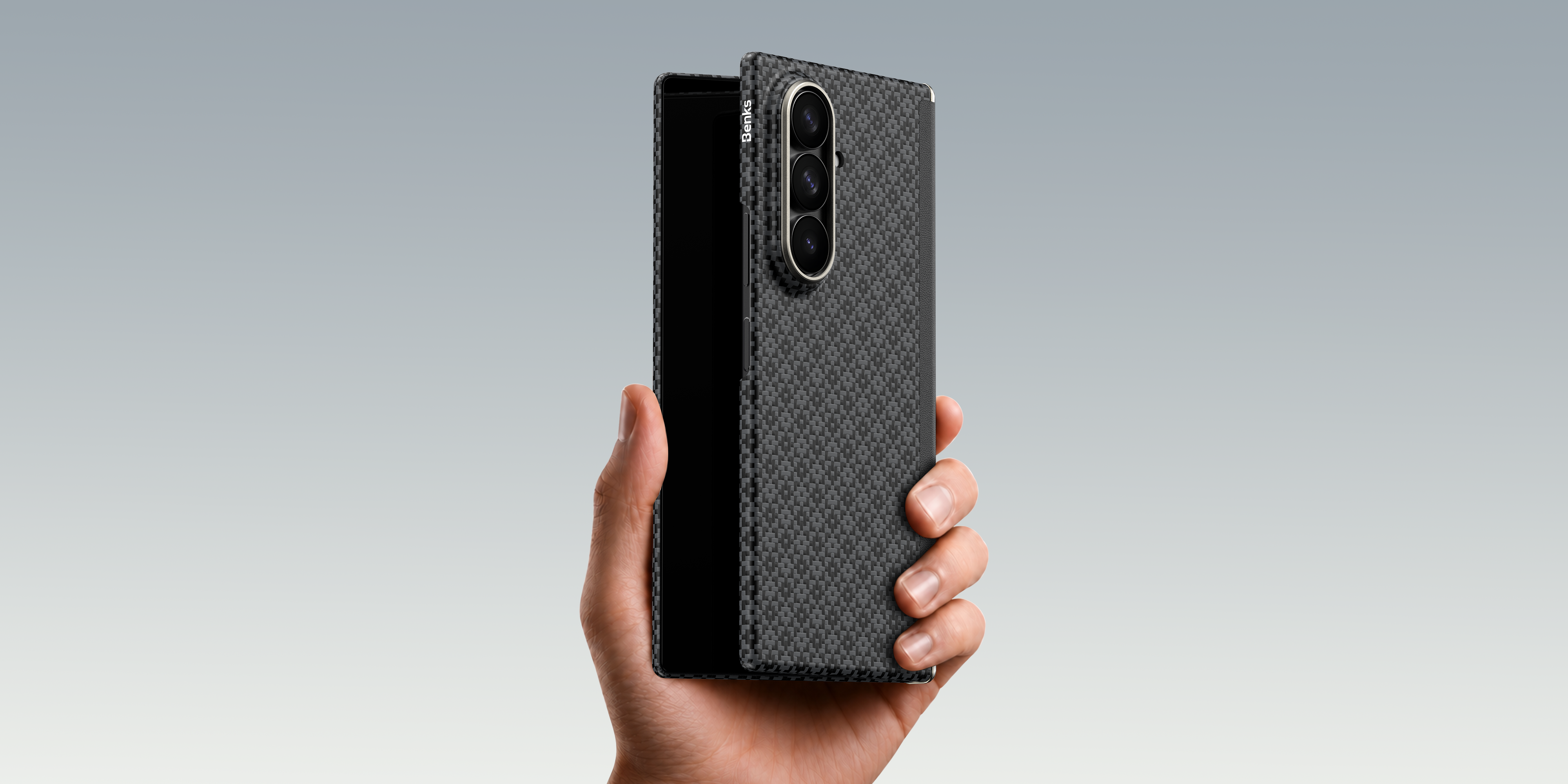
Benks' Galaxy Z Fold 8 case lineup — in both 600D DuPont™ Kevlar® and Crystal Series options — is purpose-built for the new wider dimensions of the Fold 8 and the thinner profile of the Ultra, with hinge coverage designed for the dual-rail mechanism's specific geometry.

FAQ
Is the Galaxy Z Fold 8 worth upgrading to? For Fold 7 owners: probably not unless you specifically want the wide format or the battery and charging improvements. For Fold 6 owners and earlier: yes — the Flex Titanium display, 45W charging, Silicon-Carbon battery, and significantly improved ultrawide camera represent a meaningful generational jump. For first-time foldable buyers: the Fold 8 Ultra is the safer choice; try the Fold 8 Wide in person before committing.
Should I buy the Fold 8 or keep my Fold 7? Keep your Fold 7 unless one of the following applies: the 45W charging improvement matters significantly to you (the Fold 7's 25W was its most-criticized limitation), you want to try the new wider form factor, or the Flex Titanium crease reduction is important to your experience. The chipset is the same. The camera improvement on the main sensor is minimal. The quality-of-life gains are real but not urgent for a one-year-old device.
Does the Galaxy Z Fold 8 have a better camera than the Fold 7? Yes, on the ultrawide — jumping from 12MP to 50MP is a genuine improvement. On the main sensor, both the Fold 8 and Fold 8 Ultra use 200MP class sensors with the same generation of processing. The Fold 8 (wide) drops the telephoto entirely, which is a step back for zoom photography. The Ultra retains the 3x optical telephoto and represents the more complete camera upgrade.
Is the Fold 8 Wide better than the Fold 8 Ultra? Neither is objectively better. The Fold 8 Wide is better for users who want a more phone-like folded experience, lighter weight, and a wider cover screen. The Fold 8 Ultra is better for photography, productivity multitasking, and users who prefer the traditional tall Fold format. The $200 price difference is real; whether it's worth paying depends on whether you need the camera and form factor the Ultra provides.
Is hinge protection necessary for the Galaxy Z Fold 8? For most daily users, yes. The hinge is the most expensive component to repair ($350–500 out of warranty) and the one surface no back-only case covers. The Fold 8's new dual-rail hinge is a different mechanism from the Fold 7's, meaning cases need to be specifically designed for its geometry. A case that protects the hinge from the start costs less than a single repair.
What's the best Galaxy Z Fold 8 case? Look for a case that covers three surfaces: back panel, front frame, and hinge spine — as a coordinated set, not separate pieces. Rigid materials like 600D aramid fiber (Kevlar®) maintain structural geometry around the hinge aperture better than soft TPU over time. For users who want the phone's finish visible, an anti-yellowing Crystal case is the alternative. Benks offers both for the Fold 8 and Fold 8 Ultra, designed to the specific dimensions of each device.


Hinterlasse einen Kommentar
Diese Website ist durch hCaptcha geschützt und es gelten die allgemeinen Geschäftsbedingungen und Datenschutzbestimmungen von hCaptcha.