
Foldable Phone Hinge Protection: Do You Actually Need It?
Modern foldable phones have much stronger hinges than their early predecessors. Samsung rates the Galaxy Z Fold 7 hinge for 200,000 open-and-close cycles. The Z Fold 8 introduces a dual-rail mechanism that distributes stress more evenly across the joint.
So the question is worth asking honestly: if the hinge itself is this reliable, does a case still need to protect it?
The answer depends less on Samsung's engineering and more on how you actually use the phone.
Why the Hinge Deserves Attention
Most phone components are static. The display doesn't move. The frame holds its shape. A conventional case wraps around these surfaces and protects them from impact.
The hinge is different.
It opens and closes hundreds of times per day. It contains dozens of precisely-machined components — gear assemblies, spine rails, torsion elements — all operating in close tolerances. It's the one part of a foldable that experiences constant, repetitive mechanical stress rather than occasional accidental impact.

Internal components of a Galaxy Z Fold hinge showing gear assembly and rail system.
Foldable hinges contain dozens of precision components — a fundamentally different protection challenge from a static screen.
That complexity has a cost consequence. Samsung charges $350–$500 for hinge repairs out of warranty. That's a repair bill that can approach or exceed a year's worth of case protection for most users.
The hinge won't fail under normal use. But when something goes wrong near it, the consequences are significant.
💡 For a broader look at foldable durability: Do Fold Phones Break Easily?
The Arguments Against Hinge Protection
The opposing view is worth taking seriously — because it comes from experienced Fold users, not first-time buyers.
Many long-term owners report using their devices through multiple generations without hinge protection, without hinge problems. Their reasoning: the hinge is recessed when folded, the mechanism is self-contained, and early hinge-guard cases introduced their own problems — friction at the fold, restricted opening angle, added spine bulk.
They're right about the early designs. First-generation foldable cases with hard hinge guards were often clunky. Some didn't clear the hinge geometry precisely enough and created pressure on the mechanism rather than protecting it.
There's also the profile argument. Foldable phones are already thicker when folded than conventional phones. Any case that adds material around the hinge spine pushes that number higher — and for users who specifically chose the Fold form factor for portability, every extra millimeter matters.
For light users — someone who uses their Fold mostly at home, opens it deliberately, and keeps it away from dusty or gritty environments — skipping hinge protection is a defensible choice.
The Arguments For Hinge Protection
That said, most Fold users don't fit that description.

Pocket carry, bag travel, and frequent opening are the conditions where hinge exposure accumulates.
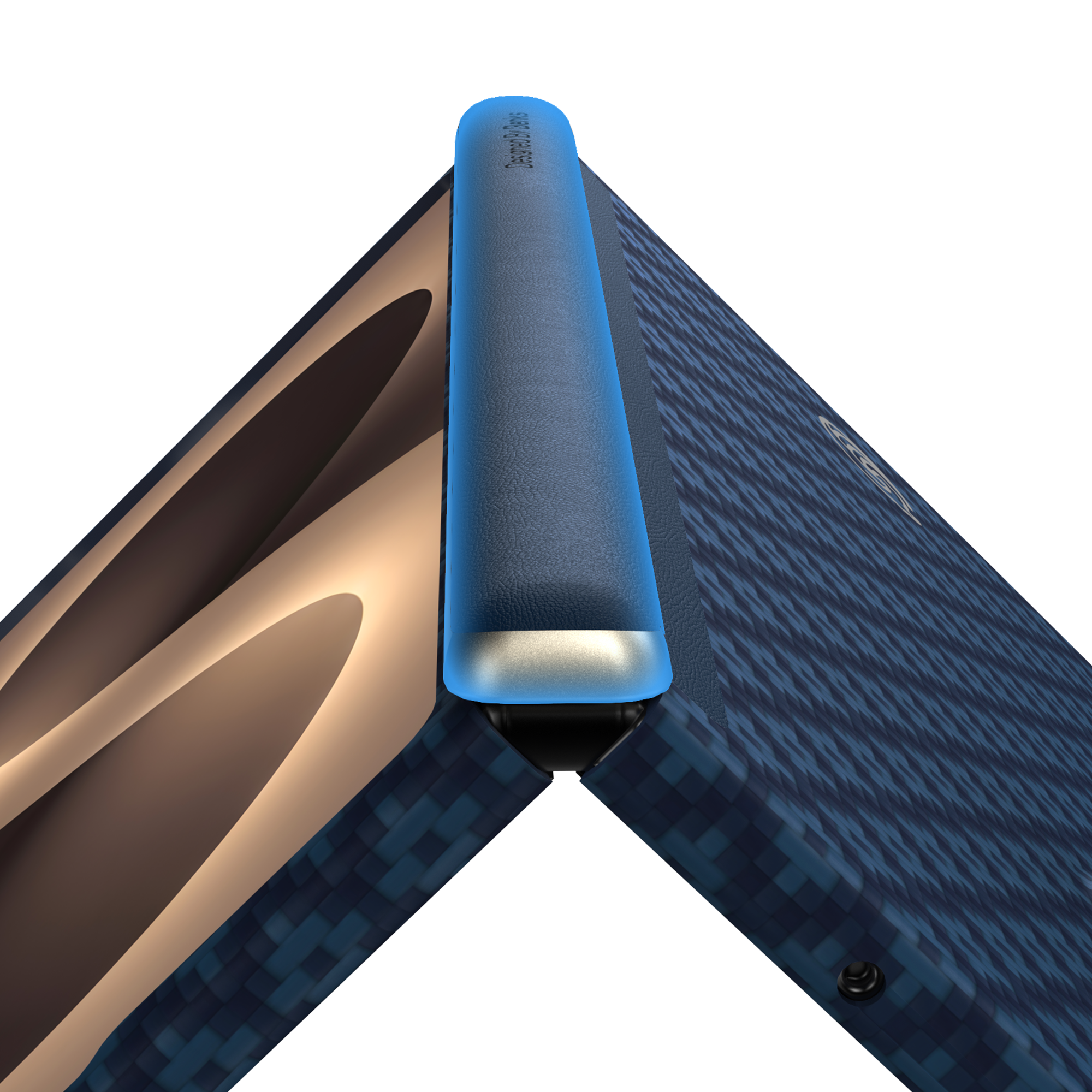
The hinge is the only exposed edge. A conventional flat case wraps every edge of the phone. On a foldable, the hinge spine runs the full height of the device, and no back-only case touches it. Debris, pocket grit, and contact wear happen at that spine every day.
Hinge-first drops happen. Transitioning between folded and open positions creates grip scenarios that flat phones don't have. When a Fold drops during that transition, it doesn't always land on a corner or face — a spine-down impact is plausible, and it's exactly what a back-only case doesn't address.
Fine particles accumulate over time. The hinge mechanism operates in close tolerances. Dust and fine grit don't cause immediate failure, but they can accelerate wear on gear surfaces over months and years. A case that provides coverage at the hinge aperture reduces the rate at which debris enters — even without sealing the hinge completely.
The cost equation is asymmetric. A $1,900 phone with a $350–500 hinge repair out of warranty puts the value of a $60–100 case in clear perspective.
Has the Bulk Problem Been Solved?
Yes — at least for premium materials.
Early foldable cases with hinge protection were designed around the hinge rather than with it. The results were predictable: rigid bumpers that created friction, TPU extensions that flopped, hard guard plates that added millimeters of unnecessary thickness at the spine.
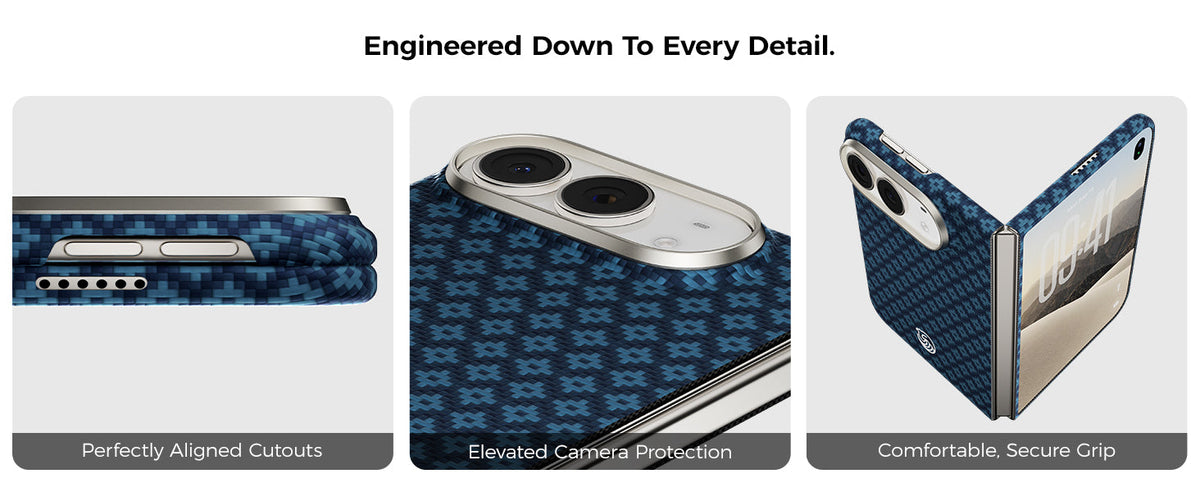
Modern aramid fiber cases take a different approach. The material achieves structural rigidity at thin cross-sections that soft polymers cannot, which means meaningful coverage at the hinge area without the extra material bulk. Aramid cases typically add 0.5–0.8mm to the folded profile — barely perceptible in the hand.
 Modern aramid fiber cases deliver hinge coverage at profiles that were impossible with first-generation designs.
💡 Comparing case materials for the Z Fold 7: Best Material for a Slim Galaxy Z Fold 7 Case
Who Actually Needs Hinge Protection?
| User Type | Hinge Exposure | Recommendation |
|---|---|---|
| Office worker, desk-based use | Low | Optional |
| Daily commuter, pocket carry | Medium | Recommended |
| Frequent traveler, varied environments | Medium–High | Recommended |
| Outdoor or field use | High | Highly recommended |
| Users who drop their phone regularly | High | Highly recommended |
| Light home user, stable environment | Low | Optional |
The critical variable isn't the hinge's rated durability — it's how much incidental exposure the hinge faces in your daily life. A hinge rated for 200,000 cycles in a controlled lab test encounters no debris, no drops, no pocket pressure. Real-world use introduces variables that lab specs don't capture.
What to Look for in a Hinge Protection Case
A few factors separate effective hinge protection from cases that create new problems.
Precise hinge geometry. A case that doesn't account for the exact hinge dimensions of your specific device will restrict fold angle or leave the spine uncovered. Z Fold 7 cases won't fit the Z Fold 8 — dimensions, hinge geometry, and button positions all differ.
💡 Your Z Fold 7 Cases Won't Fit the Fold 8 — Here's What Will
Material rigidity at low thickness. Soft materials need more thickness to provide equivalent structural coverage. For hinge protection specifically — where added spine width directly affects pocket profile — material choice matters more than it does for flat surfaces.
Wireless compatibility. Aramid fiber is electrically non-conductive, so it doesn't interfere with NFC, 5G, or wireless charging. Metal hinge guard hardware requires careful placement to avoid signal interference.
Full-set coverage. Back panel, front frame, and hinge covered by a single coordinated system performs better than mixing components from different sources.
💡 For background on why aramid fiber properties matter: Read This Before You Buy an Aramid Fiber Case
How Benks Approaches Hinge Protection

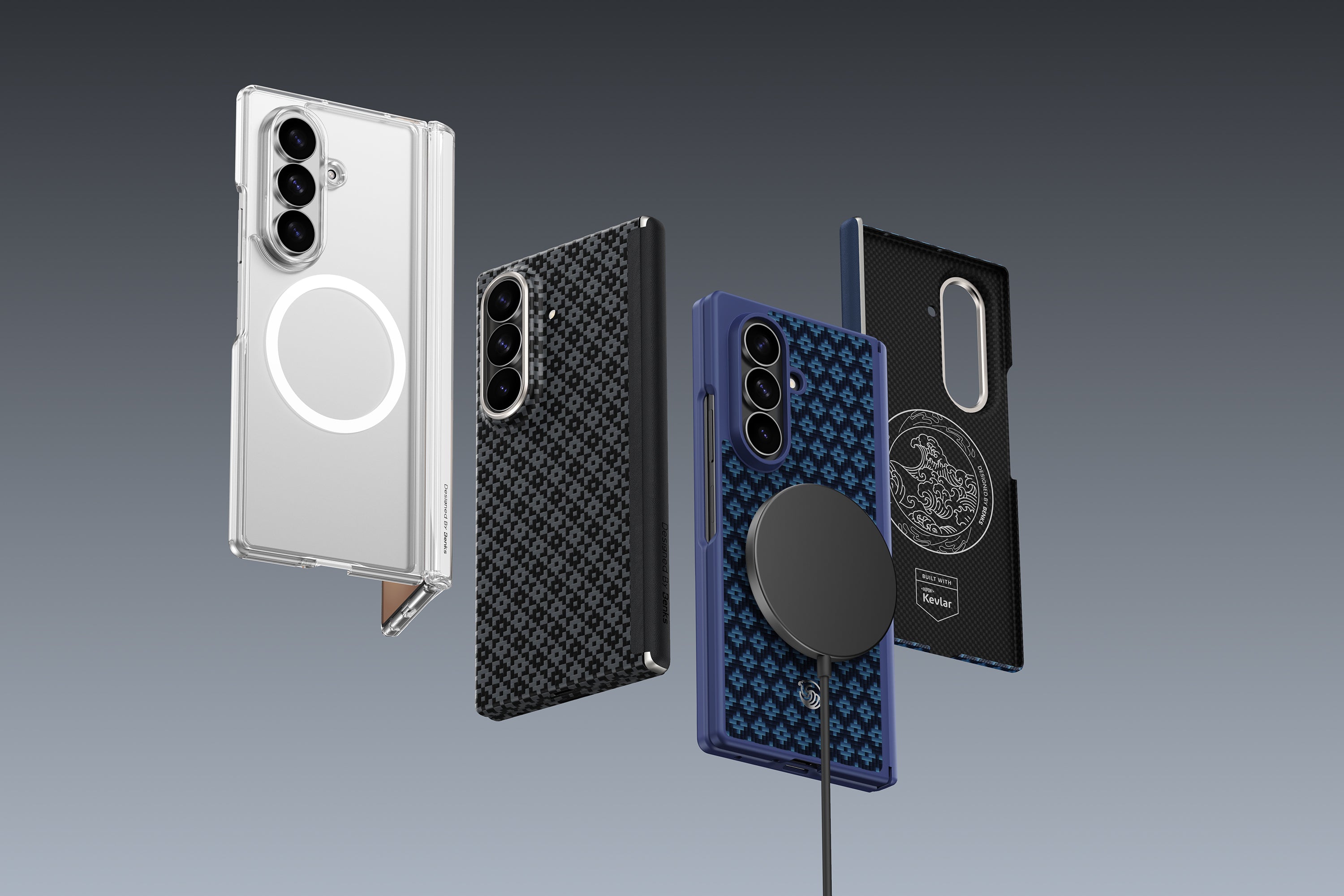
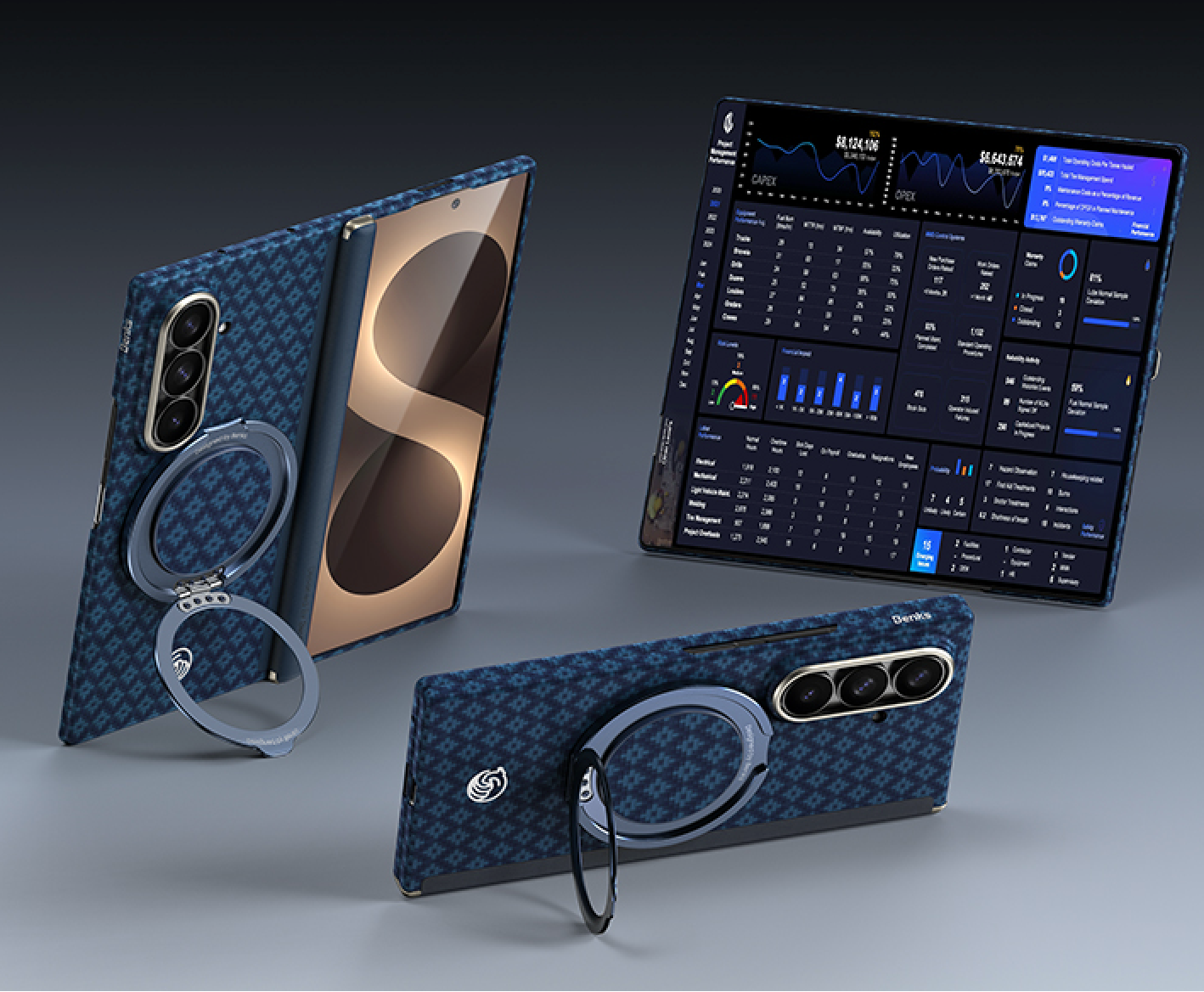
The Benks Grand Combo series addresses back panel, front frame, and hinge as a single coordinated system.
Benks designs every Galaxy Z Fold case around one principle: a case that leaves the hinge exposed isn't a complete case.

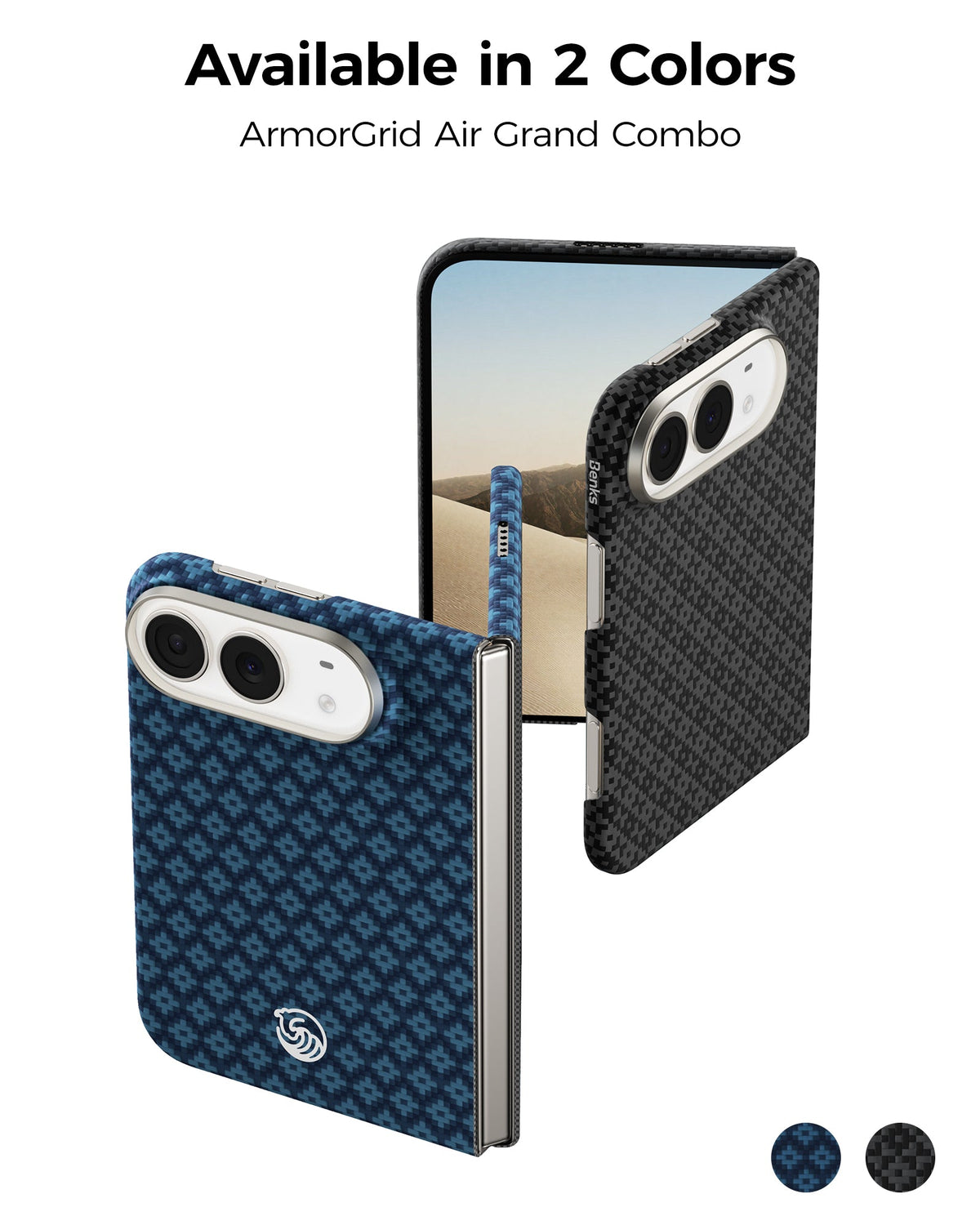
The Grand Combo series for both Z Fold 7 and Z Fold 8 is a three-component system — back case, front frame, and hinge protector — built from 600D DuPont™ Kevlar® fiber. The 600D weave is a denser construction than standard aramid fiber, producing a thinner wall with equivalent structural performance.
💡 On 600D vs 1500D Kevlar construction: What's the Difference Between 600D and 1500D Kevlar Fibers?
The hinge cutout is laser-precision cut to each device's geometry, allowing full range of fold motion without case interference. The aramid construction is non-conductive throughout, so magnetic charging, NFC, and 5G function normally.
The design intent is straightforward: reduce the incidental exposure the hinge encounters outside normal use — debris, drops, pocket wear — so the hinge operates within the parameters it was designed for, for longer.
Conclusion
Hinge protection isn't mandatory for every Fold owner. Light users in controlled environments have a reasonable case for skipping it.
For most people — commuters, travelers, frequent openers, anyone who regularly carries their phone in mixed environments — the argument for covering the hinge holds up. It's the only side of the phone a back case doesn't touch. Modern slim aramid designs have solved the bulk problem that made early hinge guards unpopular. And at $60–100 against a $1,900 device and $350–500 in potential repair costs, the protection-to-cost ratio is clear.
Whether you choose the Z Fold 7 or Z Fold 8, protecting the hinge from day one costs less than fixing it after an incident — and preserves both the phone's function and its resale value over a two-to-three year ownership cycle.
🔗 Galaxy Z Fold 7 cases — Benks 🔗 Galaxy Z Fold 8 cases — Benks
FAQ
Is hinge protection necessary for a Galaxy Z Fold? Not strictly, but it's worth considering for most users. The argument isn't that the hinge will fail under normal use — it almost certainly won't. It's that the hinge spine is the one surface no back-only case covers, and hinge repairs run $350–500 out of warranty. For daily commuters and heavy users, the protection-to-cost ratio is favorable.
Does hinge protection scratch or damage the hinge mechanism? A well-designed case with hinge coverage should not contact the mechanism directly. The protection is at the exterior spine. The risk comes from imprecise cutouts that press against the hinge during opening — laser-precision geometry, as used in premium aramid cases, eliminates this.
Are hinge protection cases too bulky? Early designs were. Modern aramid fiber cases add approximately 0.5–0.8mm to the folded profile — barely noticeable in hand. Material rigidity at thin cross-sections is what makes this possible.
What material is best for a foldable hinge protection case? Aramid fiber (Kevlar®) — structural rigidity at low thickness, no long-term deformation, electrically non-conductive so it doesn't affect wireless charging or 5G. For hinge coverage specifically, rigidity matters more than for flat surfaces, since deforming materials gradually lose their geometric precision around the hinge aperture.
Will Z Fold 7 cases fit the Z Fold 8? No. Every key dimension differs — wider inner screen, thinner hinge, repositioned buttons, revised camera geometry. Buy cases specifically made for your device generation.



Leave a comment
This site is protected by hCaptcha and the hCaptcha Privacy Policy and Terms of Service apply.