
iPhone Ultra: What Early Users Love — And the One Thing That Can Ruin It
Two weeks before Apple's September 9 event, Mark Gurman published something unusual in his Bloomberg Power On newsletter.
He'd spoken to several people inside Apple who had already used the iPhone Ultra. And he reported three specific things they liked about it — not Apple marketing language, not spec claims, but actual impressions from people who'd held the device and used it.
Those three things are worth understanding. Because they're also the exact three things most at risk if you get the protection wrong on day one.
What People Who've Used It Actually Said
1. "How well it fits in a pocket"
This was the first thing. Not the display. Not the camera. The pocket fit.
That sounds trivial until you understand the context. Every book-style foldable since 2019 has had a pocket problem. The Galaxy Z Fold lineup — excellent as it's become — has always been noticeably bulky when folded. Early Folds were 17mm thick. The Fold 8 Ultra at 8.9mm folded is genuinely impressive engineering. But it still registers differently in a trouser pocket than a flat phone.
Reports put the iPhone Ultra at approximately 9.5mm folded — similar to the Fold 8. What changes the equation is the format. The iPhone Ultra uses a shorter, wider 4:3 passport proportions. Less tall than a traditional foldable. That shape sits differently in a front trouser pocket where height matters more than width.
The people who've used it noticed. That means pocket comfort is something Apple specifically optimized for — and it will be the first thing most buyers feel in the first week.
The protection implication: a case that adds significant bulk works directly against this. Every extra millimeter and every extra gram erodes the quality of life that made the pocket experience stand out. This is why material choice for an iPhone Ultra case matters more than it does for a flat iPhone.
2. "The durability of the hinge"
The second thing people mentioned was the hinge.
Hinge durability has been the primary anxiety driving foldable hesitation since the original Galaxy Fold launched in 2019 — a device that started failing at the hinge within days of reviewers getting their hands on it. Samsung has spent seven generations solving that problem. Apple reportedly uses a titanium-reinforced liquid metal hinge — the same liquid metal alloy in Apple's SIM ejection tools, known for hardness and corrosion resistance.
The people who used the iPhone Ultra came away with confidence in it.
What doesn't show up in a brief hands-on: what happens to the hinge over 18 months of daily use. The mechanism is exposed to repeated open-and-close cycles under real-world conditions — not lab testing. Fine particles and humidity cycling affect the lubrication inside the mechanism over time. None of this is dramatic. All of it accumulates.
The honest message: Apple's titanium-reinforced hinge is impressive engineering. Treating the device with care — not forcing it closed, not carrying it with abrasive objects pressing against the hinge gap — extends that lifespan. The hinge is durable. It's not indestructible.
3. "The new iPad-like app layouts"
The third thing is what makes the iPhone Ultra more than a foldable novelty.
Apple has reportedly revamped iOS apps specifically for the 7.8-inch inner display — layouts that look and function like iPad apps, with multitasking reportedly simpler than on iPad. Side-by-side apps. Full use of the wider canvas. Developers given tools to redesign for the format.
This is the use case that makes a foldable worth carrying daily rather than occasionally. When opening the phone gives you something meaningfully more useful than the outer screen — not just bigger, but genuinely different — the weight and cost justify themselves in practice.
Protecting that inner display is protecting the feature that makes the device worth buying.
The Pain Points Nobody Mentions Until It's Too Late
The inner display is not like iPhone glass
Ceramic Shield has made flat iPhones meaningfully scratch-resistant. The Mohs hardness of the outer iPhone glass is in the 6–7 range — resistant to keys, coins, and most everyday abrasion.
The iPhone Ultra's inner folding display uses ultra-thin glass (UTG) — a different material that flexes. The trade-off is scratch resistance at approximately Mohs level 2 — softer than a fingernail by a narrow margin, and significantly softer than any flat iPhone screen. The fine grit at the bottom of most pockets is enough to cause visible surface damage.
Apple will ship the iPhone Ultra with a factory-applied protective film on the inner display. This is not packaging. It is a functional component of the display assembly. Removing it is one of the most expensive mistakes a new foldable owner can make — it voids the inner display warranty and exposes the UTG directly.
Tempered glass cannot be applied to the inner display. The fold radius is 3–4mm. Rigid glass cracks at that radius.
💡 Galaxy Z Fold 8 screen protector guide — the same inner screen rules apply to iPhone Ultra
The case ecosystem starts from zero
Every iPhone Ultra case available at launch will be built from dummy unit measurements, not Apple's confirmed specifications. Cases built from pre-announcement dimensions risk camera cutout misalignment, hinge clearance errors, and button positioning issues.
The right approach: wait until September 9 confirms dimensions, then order from manufacturers who build from Apple's confirmed specifications — not adapted from Samsung Fold templates.
Why the Case Decision Matters More at $2,000+
Most iPhone users buy a case because dropping their phone is inconvenient. iPhone Ultra buyers have a specific set of vulnerabilities — and the cost of getting it wrong is higher.
The inner display is the most expensive component to replace on any foldable. On current Samsung Fold models, out-of-warranty inner screen replacement runs $400–600. The hinge is the second most expensive: $350–500. Neither is covered by the standard warranty for accidental damage.
A $2,000+ phone with $1,000+ of repair exposure on its two most vulnerable components needs a case. The question is which kind.
The case needs to do two things well:
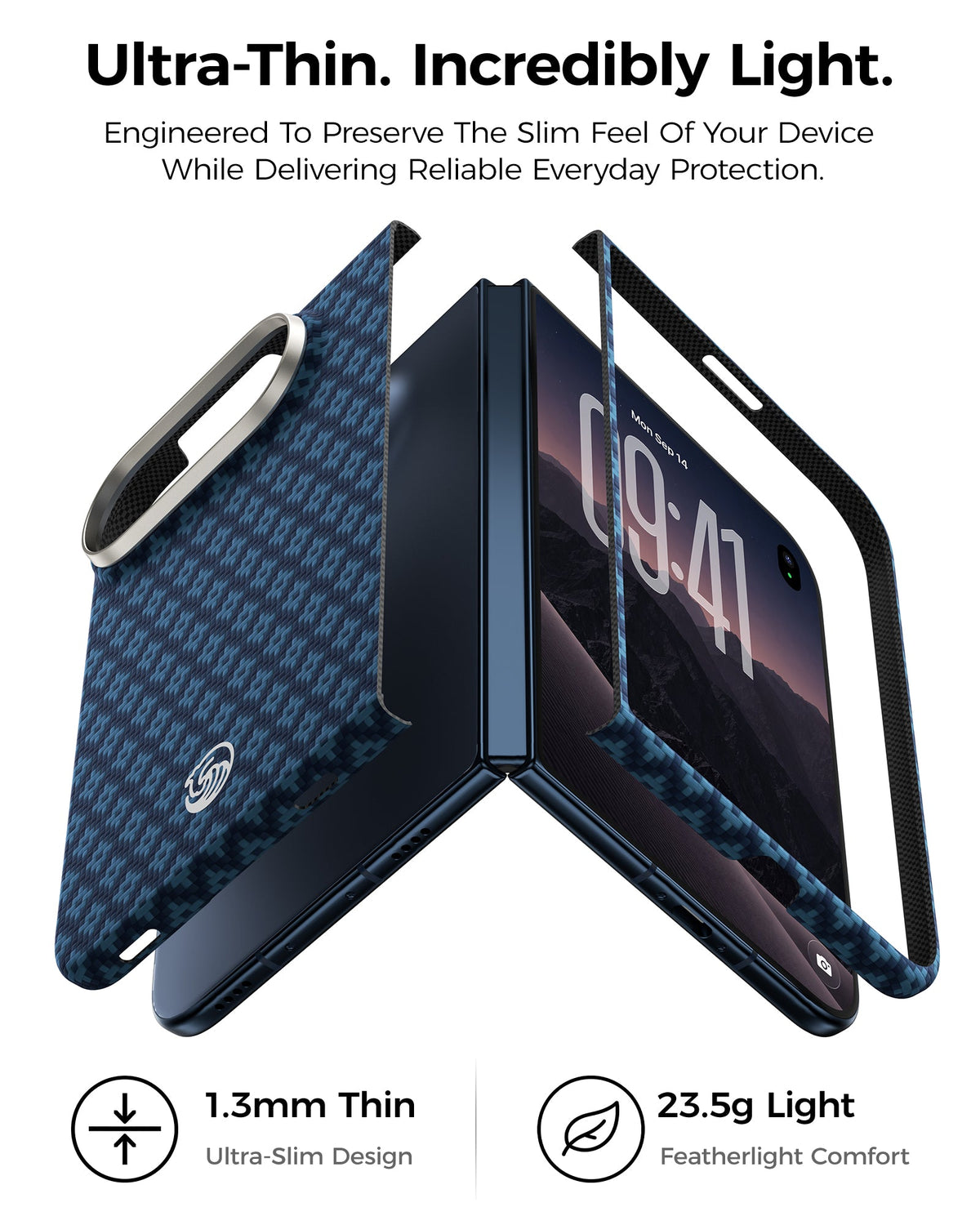
Not add significant bulk. The pocket fit that impressed early testers requires the phone to stay close to its native dimensions. A thick TPU case adds 30–50g and 2–3mm — eroding both the weight and the profile that made that pocket experience stand out.
Maintain structural precision over time. Camera cutouts and button apertures need to remain accurate after 18 months. Soft polymers deform under heat and daily pressure, loosening tolerances. Rigid materials hold their geometry.
Why Kevlar® Fits This Specific Use Case
600D DuPont™ Kevlar® at 1.0mm wall thickness handles all three simultaneously.
The strength-to-weight ratio of aramid fiber means meaningful structural protection at a thickness that adds almost nothing to the phone's profile. The material doesn't deform under heat or pressure — the hinge cutout that fits correctly on day one fits the same way in month 18. It doesn't yellow under UV exposure, which matters when the case will be in use for two or more years.
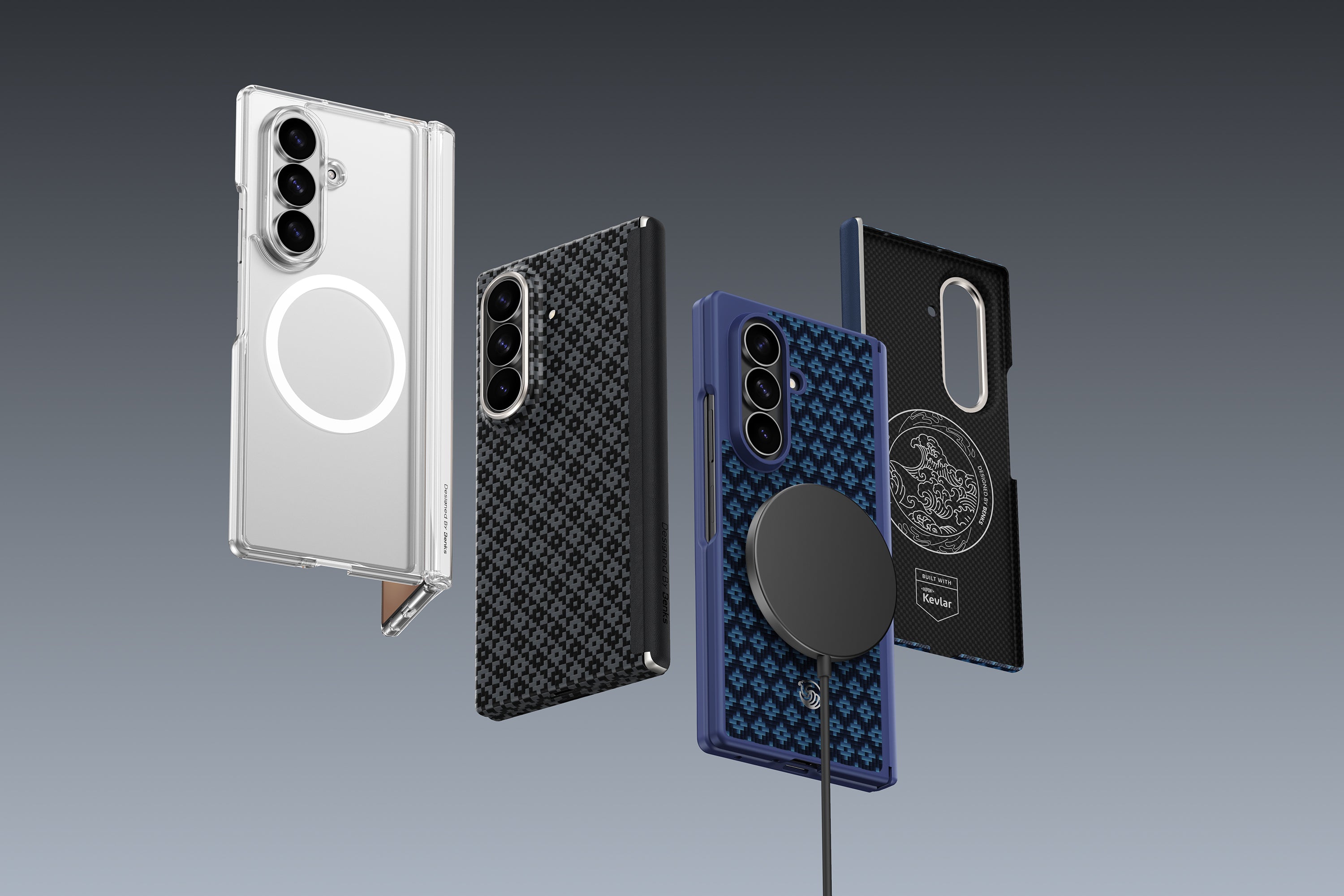
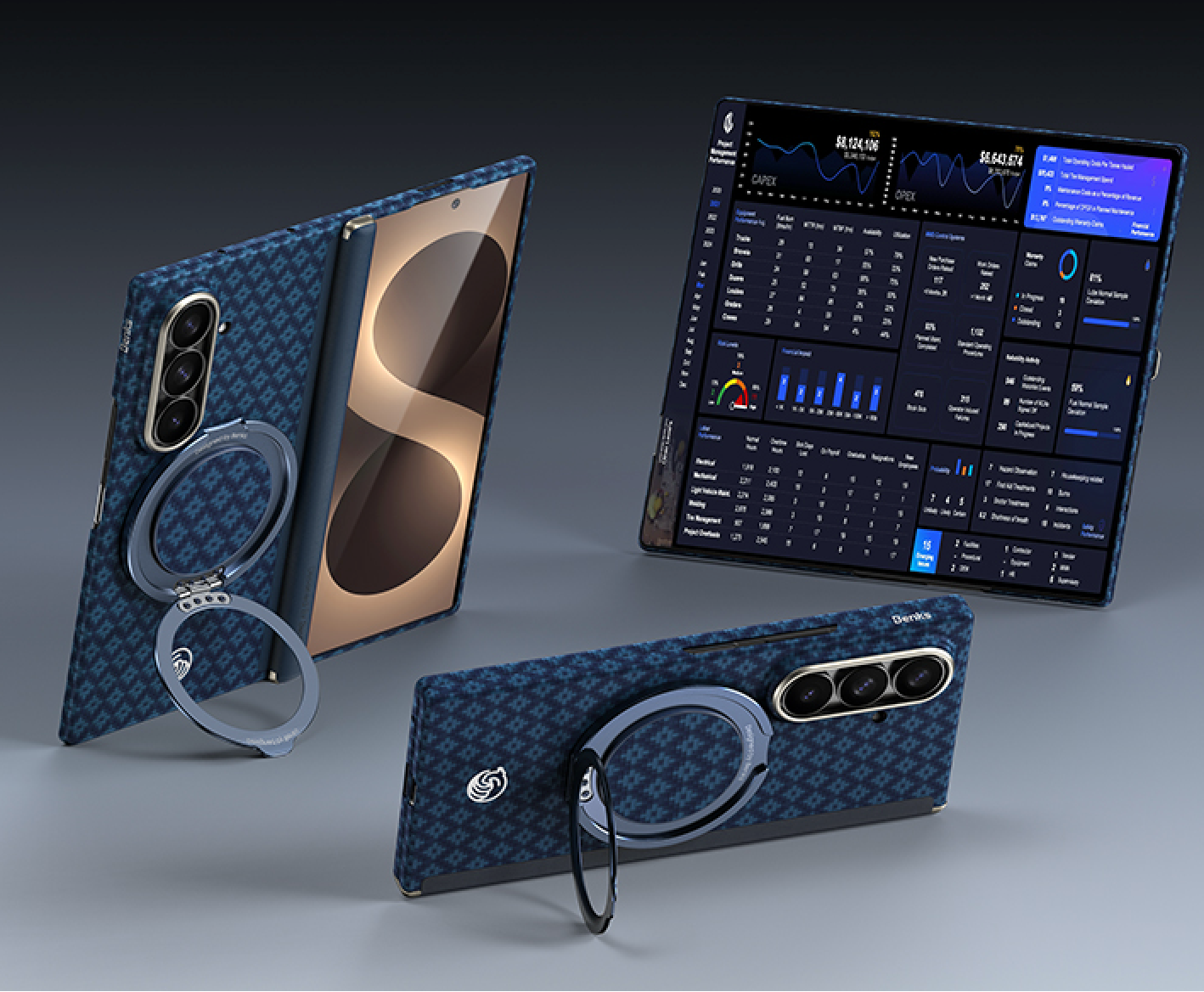
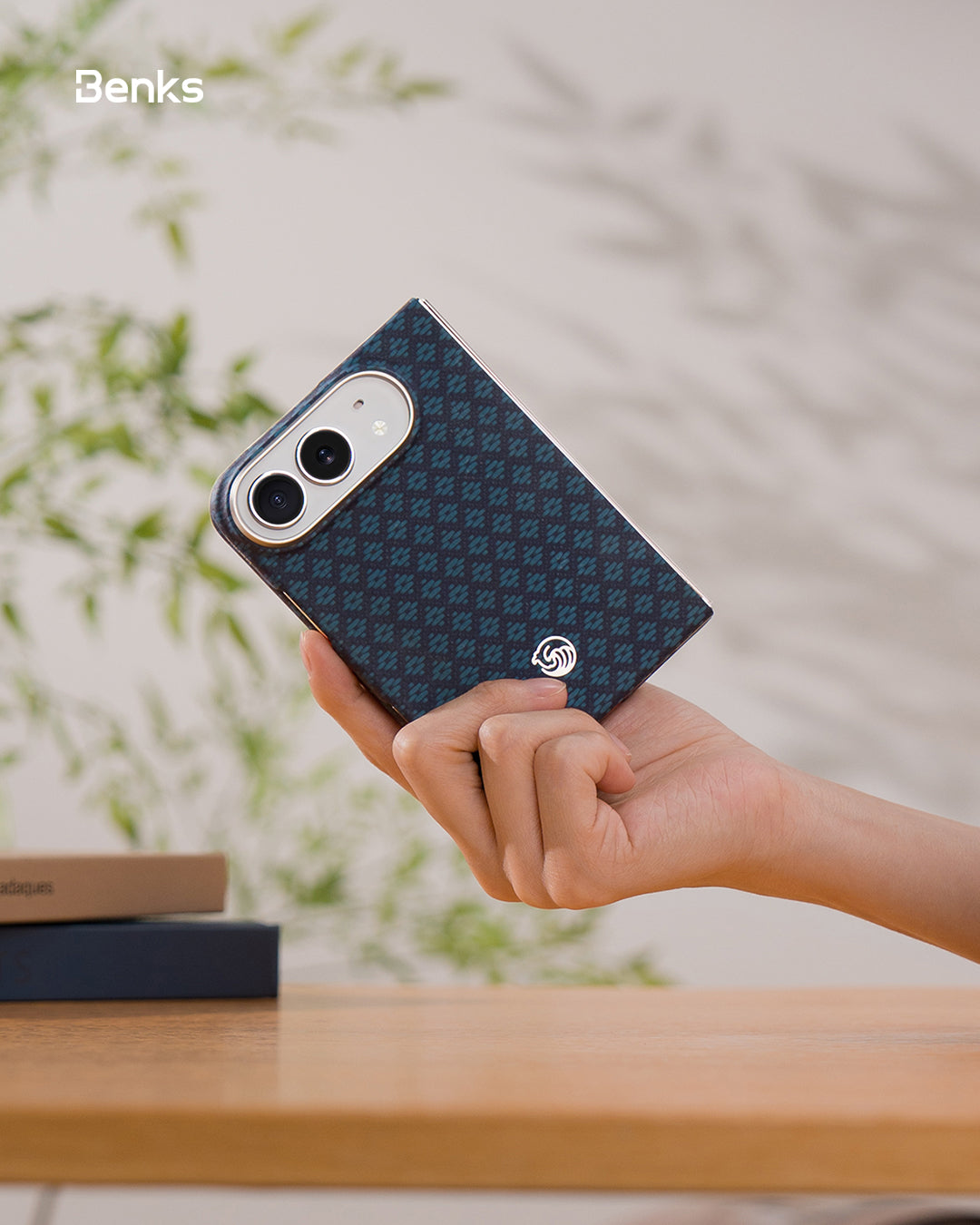
Weight addition is measured in grams, not tens of grams. The Benks ArmorGrid Air iPhone Ultra case is built specifically for Apple's first foldable — not adapted from a Samsung Fold template — with precise cutouts for the iPhone Ultra's dual-camera array, raised camera protection, and MagSafe compatibility for the full magnetic accessory ecosystem.

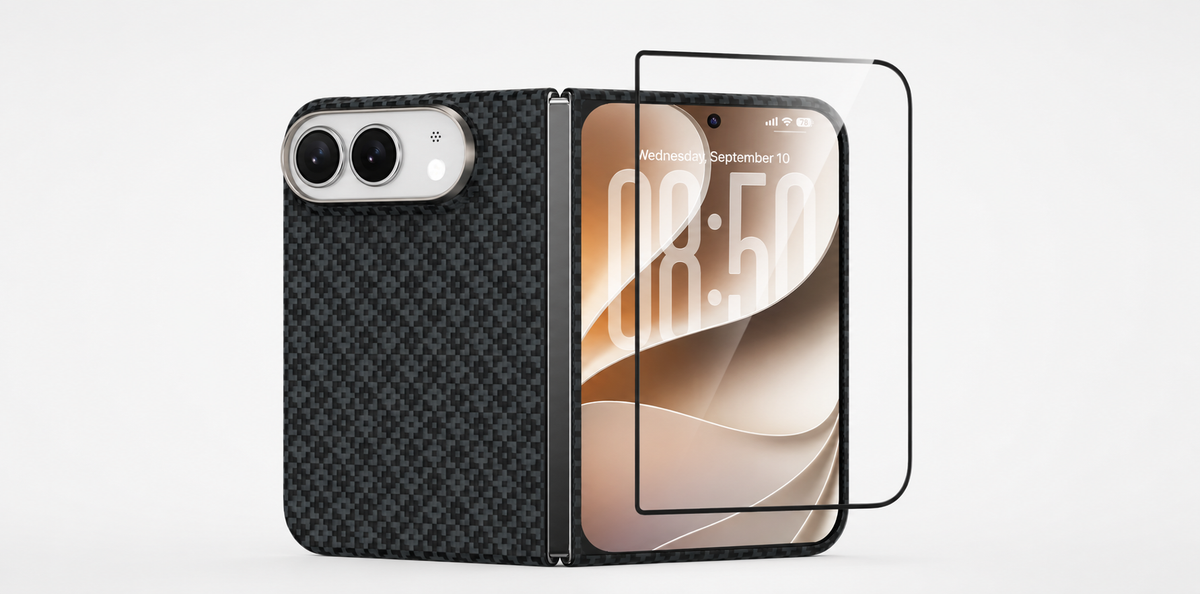
Benks ArmorGrid Air case on iPhone Ultra showing slim Kevlar profile.
🔗 Benks iPhone Ultra cases — ArmorGrid Air Kevlar® protection engineered for Apple's first foldable
The Day-One Setup
| Surface | What to Do |
|---|---|
| Inner display | Preserve Apple's factory film; never remove, never add tempered glass |
| Outer display | 9H tempered glass cut for iPhone Ultra outer display dimensions |
| Camera | Raised camera surround in the case |
| Body | Slim Kevlar® case covering both halves |
The outer display protector and case should be ordered immediately after September 9 when Apple confirms dimensions. The inner display needs nothing except preservation of what Apple already applied.
💡 Why Kevlar® is the right material for a premium phone case
FAQ
Does the iPhone Ultra need a special case? Yes. The inner folding display, two-part body, and camera module each have vulnerabilities a standard flat iPhone case wasn't designed to address. The case must be purpose-built for the iPhone Ultra's specific dimensions and form factor.
Can I use a regular iPhone case on the iPhone Ultra? No. The iPhone Ultra's two-part body and camera configuration are physically incompatible with any flat iPhone case. A foldable phone needs a case designed around its specific form factor.
What happens if I remove the factory film on the inner display? The inner display warranty is voided immediately, and the ultra-thin glass beneath is exposed to direct surface damage. This is irreversible. The factory film must not be removed.
Is Kevlar® better than TPU for a foldable case? For foldables specifically, yes — because Kevlar® maintains its structural precision and cutout geometry over time. Soft polymers deform under heat and pressure, causing camera and button apertures to loosen. At equivalent protection levels, Kevlar® is also lighter. On a phone already heavier than any flat iPhone, that difference is felt in daily carry.
When should I buy an iPhone Ultra case? After September 9, once Apple confirms dimensions. Cases built from pre-announcement dummy units risk misaligned cutouts. Buy from manufacturers building from Apple's confirmed specifications.
Published by Remy Guo · August 2026
Note: iPhone Ultra specifications have not been officially confirmed by Apple. All figures are based on leaks and reports as of August 26, 2026.
Sources: Mark Gurman / Bloomberg Power On (August 23, 2026) · 9to5Mac (August 23, 2026) · PhoneArena (August 2026) · MacRumors · Back Market roundup · MacDailyNews (August 24, 2026)


Leave a comment
This site is protected by hCaptcha and the hCaptcha Privacy Policy and Terms of Service apply.