
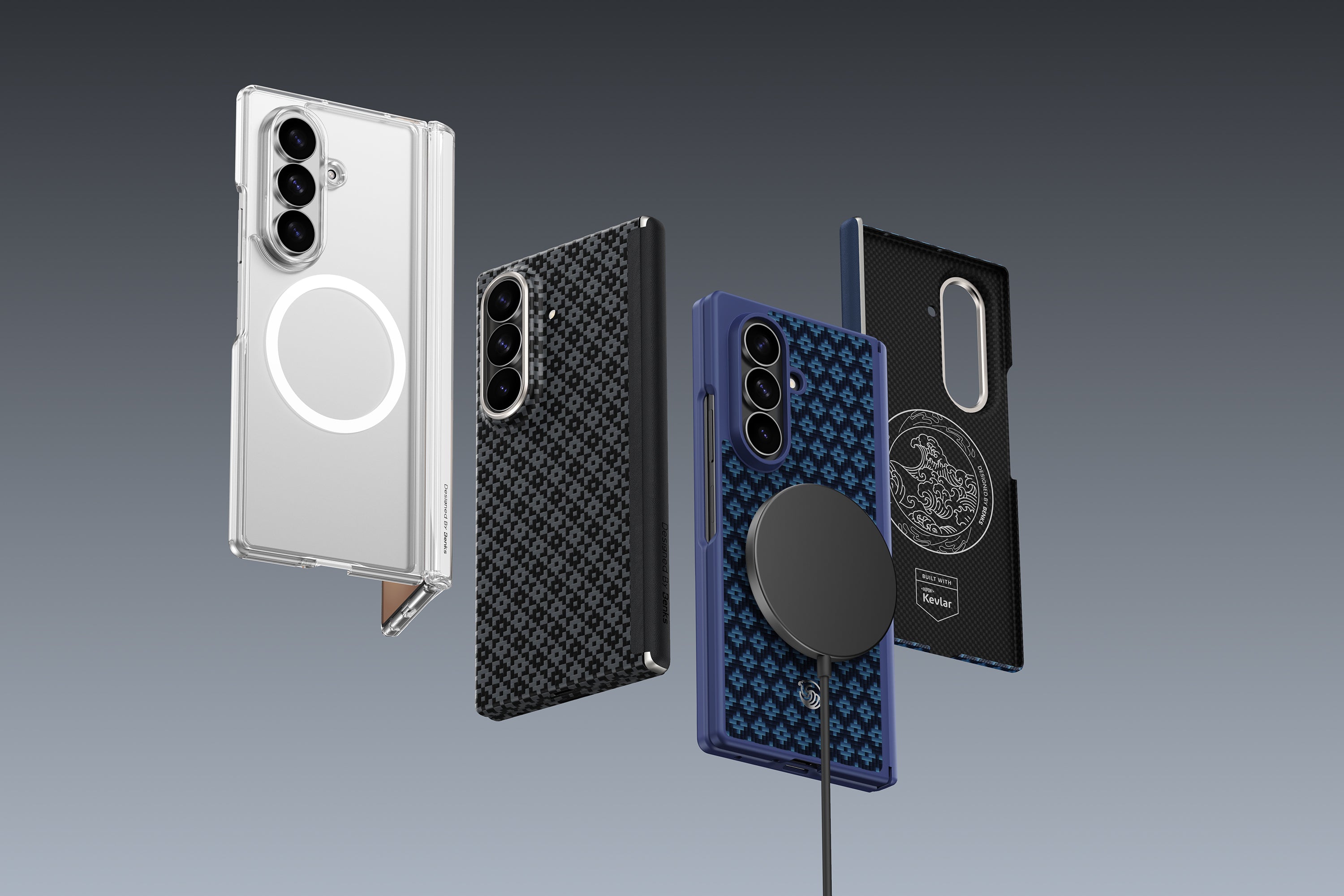

Article: Does iPhone Duo Really Need Hinge Protection? What Foldable Owners Should Know
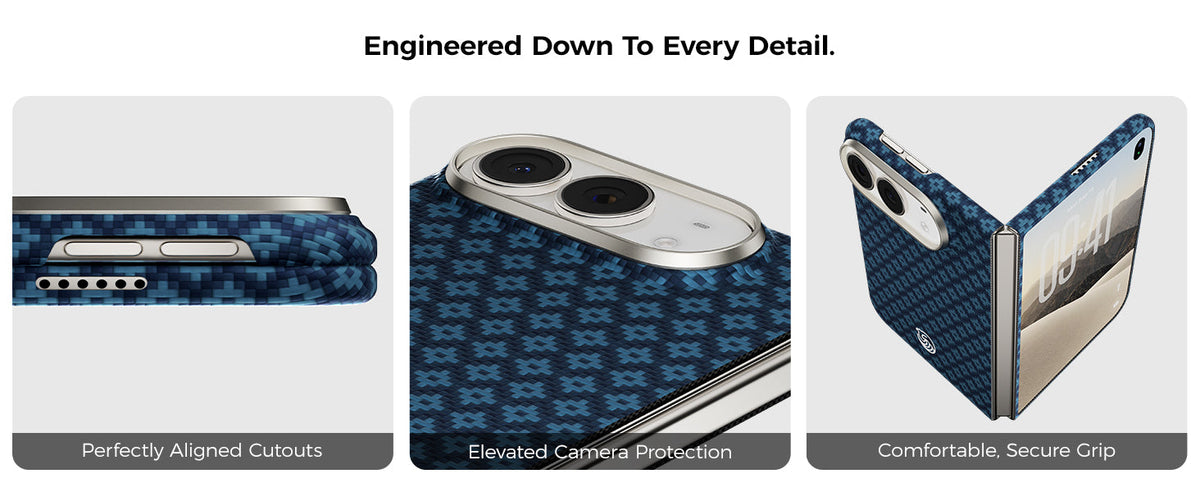
Does iPhone Duo Really Need Hinge Protection? What Foldable Owners Should Know
What if the part of a phone case designed to protect the hinge becomes another place where dust and friction build up? It sounds counterintuitive, but it captures a real concern among foldable-phone shoppers. The iPhone Duo invites a new accessory decision: should you cover the folding spine, or leave it exposed to keep the phone slim? The answer depends on the design of the case, the way you use your phone, and which risks matter most to you.
A hinge cover may help shield the outside of the folding mechanism from certain impacts and contact. But it can also add moving parts, thickness and areas that need cleaning. An open-hinge case makes different compromises. Neither approach is automatically safer in every situation. Here is how to decide without falling for the idea that more material always equals better protection.
Quick Answer: Does iPhone Duo Need Hinge Protection?
Hinge protection is worth considering if you frequently drop your phone, work around abrasive debris, or want more exterior coverage. It is not automatically essential for every user. A well-designed hinge-cover case can provide an extra physical barrier, while an open-hinge case may be more comfortable for someone who values thinness and easier access for cleaning. No case should be assumed to prevent internal hinge damage from a fall. Check manufacturer guidance and product-specific testing before relying on any protective claim.
Samsung Fold8 hinge protection case
1. Why the Folding Hinge Deserves More Attention Than an Ordinary Phone Edge
On a conventional smartphone, the outer frame is mostly a fixed perimeter. On a book-style foldable, the spine sits near a moving mechanical assembly that allows two halves of the device to open and close. That difference changes how an accessory must fit. A case cannot simply wrap the spine in rigid material without allowing for movement. Hinged flaps, sliding covers and other mechanisms are common design approaches, each with its own trade-offs.
It also helps to separate three concerns that are often discussed together. Cosmetic scratches on the exposed exterior hinge are not the same as damage to the internal folding mechanism. A drop onto the spine is not the same as dust entering a moving assembly. And a case that hides the metal surface does not necessarily seal the internal mechanism against particles. Clear definitions make it easier to evaluate what a case actually promises.
The folding display is another distinct component. Its crease and protective layers should be handled according to the device maker's instructions. For more on that difference, read our guide to the iPhone Duo crease and display protection. A hinge case should never be treated as a substitute for careful inner-screen handling.
2. Can a Hinge Protection Case Actually Scratch the Hinge?
This is the question that makes hinge-cover cases more interesting than a simple yes-or-no purchase. A cover introduces another surface close to the phone's exterior spine. If the design leaves a gap that traps grit, or if a moving part rubs against the phone, there is a plausible path to cosmetic abrasion. That does not prove every hinge-cover case causes scratches. It means construction, clearance and maintenance matter.
Dust and grit are the variables to watch
Fine dust is usually less concerning than hard abrasive particles, but you cannot identify every particle by looking at it. Sand and other debris can travel into pockets and bags, then lodge in narrow spaces. If a cover slides or pivots against that debris, it may create rubbing contact. A case with a hinge cover should therefore be evaluated for how easily you can inspect and clean the area beneath it. A protective component that cannot be maintained is not necessarily a better long-term solution.
Fit matters more than the label on the box
Look at how the cover moves through the full folding range. Does it touch the spine? Does it sit flush when closed? Does it create an awkward contact point when open? Does it shift sideways after repeated use? These are practical questions, not claims that a particular brand has failed. Independent testing and a clear installation guide are more persuasive than broad promises such as “total protection.”

An exposed hinge also has risks
Leaving the spine uncovered can make cleaning and inspection easier, but it also leaves that exterior surface open to direct contact. If a foldable falls onto its hinge edge, an open-hinge case may offer little direct barrier at that impact point. The correct comparison is not “safe versus unsafe.” It is direct exterior coverage versus added components, with different exposure and maintenance needs.
3. The Hidden Trade-Off: Protection, Thickness and Everyday Comfort
A hinge-cover mechanism occupies physical space. Depending on the design, it may add thickness to the closed phone, form a ridge when unfolded, or change the way your fingers wrap around the device. Some users will barely notice. Others will feel the difference every time they slide the phone into a pocket, hold it for a long reading session or place it flat on a desk.
Weight is part of that experience, but a single gram figure never tells the whole story. Where the weight sits matters, as does whether a protruding hinge cover changes the phone's balance. A thick protective case can make a premium foldable feel less portable, while a slim case may leave more areas exposed. The right choice depends on whether your everyday priority is a comfortable carry or maximum available exterior coverage.
This is also why case material deserves attention. A thin aramid-fiber rear shell can preserve a relatively streamlined profile, but material alone does not guarantee drop performance. Coverage, fit and geometry remain important. For a broader discussion of bulk and protection, see Does iPhone Duo Need a Case? How to Protect It Without the Bulk.

4. When Is a Hinge-Cover Case Worth Considering?
You frequently drop your phone
If accidental drops are a regular concern, extra exterior coverage around the spine may be attractive. That does not mean every hinge cover provides meaningful impact absorption. Look for specific drop-test conditions and be skeptical of unexplained certification language. A case can reduce certain kinds of contact without guaranteeing the phone's internal hinge survives a hard landing.
You work or travel around debris
Construction sites, sandy environments and dusty bags make particle management more important. A hinge cover may shield part of the exterior surface, yet it may also create a cavity where particles collect. Easy inspection and cleaning should be part of the buying decision. No ordinary case should be described as making a foldable dustproof unless there is a credible, product-specific basis for that claim.
You care most about a slim daily carry
If your phone spends its days in a jacket pocket, on a desk and in your hand, an open-hinge design may feel more natural. It can keep the back profile simpler and avoids a moving cover at the spine. The trade-off is straightforward: you accept that the exterior hinge remains exposed. Some buyers will consider that reasonable; others will prefer the reassurance of a cover.
You want one setup for every scenario
There may not be a perfect single case. Someone who commutes in the city during the week and hikes on weekends might prefer different accessories for different situations. Evaluate how often each risk actually occurs rather than choosing the most elaborate case by default. Your case should suit your routine, not an imaginary worst-case scenario every minute of the day.

5. Open-Hinge vs. Hinge-Cover Cases: A Practical Comparison
Exterior spine coverage: An open-hinge case leaves the hinge exposed. A hinge-cover case adds a physical barrier over at least part of the spine. The exact covered area varies by design.
Bulk: Open-hinge designs often have more room to stay slim. A hinge cover may add a protrusion, though its real impact depends on engineering and materials.
Cleaning: An exposed spine is generally easier to see and wipe. A cover may need to be opened, moved or removed to inspect trapped debris.
Impact protection: A covered spine may have an extra barrier against certain contacts. Neither configuration should be assigned a drop-resistance score without testing.
Handling: An open design avoids a moving spine component. A covered design may change grip, desk stability or how the phone feels when unfolded.
The best case is not necessarily the one that wins the most rows in a comparison chart. It is the one whose trade-offs align with how you actually use the phone.
6. Where Benks ArmorGrid Air Fits Into the Decision
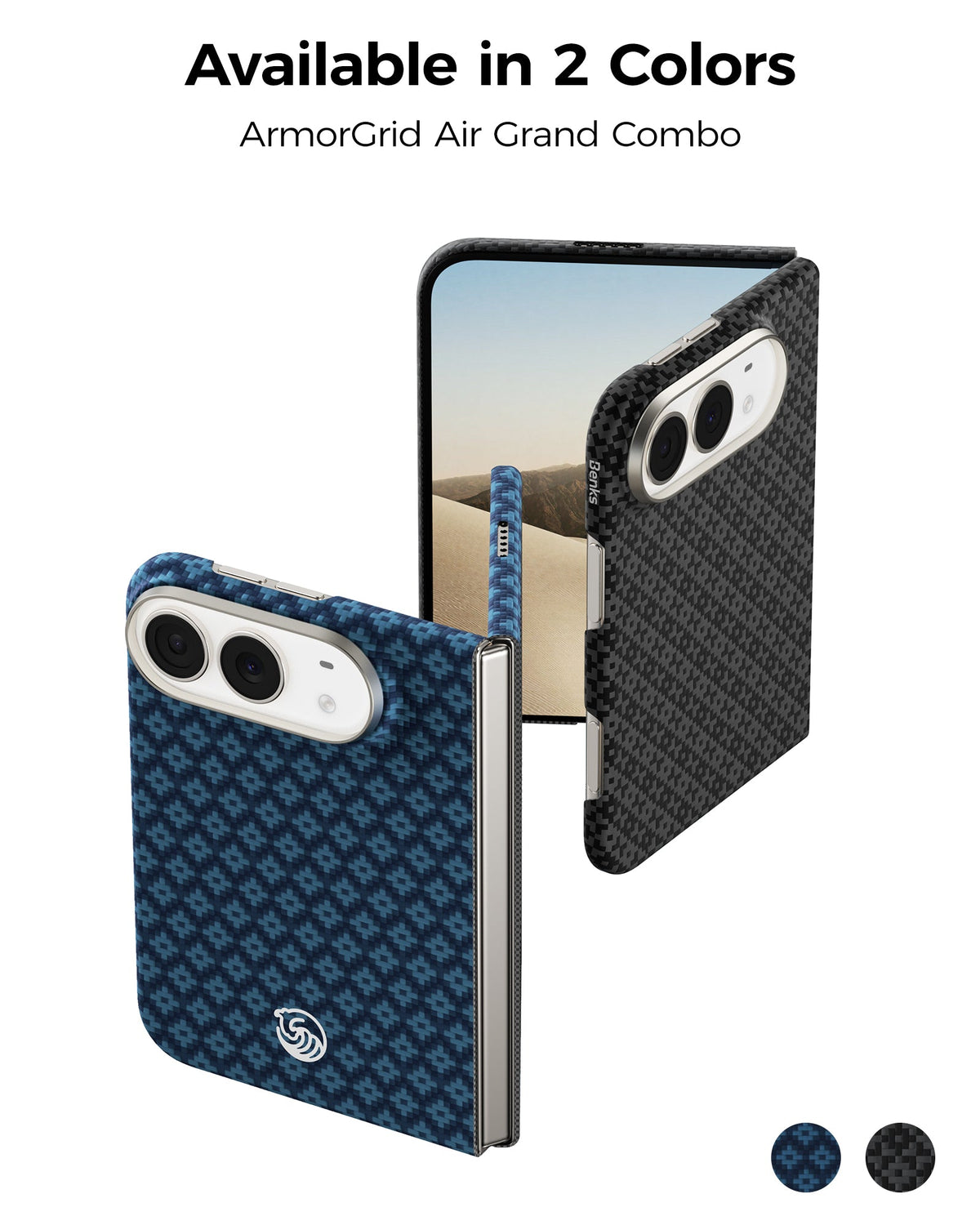
For shoppers who prioritize a slim, streamlined exterior, the Benks ArmorGrid Air Grand Combo for iPhone Duo offers a different approach from a bulky hinge-cover case. Its Kevlar®-based rear shell is designed around a slim profile, and the bundle pairs it with a front frame and cover-screen protector. That is a useful combination for people who want coordinated protection around the phone's exterior without purchasing several unrelated accessories.
There is one important limitation: the current ArmorGrid Air Grand Combo does not include hinge protection. We would rather make that clear than imply it protects a part of the phone it does not cover. If direct hinge coverage is your highest priority, this specific version is not the complete answer. Benks also plans to explore a hinge-protection option, but no release date, thickness, weight or performance claim should be assumed until official product information is available.
The Benks Crystal Grand Combo is another current option for buyers who prefer a transparent look. It similarly focuses on coordinated exterior protection rather than full hinge coverage. Both choices make more sense when presented honestly: they serve people who value a particular balance of appearance, fit and everyday handling.
[IMAGE PLACEHOLDER 5: Official Benks ArmorGrid Air Grand Combo components and hinge-exposed side view. Use verified product imagery.]
7. Five Checks Before Buying Any Hinge Protection Case
1. Check the entire folding motion
A case must work when the device is fully closed, partially open and fully unfolded. Watch for rubbing, catching or unusual resistance. Never force a case to move through a position where it binds.
2. Inspect clearance and contact points
The moving cover should not scrape against exposed surfaces during normal operation. Check whether the design allows you to see and clean the space beneath the cover.
3. Consider pocket thickness and grip
Look beyond marketing words like “ultra slim.” Seek actual case weight and dimensions when available, and pay attention to protrusions in the unfolded position.
4. Confirm screen-protector compatibility
A front frame can push against a glass protector if their edges overlap. Our article Do iPhone Duo Cases Work With Screen Protectors? explains how to avoid edge lifting. Coordinated bundles can simplify compatibility, but always verify the exact contents.
5. Check the evidence behind protection claims
A case advertised as protective should identify what it protects and, ideally, under what test conditions. A cosmetic barrier, a reinforced edge and an impact-tested hinge structure are not interchangeable promises. Read the specifications carefully and distinguish manufacturer claims from independent measurements.
8. Caring for the Hinge, With or Without a Cover
Basic care matters regardless of which case you choose. Keep abrasive debris away from the folding area. Before closing the phone, make sure nothing is resting between the two screen halves. Clean accessible exterior surfaces using the device maker's recommended methods, and avoid pushing cleaning tools into narrow mechanical gaps. If a hinge cover traps grit, inspect and clean it according to the case maker's instructions. Do not remove a factory-installed inner-screen layer unless Apple explicitly directs you to do so.
If the phone develops unusual resistance, noise or visible damage during folding, stop forcing the mechanism and consult official service guidance. A case cannot diagnose an internal mechanical issue, and adding more pressure is unlikely to help. For buyers preparing their first foldable setup, our iPhone Duo accessories checklist also explains what is worth buying early and what deserves extra verification.
Final Verdict: More Coverage Is Not Always Better Protection
So, does iPhone Duo really need hinge protection? It depends. A well-designed hinge cover can add useful exterior coverage for certain users. It can also introduce bulk, moving components and cleaning considerations. An open-hinge case keeps the design simpler and often slimmer, but leaves the spine directly exposed. Neither choice should be described as universally superior.
If your first priority is slim everyday protection, explore the Benks ArmorGrid Air Grand Combo. If you need direct hinge coverage, compare dedicated hinge-cover designs and wait for verified specifications rather than assuming a slim case includes it. The smartest foldable accessory is not the one that covers the most surface area. It is the one that protects the risks you actually face without making the phone harder to enjoy.
Frequently Asked Questions
Can a hinge protection case scratch an iPhone Duo?
It is possible for poorly fitted moving parts or trapped abrasive debris to create rubbing contact. That does not mean every hinge-cover case scratches a phone. Fit, materials and cleaning access matter.
Is it safe to use a foldable without a hinge cover?
Many people choose open-hinge cases for portability, but the exposed spine can still be scratched or struck. Consider your drop risk and usage environment before deciding.
Will a hinge cover make the iPhone Duo harder to fold?
A correctly fitted case should accommodate the intended folding motion. If you feel binding or abnormal resistance, do not force it; check installation and compatibility.
Does ArmorGrid Air protect the hinge?
No. The current Benks ArmorGrid Air Grand Combo has a slim Kevlar® rear case, front frame and outer-screen protector, but it does not include direct hinge coverage.
Is a thicker hinge case always more protective?
No. Thickness alone does not establish drop performance. Geometry, materials, fit and credible testing matter more than appearance.
How should I clean a hinge-cover case?
Follow the case manufacturer's instructions, remove accessible debris carefully and avoid pushing liquid or tools into the phone's folding mechanism.



Leave a comment
This site is protected by hCaptcha and the hCaptcha Privacy Policy and Terms of Service apply.