
Galaxy Z Fold 8 Flex Titanium: Samsung Finally Fixes the Crease?
Samsung Unpacked is today. Seven years after the first Galaxy Fold shipped, Samsung is taking the stage in London with a claim it hasn't been able to make before: the crease is nearly gone.
Not reduced. Not less noticeable. Nearly gone.
That's a significant statement. For most of those seven years, the fold line running down the center of every Samsung foldable has been the single most common complaint from owners and the single most common reason undecided buyers stayed undecided. Samsung tackled it generation after generation — better UTG, tighter hinge tolerances, improved bonding layers — and every generation, the crease was still there.
The Galaxy Z Fold 8 does something different. Instead of attacking the hinge, Samsung rebuilt the display itself.

What Flex Titanium Actually Is
The technology is called Flex Titanium, and Samsung officially confirmed it ahead of today's Unpacked. The engineering behind it is more interesting than the marketing name suggests.
Previous foldable displays — including all seven generations of Galaxy Fold — used polymer films beneath the OLED panel to provide structural support at the fold. Polymer is flexible, which is necessary for folding, but it's also relatively soft. When you fold the phone thousands of times, the polymer beneath the display deforms slightly under repeated stress. Those deformations accumulate at the fold line and become visible as a crease.
Flex Titanium replaces that polymer layer with two titanium components stacked beneath the OLED.
The first is a titanium-alloy film — thinner than 30% of a human hair, and 20 times stiffer than the polymer film it replaces. Because it's stiffer, it resists the micro-deformation that creates crease buildup. Because it's thin, it doesn't add meaningful thickness to the display stack.
Below that sits a titanium plate with a laser-drilled lattice structure — microscopic patterned holes across the folding zone. The lattice serves two purposes simultaneously: the holes let the plate flex enough to fold cleanly, while the surrounding titanium provides rigid support when the phone is open. The plate also eliminates air gaps between the display module and its adhesive layer, which previously allowed the panel to shift slightly under pressure and create visible distortion at the fold.
The result, according to Samsung Display executives and corroborated by leakers who've seen production units: a fold line that's dramatically less visible than any previous Galaxy Fold. Leaker Ice Universe, typically conservative on Samsung claims, described Flex Titanium as comparable in significance to the original introduction of UTG (Ultra Thin Glass) — the technology that made touch response on foldable inner screens viable in the first place.

Why the Hinge Wasn't the Real Problem
This is the part that changes the understanding of how foldable displays degrade.
The conventional assumption — including Samsung's own previous engineering approach — was that crease visibility was primarily a hinge problem. If the hinge could be made stiffer, more precise, or geometrically better calibrated, the crease would reduce. Every generation brought hinge improvements, and every generation reduced the crease somewhat.
What Samsung's Flex Titanium announcement acknowledges, implicitly, is that the hinge was never the root cause. The crease forms because the display panel itself deforms under repeated folding stress. The hinge can be perfect and the crease will still form if the support structure beneath the OLED allows micro-deformation at the fold point.
Rebuilding the display stack — rather than refining the hinge — attacks the actual source of the problem. It's a more fundamental engineering change than anything Samsung has applied to the Fold line since UTG replaced plastic displays on the inner screen.
The Z Fold 8's Flex Titanium applies to both the standard Fold 8 (the wider 4:3 model at $1,899) and the Fold 8 Ultra (the taller format at $2,099, the true successor to the Fold 7). Both devices benefit from the same display stack redesign.
What This Means Alongside the Fold 8's Other Changes
Flex Titanium doesn't exist in isolation. It's part of a generational upgrade that Samsung has described as the most significant since the Fold category launched.
Battery: 5,000mAh, up from the Fold 7's 4,400mAh — a 14% increase. Combined with 45W wired charging (up from 25W), this is a meaningful real-world improvement for a device that drives a large display all day.
Chipset: Snapdragon 8 Elite Gen 5 for Galaxy, built on 3nm architecture. Efficiency improvements at the chip level extend the benefit of the larger battery.
Display resolution: The inner display is reported to reach approximately 500 ppi on the Fold 8 Ultra, bringing it in line with the Galaxy S26 Ultra for pixel density. The wider Fold 8 at 4:3 aspect ratio offers a fundamentally different screen geometry — shorter and wider, closer to a small iPad in orientation than to any previous Fold.
Camera: The ultrawide on both models upgrades from 12MP to 50MP. The Fold 8 Ultra keeps the triple-camera system with telephoto. The standard Fold 8 ships with a dual-camera setup (50MP main + 50MP ultrawide) without telephoto — a trade-off in exchange for the slimmer, lighter 201g body.
| Spec | Galaxy Z Fold 8 | Galaxy Z Fold 8 Ultra |
|---|---|---|
| Display technology | Flex Titanium | Flex Titanium |
| Inner screen | 7.6" QHD+ 4:3 | 7.6" — taller format |
| Cover screen | 5.5" QHD+ | 6.5" |
| Battery | 4,800mAh / 45W | 5,000mAh / 45W |
| Cameras | Dual 50MP | 200MP + 50MP + 10MP telephoto |
| Weight | 201g | ~237g |
| Price | ~$1,899 | ~$2,099 |

The Repair Cost Question
One consequence of Flex Titanium that deserves honest discussion: tougher displays are also more expensive to repair when something does go wrong.
Samsung's inner screen replacement cost has historically run $400–600 out of warranty. The titanium reinforcement in Flex Titanium makes the display more durable under normal folding stress, but it also makes the repair process more complex if the screen is damaged by a drop or impact. Samsung hasn't confirmed revised repair pricing for the Fold 8 series, but the engineering complexity involved in replacing a titanium-reinforced display stack is higher than replacing a polymer-film display.
Forbes noted this explicitly in their Flex Titanium coverage: "tougher displays could mean pricier repairs if something does go wrong."
This is the exact dynamic where a good case becomes more valuable, not less — not because the display is more likely to break, but because the cost consequence of it breaking is higher. On a device where the inner display replacement was already the most expensive single repair, any upward pressure on that cost strengthens the case for protection from day one.
The hinge itself is also affected. The Fold 8's new dual-rail hinge is thinner and geometrically different from the Fold 7's mechanism. Cases designed for the Fold 7 will not fit correctly — the hinge cutout geometry, camera position, and panel dimensions all differ.
💡 Your Z Fold 7 cases won't fit the Fold 8 — here's what will
Does Flex Titanium Change How the Phone Should Be Protected?
The display stack redesign doesn't fundamentally change what protection a foldable needs — it changes the stakes if that protection isn't in place.
A foldable case still needs to address three surfaces that conventional cases don't: the outer back panel, the front frame, and the hinge spine. The inner screen — now more durable under folding stress but not immune to impact damage — still benefits from the factory UTG protector Samsung applies before the phone ships. That protector should never be removed.
What Flex Titanium does change is the conversation about corner and edge impact protection. The Fold 8's display is more resistant to crease formation from folding, but the corners and edges of the outer panel remain as vulnerable to drop impacts as any previous generation. A dropped Fold 8 landing on a corner edge can damage the outer display or the hinge housing regardless of the display stack's titanium reinforcement.

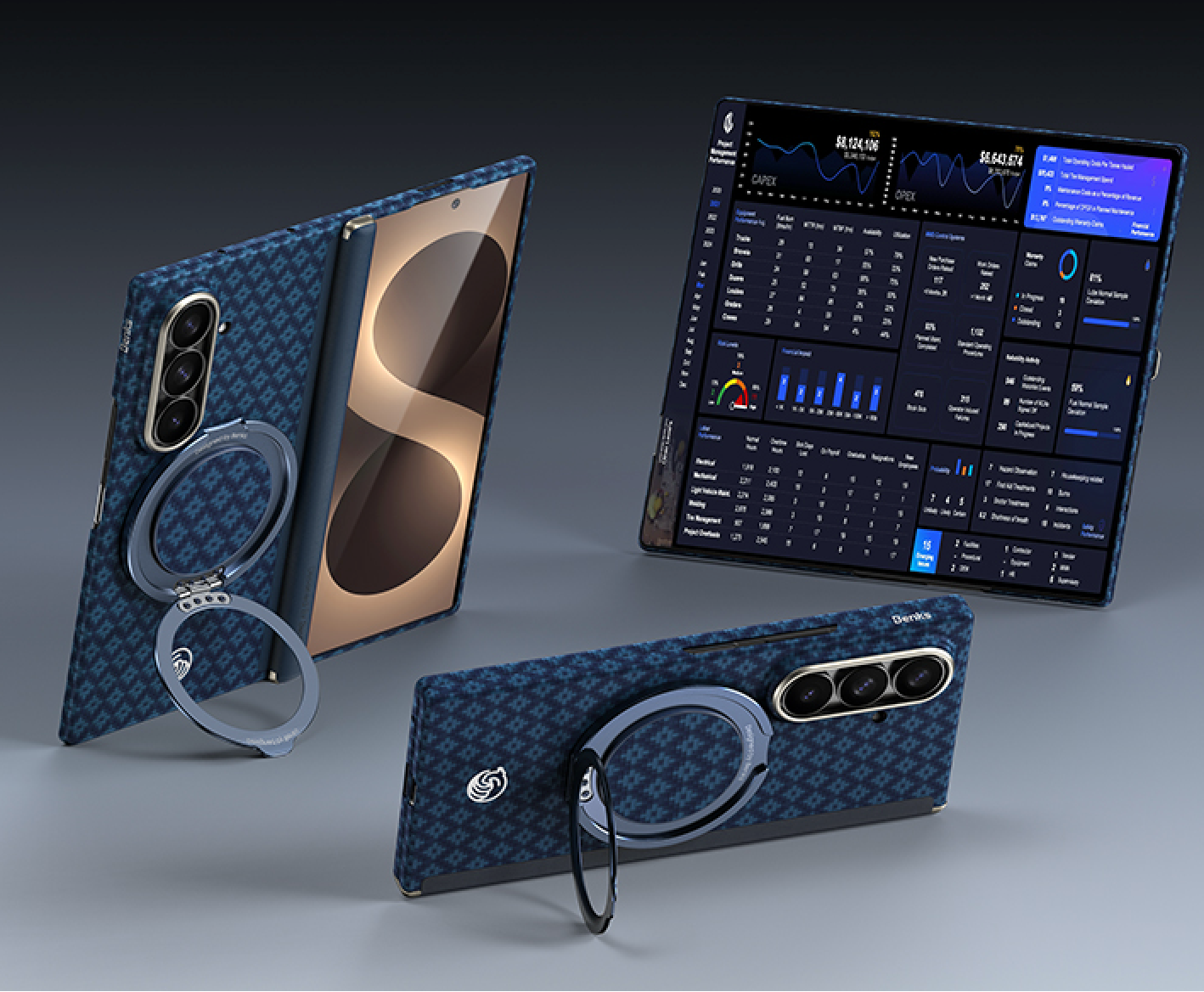
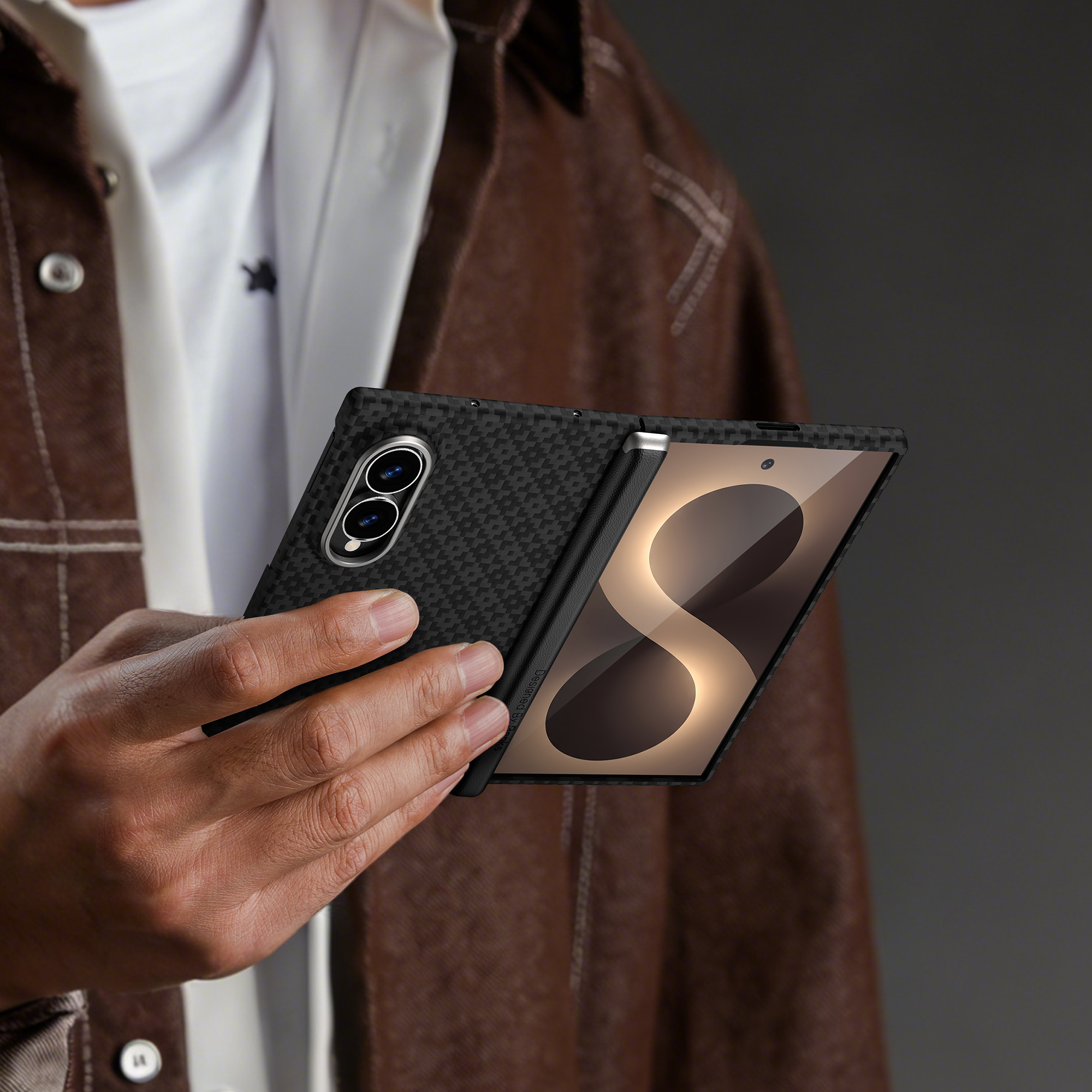
For Fold 8 buyers, the protection framework is the same as for any book-style foldable: a case that covers the hinge, front frame, and back panel as a coordinated system — purpose-built for the Fold 8's specific dimensions, not adapted from a Fold 7 design.
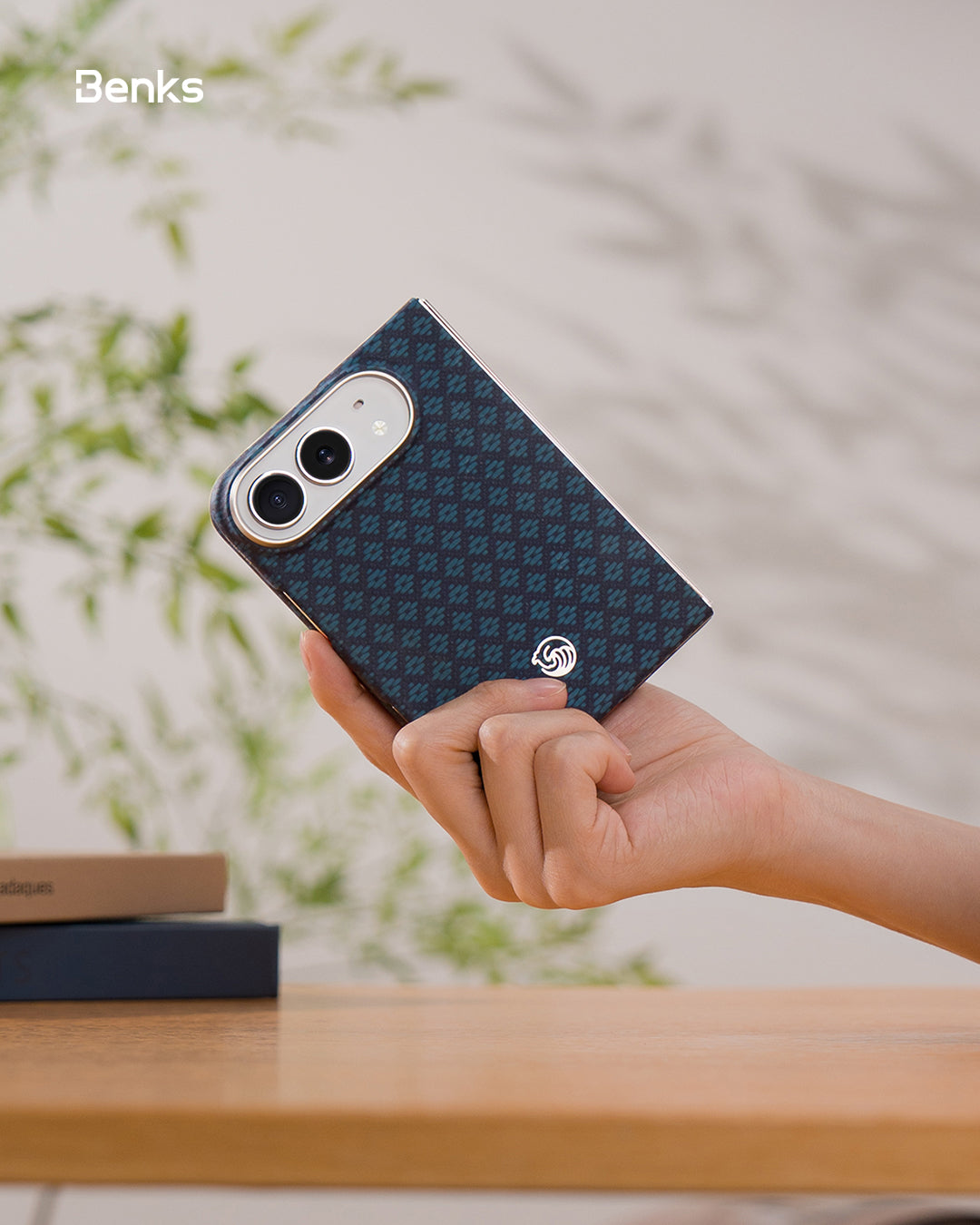
 Benks Galaxy Z Fold 8 case collection
Where This Leaves the Crease Problem
The crease hasn't been "solved" in the sense that it no longer exists. Samsung and every credible source who has seen the Fold 8 use the word "nearly" — nearly invisible, nearly crease-free. The fold line is still there under controlled conditions and certain lighting angles.
What Flex Titanium accomplishes is something arguably more important: it changes the category benchmark. For six years, the Oppo Find N series held the title of best crease management among book-style foldables. Samsung's display stack redesign is the first time a mainstream Galaxy Fold has been described in the same breath, at the same level.
That matters competitively because Apple's iPhone Fold — expected in September 2026 — is reportedly also pursuing near-creaseless design through a different engineering approach. Samsung's first-mover position on Flex Titanium is partly a response to that competitive pressure.
The result, launching today, is a foldable phone where the most criticized aspect of the form factor has genuinely improved — not incrementally, but structurally. Seven generations to get here. The eighth one changes how the display is built.
FAQ
What is Samsung Flex Titanium? Flex Titanium is a new display stack technology in the Galaxy Z Fold 8 that replaces the traditional polymer support film beneath the OLED panel with two titanium components: a titanium-alloy film 20 times stiffer than polymer alternatives, and a micro-patterned titanium plate with laser-drilled holes that eliminate air gaps at the fold. Together, these components dramatically reduce the visibility of the fold crease.
Does the Galaxy Z Fold 8 still have a crease? Yes, but significantly less visibly than previous generations. Samsung and independent sources who have seen production units describe the crease as "nearly invisible" in normal use. The Flex Titanium technology doesn't eliminate the fold line entirely, but it represents the most significant reduction in crease visibility of any Samsung foldable to date.
Is Flex Titanium on both the Fold 8 and Fold 8 Ultra? Yes. Both the Galaxy Z Fold 8 (the wider 4:3 model) and the Galaxy Z Fold 8 Ultra (the taller format, successor to the Fold 7) use Flex Titanium display technology.
Will Galaxy Z Fold 7 cases fit the Fold 8? No. The Fold 8 has a different hinge geometry, wider inner display, and repositioned camera and buttons. Cases must be purchased specifically for the Fold 8 or Fold 8 Ultra.
How much does the Galaxy Z Fold 8 cost? The Galaxy Z Fold 8 (wide model) is expected at approximately $1,899. The Galaxy Z Fold 8 Ultra starts at approximately $2,099. Samsung is offering launch trade-in promotions at Unpacked.
Does the tougher Flex Titanium display mean cheaper repairs? Likely the opposite. The added engineering complexity of a titanium-reinforced display stack makes replacement more technically involved. Samsung hasn't confirmed revised repair pricing, but the expectation is that inner screen repairs on the Fold 8 will cost at least as much as on the Fold 7 — and potentially more.


Dejar un comentario
Este sitio está protegido por hCaptcha y se aplican la Política de privacidad de hCaptcha y los Términos del servicio.