
iPhone Ultra Is Coming: Release Date, Price, Specs, and Everything You Need to Know
Apple is finally entering the foldable phone market.
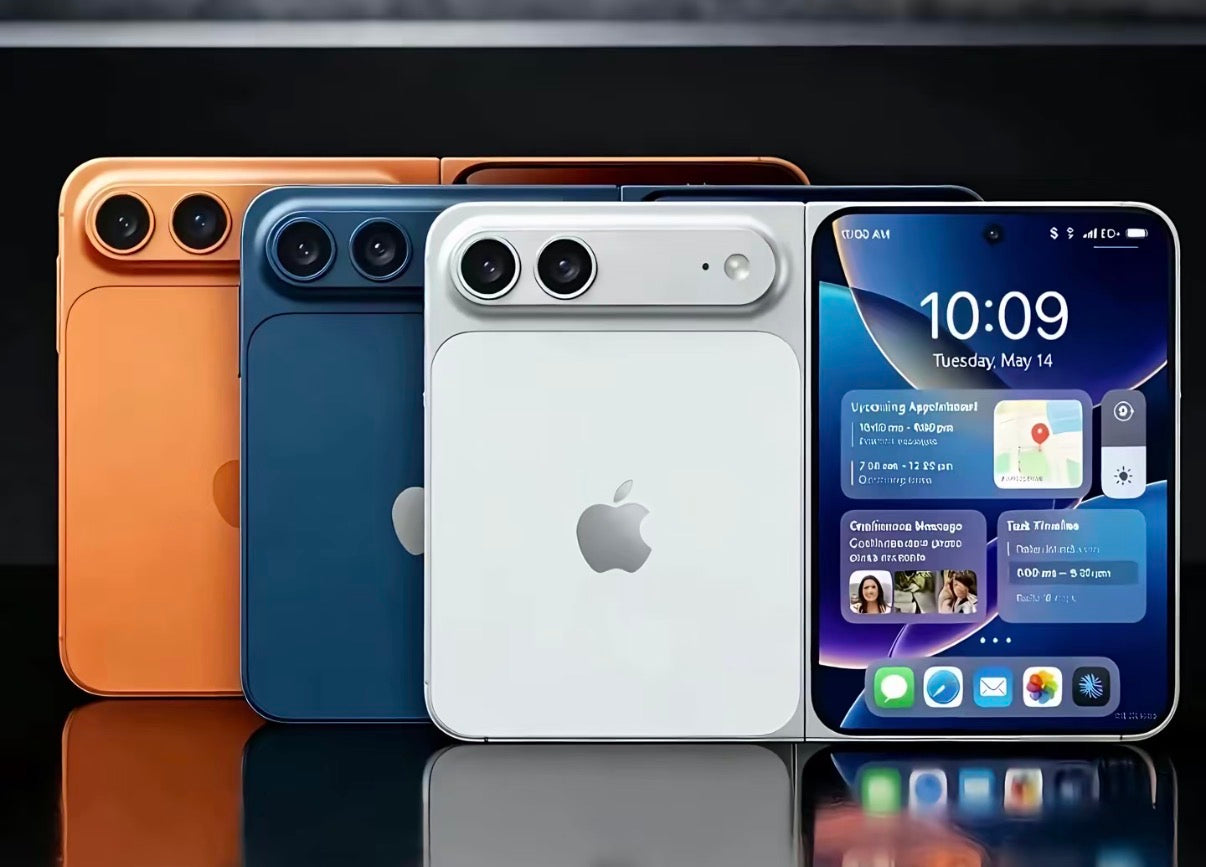
After years of rumors, leaks, and speculation, the long-awaited foldable iPhone is now expected to make its debut at Apple's September 2026 event. While the device has commonly been called the iPhone Fold, recent reports increasingly point toward a more Apple-like name: iPhone Ultra.
And this isn't simply an iPhone that folds in half.
Apple appears to be taking a very different approach to foldable phones, from the wider passport-style design and near-creaseless display to the rumored switch from Face ID to Touch ID.
So what exactly is the iPhone Ultra? When will it launch, how much will it cost, and will it actually be worth buying?
Here's everything we know before Apple's September event.
When Will the iPhone Ultra Be Released?
The biggest question is no longer whether Apple will make a foldable iPhone. It's when you can actually buy one.
Apple has scheduled its next major iPhone event for September 9, 2026, where the company is expected to introduce the iPhone 18 lineup and potentially its first foldable iPhone.
The iPhone Ultra is expected to be unveiled alongside the iPhone 18 Pro and iPhone 18 Pro Max. However, unveiling and retail availability may not happen on exactly the same day.
This matters because Apple's first foldable iPhone is expected to have a much more complicated manufacturing process than a conventional iPhone. The display, hinge, frame construction, and overall assembly are all new for Apple.
Recent supply-chain reports have already raised concerns about initial production volume.
That means the iPhone Ultra could become one of those Apple products where getting one at launch may be harder than simply having the money to buy one.
If you're planning to buy Apple's first foldable on day one, keeping an eye on the September announcement and preorder schedule will be important.
What Will the iPhone Ultra Look Like?
This is where Apple's approach gets interesting.
Instead of copying the tall-and-narrow design used by many existing book-style foldables, the rumored iPhone Ultra is expected to use a wider, shorter "passport-style" design.
The rumored dimensions point to two displays:
-
5.49-inch cover display
-
7.76-inch inner display
-
Both displays reportedly use a 4:3 aspect ratio
When unfolded, the iPhone Ultra would therefore look more like a compact tablet than a traditional tall smartphone.

That's a significant departure from Samsung's classic Galaxy Z Fold design.
The goal seems obvious: make the folded phone feel more natural as an everyday smartphone while making the unfolded display better for browsing, reading, multitasking, and watching content.
Benks recently compared this design philosophy directly with Samsung's latest foldable in iPhone Fold vs Galaxy Z Fold 8: Did Apple Solve Foldables?
The important takeaway is that Apple doesn't appear to be trying to make a "better Galaxy Fold."
It is trying to make an iPhone that happens to fold.
iPhone Ultra Display: The Crease Could Be Apple's Biggest Advantage
Foldable displays have improved dramatically over the past few years, but one problem still gets everyone's attention:
The crease.
Apple reportedly spent significant resources trying to minimize the visible crease on the iPhone Ultra. Multiple reports suggest that the company wants the fold to be close to invisible during normal use.
The rumored inner display measures 7.76 inches, with a resolution around 2,713 × 1,920.
That's a 4:3 canvas, giving the phone a much wider unfolded experience than the tall-format foldables that defined the category for years.
The difference could be particularly noticeable when watching video.
Most video content is produced in 16:9. On a very tall foldable display, a large portion of the screen can be wasted by black bars. A wider 4:3 display can make better use of its physical screen area while unfolded.
Of course, display specifications are still based on reports until Apple officially confirms them.
But if Apple manages to deliver a foldable display that feels significantly closer to a conventional iPhone screen, that could be one of the biggest reasons mainstream iPhone users finally consider a foldable.
iPhone Ultra Specs: What We Expect
Here's where the rumors currently stand.
| Feature | iPhone Ultra rumored specs |
|---|---|
| Cover display | 5.49-inch |
| Inner display | 7.76-inch |
| Aspect ratio | 4:3 |
| Processor | A20 Pro |
| Process | 2nm |
| RAM | 12GB |
| Modem | Apple C2 |
| Frame | Titanium + aluminum |
| Cameras | Dual rear cameras |
| Authentication | Side-mounted Touch ID |
| Storage | 256GB–1TB |
| Battery | Approximately 4,883–5,500mAh |
| Price | $2,000+ rumored |
| Launch | September 2026 expected |
None of these specifications should be treated as official until Apple announces the device.
Still, several details have appeared consistently enough across reports to make the overall picture increasingly believable.
Why Would Apple Bring Back Touch ID?
One of the most surprising iPhone Ultra rumors is the return of Touch ID.
The device is reportedly expected to use a side-mounted fingerprint sensor instead of Face ID.
At first, that sounds like a step backward.
It probably isn't.
A foldable phone has three primary states: closed, partially open, and fully open. Face ID works best when the camera and sensor system have a predictable relationship with the user's face.
A foldable complicates that geometry.
A side-mounted fingerprint sensor, on the other hand, works regardless of whether you're using the cover screen or the inner display.
It also potentially helps Apple reduce the amount of hardware required around the display.
So Touch ID may not be a nostalgic comeback.
It may simply be the most practical authentication system for Apple's first foldable.
How Much Will the iPhone Ultra Cost?
Let's talk about the uncomfortable part.
The iPhone Ultra is expected to start at more than $2,000.
Some reports have suggested a starting price around the $2,000 mark, while higher storage configurations could push significantly beyond that.
That would make the iPhone Ultra substantially more expensive than even Apple's current Pro Max models.
It would also put the device directly against Samsung's most expensive foldables.
At that price, the iPhone Ultra isn't competing on value.
It's competing on:
-
Apple's ecosystem
-
premium hardware
-
foldable engineering
-
software integration
-
first-generation appeal
And that's why the first-generation experience matters so much.
If Apple gets the software, hinge, display, and durability right, $2,000 could be easier for loyal iPhone users to justify.
If the device feels like an expensive experiment, the price becomes a much bigger problem.
iPhone Ultra vs Galaxy Z Fold 8
The most obvious competitor is the Galaxy Z Fold 8.
Samsung has already spent years refining foldable hardware, while Apple is entering the category for the first time.
But the two companies appear to be taking different approaches.

| iPhone Ultra | Galaxy Z Fold 8 | |
|---|---|---|
| Design | Wide / passport-style | Wide foldable design |
| Inner display | 7.76" rumored | 7.8" |
| Cover display | 5.49" rumored | 5.5" |
| OS | iOS | Android |
| Authentication | Touch ID rumored | Side fingerprint |
| Cameras | Dual rumored | Dual 50MP |
| Price | $2,000+ rumored | $1,899.99 |
| Availability | Expected September | Available now |
Samsung has already solved many of the practical problems that come with manufacturing foldables at scale.
Apple's advantage is different.
For an existing iPhone user, switching to a Galaxy Fold means changing ecosystems. The iPhone Ultra would allow users to keep iMessage, AirDrop, Apple Watch integration, iCloud, and the rest of the Apple ecosystem while gaining a much larger display.
That's potentially the biggest reason Apple's foldable could succeed where other foldables haven't.
Will the iPhone Ultra Need a Special Case?
Absolutely.
A foldable phone isn't simply a normal smartphone with a hinge added to it.
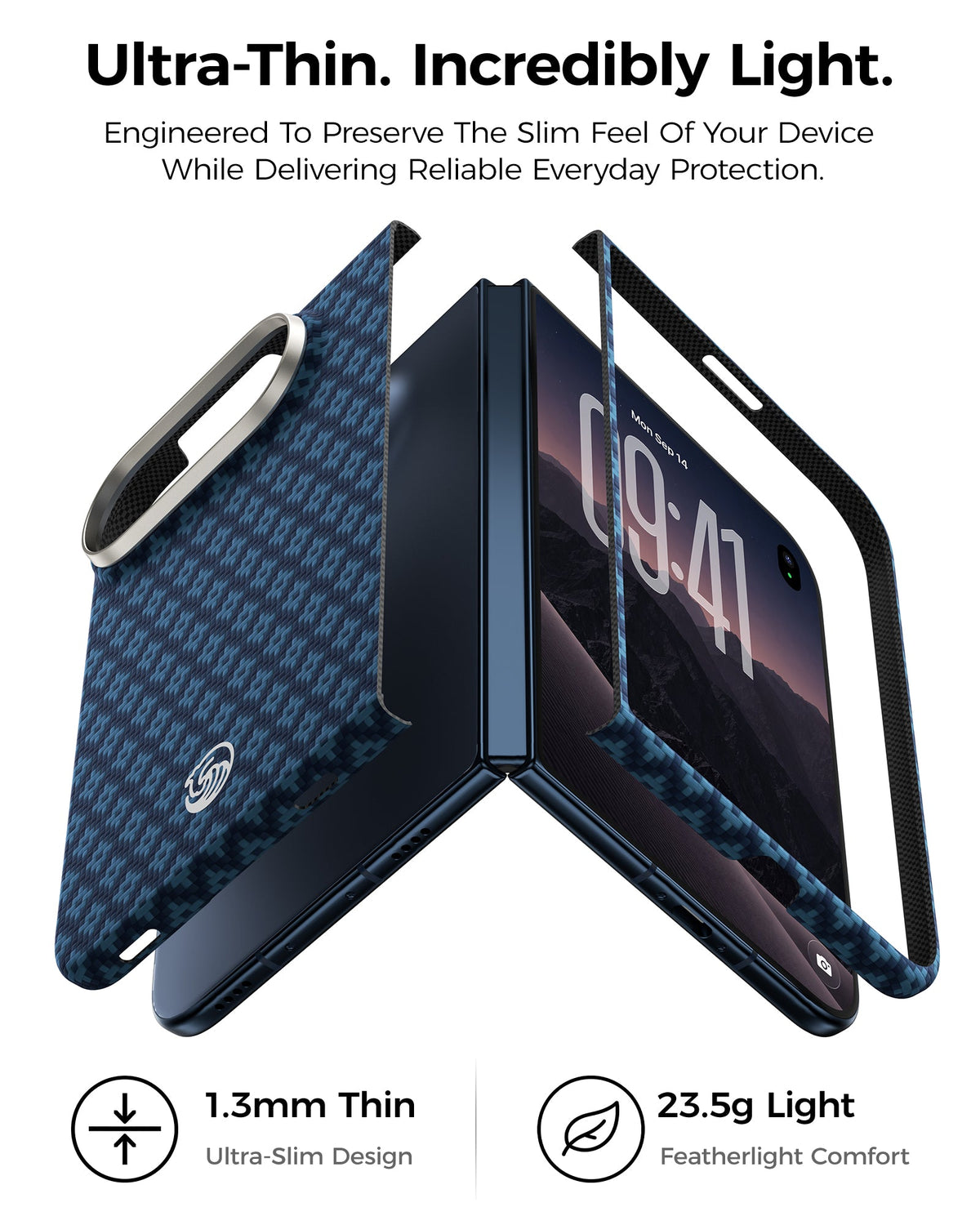
The case has to accommodate the hinge, fold radius, moving parts, display clearance, buttons, cameras, and the changing geometry of the device as it opens and closes.
That's why a conventional iPhone case won't work on the iPhone Ultra.
And a Galaxy Z Fold case won't work either.
The dimensions, hinge position, camera layout, and button placement are completely different.
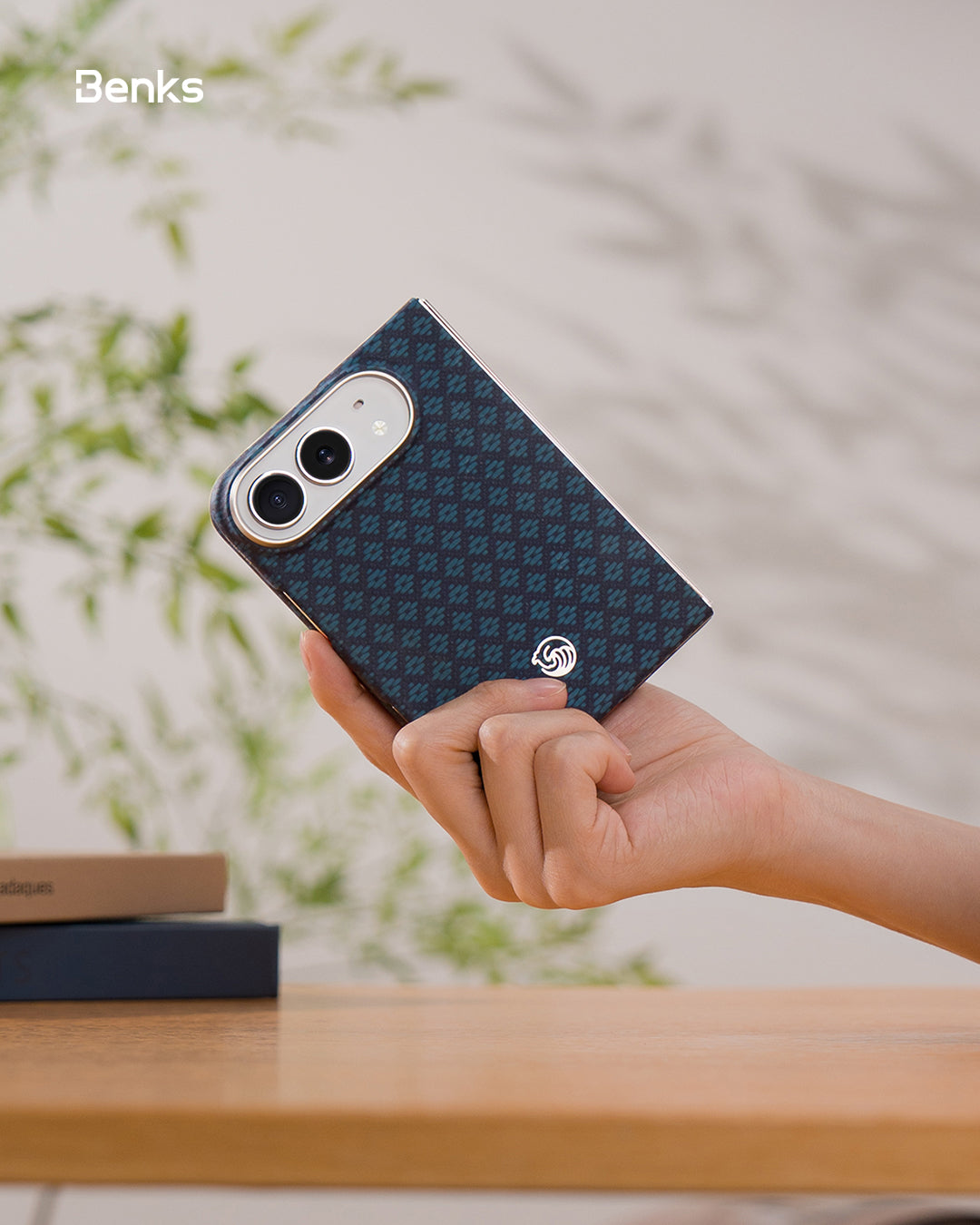
Benks has already dealt with these engineering challenges across multiple generations of Samsung foldables. The company's Galaxy Z Fold 8 case collection includes purpose-built cases designed around the Fold 8's specific geometry.
The same principle will apply to the iPhone Ultra.
A case for Apple's first foldable will need to be designed specifically around its final dimensions and hinge mechanism.
Why Kevlar® Could Make Sense for a Foldable iPhone
For a device expected to cost more than $2,000, adding a huge, bulky case isn't exactly ideal.
That's where high-strength, lightweight materials become interesting.
Benks already uses genuine DuPont™ Kevlar® fiber in its premium phone cases. The material offers high strength while keeping the overall case relatively thin.
For a premium foldable like the iPhone Ultra, every gram and millimeter matters. That's where 600D Kevlar® fiber becomes particularly interesting. Compared with the more common 1500D weave, 600D uses finer fiber strands and a denser weave, allowing for a slimmer, smoother, and more refined finish without giving up the inherent strength of Kevlar®.

Benks' ArmorAir Case built with Kevlar® 600D for iPhone 18 Pro Max uses genuine DuPont™ Kevlar® fiber with a 600D weave, an approximately 1.0mm-thin back, and a lightweight 22.2g construction. It also supports MagSafe and is designed to avoid signal interference, making 600D Kevlar® an interesting material choice for users who want protection without adding unnecessary bulk.
That's the kind of material philosophy that could make sense for an ultra-thin foldable like the rumored iPhone Ultra: protection without turning a premium device into a brick.
The important distinction is that the iPhone Ultra would require a completely new case design. Existing iPhone cases won't fit, and existing Samsung foldable cases won't fit either. Its unique dimensions, hinge mechanism, camera layout, and button placement would all require a purpose-built case.
The Hinge Will Be the Most Important Part to Protect
On any foldable phone, the hinge is one of the most mechanically complicated components.It moves every time you open and close the phone, and it sits directly on the exterior of the device.
That creates a unique problem for case manufacturers.
You can't simply surround the hinge with thick rigid material because the phone needs to fold.Instead, protection has to balance coverage, flexibility, clearance, and movement.
Benks explains the engineering problem in its guide to foldable phone hinge protection.
(Benks Galaxy Z Fold 8 Case Detail: Camera & Hinge Protection)
The Galaxy Z Fold 8 also demonstrates why foldable protection has to be designed around each generation. Benks notes that its Fold 8 case uses a precision-cut hinge area designed around the specific hinge geometry rather than simply adapting an older Fold case.
The iPhone Ultra will face the same challenge.
In fact, Apple's first foldable may make case engineering even more demanding because manufacturers will have no previous Apple foldable generation to use as a reference.
Should You Buy the iPhone Ultra or Wait?
If you're already using an iPhone and have been waiting for Apple to enter the foldable market, the answer is simple:
Wait for September.
There's little reason to rush into another foldable if the iPhone Ultra is the device you've actually been waiting for.
But there's an important distinction.
If you want a foldable phone right now, the Galaxy Z Fold 8 is already available and has a mature accessory ecosystem.
If you want an iPhone that folds, the iPhone Ultra is the device to watch.
And if you're unsure whether you even like the foldable form factor, the next few weeks could be the perfect time to see what Apple does differently.
The Real Question Isn't "Will the iPhone Ultra Be Good?"
Apple has had years to watch Samsung, Google, Huawei, and other manufacturers build foldable phones.
It has seen the problems.
Visible creases.
Fragile displays.
Bulky hinges.
Awkward cover screens.
Limited app optimization.
Expensive repairs.
The real question is whether Apple has found a way to make all of those problems feel invisible to the average iPhone user.
The rumored passport-style design suggests Apple is trying to solve the biggest problem first: making a foldable feel like a normal phone when it's closed and a useful tablet when it's open.
If Apple succeeds, the iPhone Ultra could do something no previous foldable has managed to do at scale:
Make foldable phones feel normal.
And that's potentially much bigger than simply releasing another $2,000 smartphone.
Final Verdict: Is the iPhone Ultra Worth Waiting For?
The iPhone Ultra is still unconfirmed until Apple takes the stage.
But the rumors have become specific enough that the overall product is increasingly easy to visualize: a wide foldable iPhone with a 7.76-inch inner display, a 5.49-inch cover screen, a near-creaseless design, Touch ID, Apple's next-generation silicon, and a price that could start above $2,000.
That's a lot of money.
But it's also potentially the biggest change to the iPhone lineup in years.
For existing iPhone users, the attraction isn't simply having a bigger screen.
It's getting a foldable without giving up the Apple ecosystem.
For Samsung users, the question is different: does Apple's software and design philosophy offer enough to justify switching?
We'll have a much clearer answer after Apple's September 9 event.
Until then, one thing is already clear:
The iPhone Ultra isn't just another iPhone. It could be Apple's attempt to make foldable phones mainstream.
Frequently Asked Questions
Is the iPhone Ultra the same as the iPhone Fold?
Yes. iPhone Fold is the commonly used name for Apple's rumored first foldable iPhone, while iPhone Ultra is the name some reports suggest Apple may use officially.
When will the iPhone Ultra be released?
Apple is expected to unveil its first foldable iPhone at its September 9, 2026 event. The exact retail availability date has not yet been officially confirmed.
How much will the iPhone Ultra cost?
Current reports suggest a starting price above $2,000, although Apple has not confirmed pricing.
How big is the iPhone Ultra screen?
The rumored configuration includes a 5.49-inch cover display and a 7.76-inch inner display, both using a 4:3 aspect ratio.
Will the iPhone Ultra have Face ID?
Current reports suggest Apple may use a side-mounted Touch ID sensor instead of Face ID, although this has not been officially confirmed.
Will existing iPhone cases fit the iPhone Ultra?
No. The foldable design requires a purpose-built case designed around the device's unique hinge, dimensions, camera layout, and buttons.
Will the iPhone Ultra support MagSafe?
Apple has not officially confirmed the magnetic accessory system for the foldable iPhone. Its final implementation should become clear at launch.
Should I buy a Galaxy Z Fold 8 or wait for the iPhone Ultra?
If you need a foldable now, the Galaxy Z Fold 8 is already available. If you're deeply invested in Apple's ecosystem and specifically want a foldable iPhone, waiting for the iPhone Ultra announcement makes more sense.


댓글 남기기
이 사이트는 hCaptcha에 의해 보호되며, hCaptcha의 개인 정보 보호 정책 과 서비스 약관 이 적용됩니다.