
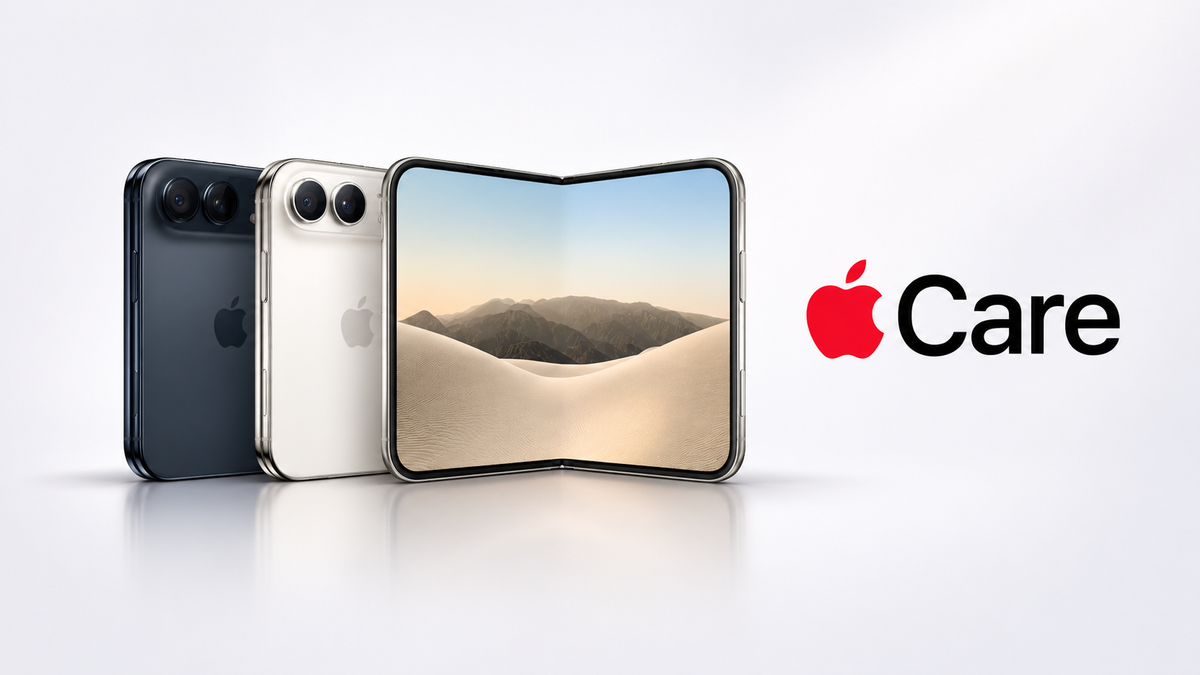
AppleCare+ Is My Case? Why iPhone Duo Owners Still Use a Case
You added AppleCare+ to your iPhone Duo. So can you stop worrying about everyday protection? Not quite. AppleCare+ can help manage the cost of eligible repairs after damage happens, but it does not prevent scratches, drops, or the inconvenience of a repair appointment.
That distinction matters on a foldable phone, where the outer display, front edges, rear shell, and hinge are exposed to different kinds of daily contact. Here's what AppleCare+ does—and why an iPhone Duo case can still be useful.
What AppleCare+ Does—and Doesn't—Do
AppleCare+ provides service benefits for eligible accidental damage, subject to plan terms, exclusions, and applicable service fees. It can make an unexpected repair more manageable, but coverage is not the same as preventing damage.
Routine cosmetic wear that does not affect functionality is generally not covered. That means an everyday scuff or scratch may remain your problem even when you have a service plan. Exact coverage depends on the applicable terms, device, and region; review Apple's current AppleCare+ information before relying on any specific benefit.

Why Everyday Protection Still Matters
Think about how often you set your phone on a table, slip it into a bag, or use its outer display while walking. These ordinary moments create opportunities for contact with hard surfaces and other objects. A case and outer-screen protector can add physical layers around selected surfaces, potentially reducing some direct contact.
They cannot guarantee that your phone will survive every fall or remain scratch-free. But their purpose is different from AppleCare+: they are part of how you handle and protect the device day to day, before a repair is needed.
AppleCare+ Can Reduce Repair Costs, Not Repair Hassle
Even an eligible repair can involve a service request, an assessment, possible fees, and time without your usual device or with a replacement arrangement. Availability and timing vary. A plan may ease the financial side of an accident, but it does not make the interruption disappear.
That is one reason some owners choose both a service plan and a case. The plan helps with certain consequences of damage; the case adds everyday exterior coverage. They are complementary choices, not competing products.
What Should You Protect on an iPhone Duo?
A foldable has several areas worth considering:
- Rear exterior: A slim shell can reduce direct contact with some surfaces during daily handling.
- Front perimeter: A fitted front frame adds coverage around the outer display edges.
- Outer display: A compatible screen protector adds a separate surface layer.
- Hinge exterior: Some configurations leave the hinge exposed; dedicated hinge-protection versions add exterior coverage but may introduce more bulk.
Coverage varies by design. A three-piece set should not be described as 360-degree protection, and no accessory eliminates the possibility of damage.

Where a Slim Benks iPhone Duo Case Fits In
If you already pay for AppleCare+, you may not want a bulky case that changes how your foldable feels. A lightweight Kevlar Aramid Fiber case is one option to consider. The material's strength-to-weight characteristics make it suitable for slim composite constructions, though the material alone does not establish a drop-protection rating.
For example, the documented Benks ArmorGrid Air Obsidian Black configuration has an 18.8g rear shell and a 2.5g front frame. Those components total 21.3g, excluding a screen protector and other accessories. The rear shell is approximately 1.2mm thick. Specifications vary by configuration, so check the exact listing.
If you prefer a coordinated setup, compare Benks' front-frame, rear-case, and outer-screen-protector options. If exterior hinge coverage is important, review a dedicated hinge-protection version separately.
Explore Benks iPhone Duo Cases →

Do You Need a Case If You Have AppleCare+?
There is no universal answer. If you are comfortable with potential cosmetic wear, service fees, and repair downtime, you may decide to carry your phone without a case. If you would rather reduce everyday surface contact and keep the device feeling relatively slim, a carefully chosen case may be worthwhile.
Ask yourself three questions: Which surfaces do I want covered? How much added weight am I comfortable carrying? And would a repair interruption be inconvenient for me? Those answers are more useful than assuming AppleCare+ makes daily protection unnecessary.
Frequently Asked Questions
Does AppleCare+ cover scratches on an iPhone Duo?
Cosmetic damage that does not affect functionality is generally excluded. Check the terms applicable to your plan for details.
Does AppleCare+ mean repairs are free?
Not necessarily. Eligible accidental-damage service may involve fees or deductibles, depending on the plan, region, and damage category.
Will a Kevlar Aramid Fiber case prevent a cracked screen?
No case can guarantee that. Impact outcomes depend on the finished case design and circumstances of the accident.
Is a three-piece set the same as hinge protection?
No. A front frame, rear case, and outer-screen protector do not necessarily cover the hinge. Check the selected configuration.
Final Takeaway
AppleCare+ helps you prepare for eligible repairs. A case helps you think about everyday protection before damage happens. You can value both without expecting either to do the other's job.
If your priority is a slim daily setup, compare Benks iPhone Duo case options and choose the coverage, weight, and fit that work for you.
Benks is not affiliated with Apple. AppleCare+ coverage, pricing, and eligibility are governed by Apple's applicable terms.



댓글 남기기
이 사이트는 hCaptcha에 의해 보호되며, hCaptcha의 개인 정보 보호 정책 과 서비스 약관 이 적용됩니다.