Article:
Galaxy S25 Edge vs iPhone Air: Which Ultra-Thin Phone Should You Buy in 2025?

Galaxy S25 Edge vs iPhone Air: Which Ultra-Thin Phone Should You Buy in 2025?
In 2025, both Samsung and Apple finally went all-in on ultra-thin flagships. Samsung has the Galaxy S25 Edge, and Apple has the iPhone Air. If you’ve held either one in person, you know how shocking they feel in the hand: almost impossibly slim, but still flagship-level.
If you love thin phones but don’t know whether to go Samsung or Apple, this guide breaks things down with real numbers: thickness, weight, battery capacity, performance, price storage options, charging speeds, network requirements, camera hardware, and early reviews. If you can test them in a store, do it—this article will help you walk in with a clear checklist.
1. Specs at a Glance
| Feature |
Galaxy S25 Edge |
iPhone Air |
| Thickness |
5.8 mm |
5.6 mm |
| Dimensions |
158.2 × 75.6 × 5.8 mm |
156.2 × 74.7 × 5.6 mm |
| Weight |
163 g |
165 g |
| Display |
6.7" QHD+ Dynamic AMOLED 2X, LTPO 1–120 Hz, up to 2600 nits |
6.5" Super Retina XDR OLED, 1–120 Hz ProMotion, up to 3000 nits |
| Chip |
Snapdragon 8 Elite for Galaxy |
Apple A19 Pro |
| RAM |
12 GB |
12 GB LPDDR5X |
| Storage options (US) |
256 GB / 512 GB |
256 GB / 512 GB / 1 TB |
| Battery capacity |
3,900 mAh |
3,149 mAh |
| Wired charging |
Up to 25 W USB-C |
USB-C PD 2.0 (≈20 W) |
| Wireless charging |
Up to 15 W Qi2-ready; reverse wireless 4.5 W |
Up to 20 W MagSafe / Qi2 (15 W in China), 4.5 W reverse wired |
| Rear cameras |
200 MP main (OIS) + 12 MP ultrawide |
48 MP Fusion wide (OIS), single-lens system |
| Front camera |
12 MP selfie |
18 MP Center Stage front camera |
| Networks |
2G/3G/4G/5G NR, 5G sub-6 + mmWave; nano-SIM + eSIM options |
2G/3G/4G/5G NR; eSIM-only, no physical SIM tray |
| Software at launch |
Android 15 with One UI 7; 7 years of updates |
iOS 26 with Apple Intelligence features |
2. Thickness, Weight & Battery Life
When it comes to thinness, the iPhone Air is slightly slimmer at 5.6 mm, offering a sleeker in-hand feel. The Galaxy S25 Edge is a bit lighter, though the difference is negligible in daily use.
Where Samsung pulls ahead is battery life:
-
S25 Edge: 3,900 mAh
-
iPhone Air: 3,149 mAh
If you want the thinnest possible device, the iPhone Air has the edge — but if battery endurance matters more, the S25 Edge is the clear winner.

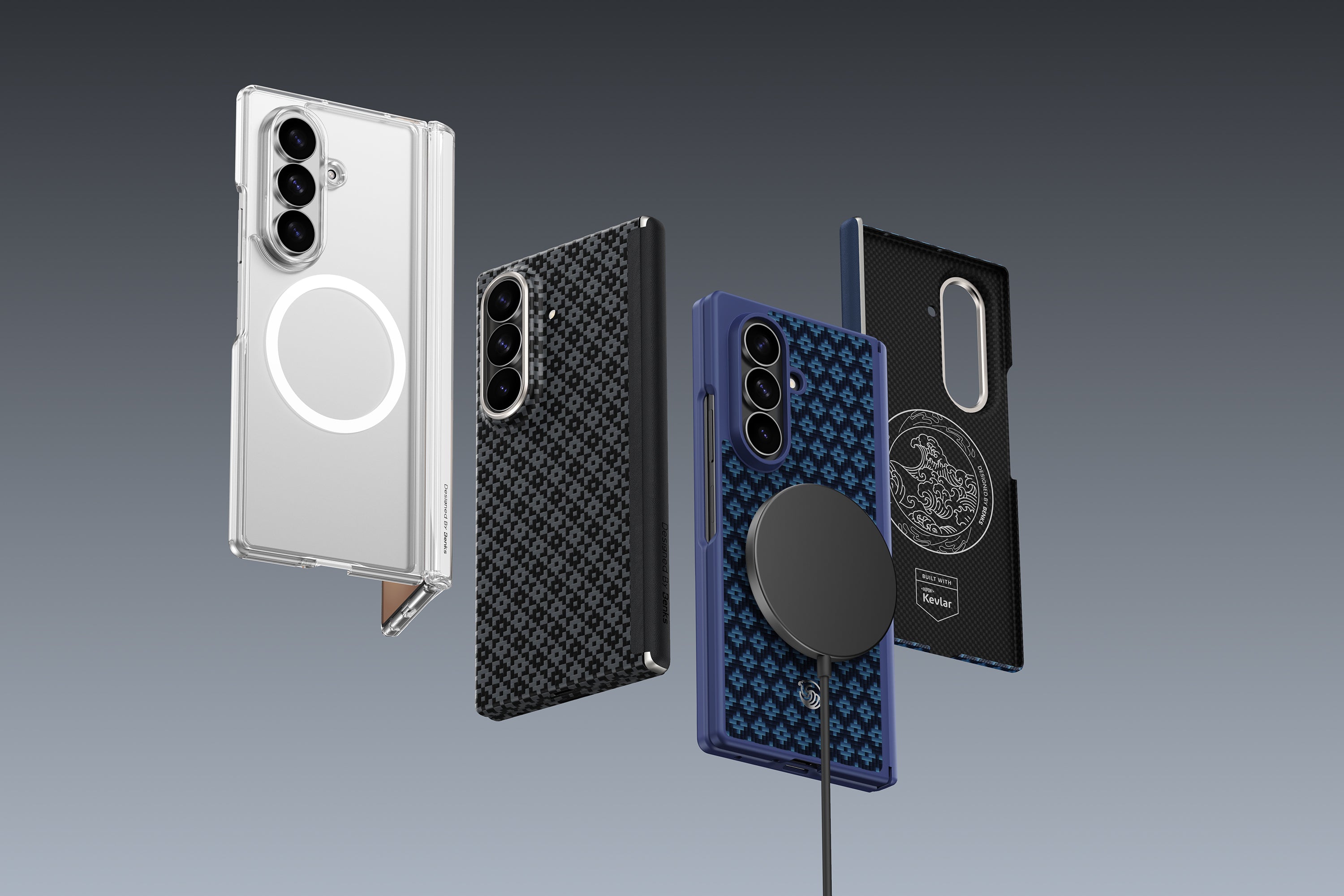
Benks iPhone Air Cases
3. Performance, RAM Behavior, Storage Options & Charging
The real deciding factor for many users is the system experience — iOS vs Android. That alone can determine which device feels more natural to you.
Both phones come with 12GB of RAM, but they manage memory differently:
-
Samsung relies on Android’s flexible RAM allocation, ideal for multitasking and background processes.
-
Apple uses tighter iOS memory optimization, often achieving similar smoothness with fewer system resources.
Storage options vary more noticeably:
Charging differences:
If you value large storage and magnetic wireless charging, the iPhone Air stands out.
If you prefer faster wired charging and Android flexibility, the S25 Edge fits better.

Samsung S25 Edge AR Screen Protector
4. Camera Setup & Shooting Style
The S25 Edge includes a more versatile dual-camera system:
The iPhone Air keeps things minimal:
This doesn’t mean poor quality — the Air still captures excellent everyday photos, and Apple’s widely praised computational photography continues to deliver some of the most natural and refined images in the industry.
5. Price Comparison (U.S. Market Reference)
Galaxy S25 Edge
-
256GB — $1,099
-
512GB — $1,219
iPhone Air
-
256GB — $999
-
512GB — $1,199
-
1TB — $1,399
All pricing is based on U.S. retail reference.
The iPhone Air starts at a lower entry price and provides a larger 1TB storage option, while the Galaxy S25 Edge costs slightly more but offers a bigger battery and a more versatile camera system.
6. Final Recommendation
-
Choose iPhone Air if you want the thinnest design, MagSafe convenience, Apple’s ecosystem, and a 1TB storage option.
-
Choose Galaxy S25 Edge if you need better battery life, camera versatility, faster wired charging, and Android flexibility (including physical SIM).
Both are excellent ultra-thin flagships — your choice depends on whether you prioritize ecosystem, endurance, or camera flexibility.
You May Want to Learn
Samsung Galaxy S25 Edge vs S25+ and S25 Ultra: What Are the Differences?
iPhone 17 Pro Max vs iPhone 16 Pro Max: Is It Really Worth Upgrading in 2025?
FAQ
1. Which phone is thinner, the Galaxy S25 Edge or the iPhone Air?
The iPhone Air is slightly thinner at 5.6 mm, while the Galaxy S25 Edge measures about 5.8 mm. The difference is subtle, but the Air offers a sleeker in-hand feel.
2. Which phone has better battery life?
The Galaxy S25 Edge has a noticeably larger 3,900 mAh battery, compared to the iPhone Air’s 3,149 mAh. While Apple’s power-saving optimizations help extend usage time, Samsung still holds the advantage in raw battery capacity.
3. Do both phones perform equally well in daily use?
Yes — both are flagship-level performers.
Galaxy S25 Edge: Snapdragon 8 Elite, strong GPU and AI capabilities.
iPhone Air: A19 Pro, industry-leading single-core efficiency and excellent thermal management. Both include 12GB RAM, though iOS and Android handle memory differently.
4. Which phone should I choose if I need a lot of storage?
The iPhone Air is better for heavy storage users.
Galaxy S25 Edge: 256GB / 512GB
iPhone Air: 256GB / 512GB / 1TB
If you shoot videos, store large photo libraries, or prefer keeping all files locally, the 1TB Air is the better option.
5. What about SIM support — is the iPhone Air really eSIM-only?
Yes.
The iPhone Air is eSIM-only in the US, meaning no physical SIM slot.
The Galaxy S25 Edge supports nano-SIM + eSIM, offering more flexibility for frequent travelers or users who switch SIM cards often.
<div class="dynamic-checkout__content" id="dynamic-checkout-cart" data-shopify="dynamic-checkout-cart"> <shopify-accelerated-checkout-cart wallet-configs="[{"supports_subs":true,"supports_def_opts":false,"name":"shop_pay","wallet_params":{"shopId":47053930645,"merchantName":"Benks","personalized":true}},{"supports_subs":false,"supports_def_opts":false,"name":"paypal","wallet_params":{"shopId":47053930645,"countryCode":"HK","merchantName":"Benks","phoneRequired":true,"companyRequired":false,"shippingType":"shipping","shopifyPaymentsEnabled":true,"hasManagedSellingPlanState":false,"requiresBillingAgreement":false,"gatewayType":"CONNECTED","merchantId":"ESZRRAH2DLBQ2","sdkUrl":"https://www.paypal.com/sdk/js?components=buttons\u0026commit=false\u0026currency=USD\u0026locale=en_US\u0026client-id=AexZEtAxk09Ncgj6FSWFFyGKbxxAZ_LTyJ2DPdJWl1YUlecinmc5AfIaRF2qYjWlusWahlzz6SVkY5Ci\u0026merchant-id=ESZRRAH2DLBQ2\u0026intent=authorize","serviceableCountryCodes":["AE","AL","AO","AR","AT","AU","AZ","BA","BE","BG","BH","BN","BR","BY","CA","CH","CL","CN","CO","CR","CY","CZ","DE","DK","DZ","EE","EG","ES","FI","FR","GB","GH","GR","HK","HR","HU","ID","IE","IL","IN","IS","IT","JO","JP","KE","KH","KR","KW","KZ","LK","LT","LU","LV","MA","MC","MD","MM","MO","MT","MX","MY","NG","NL","NO","NZ","OM","PE","PH","PK","PL","PT","QA","RO","RS","RU","RW","SA","SE","SG","SI","SK","TH","TW","TZ","UA","UG","US","VA","VN","ZA"]}}]" access-token="56b154c2f9adbcff9e5af72e4c299297" buyer-country="US" buyer-locale="en" buyer-currency="USD" shop-id="47053930645" cart-id="9756acbaa297a42a2d6a46e83a850847" enabled-flags="["a1d1f9a1"]" > <div class="wallet-button-wrapper"> <ul class='wallet-cart-grid wallet-cart-grid--skeleton' role="list" data-shopify-buttoncontainer="true"> <li data-testid='grid-cell' class='wallet-cart-button-container'><div class='wallet-cart-button wallet-cart-button__skeleton' role='button' disabled aria-hidden='true'> </div></li><li data-testid='grid-cell' class='wallet-cart-button-container'><div class='wallet-cart-button wallet-cart-button__skeleton' role='button' disabled aria-hidden='true'> </div></li> </ul> </div> </shopify-accelerated-checkout-cart> </div>



Leave a comment
This site is protected by hCaptcha and the hCaptcha Privacy Policy and Terms of Service apply.