
Galaxy Z Fold 8 Camera Debate: Does a Foldable Need the Best Camera?
A post appeared in r/GalaxyFold a few weeks ago showing what the Galaxy Z Fold 8 Wide's camera module looks like. Just two lenses. No telephoto.
The response was immediate. Some users were frustrated. Others were relieved. A few pointed out that this debate happens every time Samsung releases a foldable — and that it says more about user expectations than it does about the hardware.
That tension is what this article is about.

What We Actually Know About the Galaxy Z Fold 8 Camera
Before getting into the debate, the confirmed details matter.
The Galaxy Z Fold 8 Wide will ship with a primary 50MP camera at f/1.8 and a 50MP ultrawide at f/1.9 — both with autofocus and likely capable of 8K video at 30fps. No telephoto lens.
The standard Galaxy Z Fold 8 (the "Ultra" model, in revised naming) keeps a triple-camera system: a 200MP main camera, 50MP ultrawide, and 10MP telephoto with 3x optical zoom — a direct continuation of the Fold 7's camera philosophy.
Without a dedicated telephoto, Wide users who want close-up shots will need to crop from the main 50MP sensor — a technique that yields limited results compared to a dedicated zoom lens.
The Fold 8 Ultra is the true Fold 7 successor on camera. The wider Fold 8 is a sideways move for camera-focused users.
So the choice Samsung is presenting is real: buy the Wide for the wider display and lighter 201g body, and accept a simpler camera system. Buy the Ultra for the camera, and accept the taller, heavier form factor.
Why Foldable Phones Have Always Made Camera Trade-Offs

The frustration from Fold users is understandable. A Galaxy Z Fold costs as much as a Galaxy S Ultra. Users reasonably expect similar camera hardware.
The engineering reality is that foldables and flagships are solving different problems.
A conventional flagship like the Galaxy S26 Ultra can dedicate a significant portion of its internal volume to camera hardware — large sensors, periscope telephoto mechanisms, multiple stabilization systems. The camera module is the hero feature. Everything else is built around it.
A foldable phone is solving multiple problems simultaneously. The hinge mechanism takes up internal space. The battery has to fit around an unusual chassis geometry. The folding display requires additional support structures. The body has to be thin enough to remain pocketable when folded, which constrains how tall any internal component can be.
<cite index="26-1">This isn't new — the Galaxy Z Fold camera hardware has been largely unchanged for three generations. The same telephoto lens appeared in the Z Fold 4, 5, 6, and 7. Camera upgrades in the Fold line have historically been conservative while display and hinge engineering received the most significant investment each year.</cite>
The debate about foldable cameras isn't really about whether Samsung is being lazy. It's about whether a foldable phone should try to match a dedicated camera phone — or whether that's the wrong goal entirely.
What the Community Is Actually Arguing About
The r/GalaxyFold discussion on the Fold 8 Wide's camera layout broke into predictable but genuinely interesting camps.
The camera-parity camp argues from a price point: if this phone costs $1,899, it should offer flagship camera capabilities. Missing a telephoto lens at that price is a compromise the buyer shouldn't have to make. These users compare the Fold 8 Wide directly against the S26 Ultra and find it lacking. The counterargument — that it's a different kind of device — doesn't satisfy them.
The experience-first camp points to how Fold users actually use their phones. Foldables attract users who multitask, read, watch video, and run split-screen productivity workflows. For these users, the wider 8.0-inch display and lighter body are meaningfully more valuable than a telephoto lens they'd rarely use. The 50MP main sensor crops adequately for most social media and casual photography needs.
The "wrong comparison" camp makes the most interesting argument: foldable users should stop comparing their phones to camera phones. The Galaxy Z Fold 8 Wide isn't competing with the S26 Ultra for photography supremacy. It's competing with the idea that a phone can replace a laptop for productivity while remaining a phone. Evaluate it on that basis, and a dual 50MP camera system is perfectly reasonable.
What the community broadly agrees on: the Fold 8 Ultra — with its 200MP main camera and telephoto — is the right choice for users who prioritize camera versatility. The Wide is the right choice for users who prioritize the foldable experience itself.
| Feature | Galaxy Z Fold 8 Wide | Galaxy Z Fold 8 Ultra |
|---|---|---|
| Rear cameras | Dual 50MP (main + ultrawide) | Triple: 200MP + 50MP + 10MP telephoto |
| Telephoto | ❌ None | ✅ 3x optical zoom |
| Inner display | 8.0" — wider/shorter | 7.6" — taller/narrower |
| Weight | ~201g | ~237g |
| Price (rumored) | ~$1,899 | ~$2,099 |
| Best for | Display, portability, usability | Photography, productivity, S Pen |
Do Foldable Phone Users Actually Take More Photos?
This question doesn't get asked enough.
The marketing around foldable phones tends to emphasize the camera as a differentiator — possibly because cameras are easy to benchmark and compare. In practice, the usage patterns of Fold owners lean heavily toward what the large inner display uniquely enables: extended reading sessions, video consumption, side-by-side app multitasking, mobile document work.
A phone you use to read long-form content in bed, run two apps side-by-side during a meeting, or watch a film on a train needs a great display and a light body more than it needs a periscope telephoto lens.
This doesn't mean camera quality is irrelevant on a foldable. It means the use-case hierarchy is different. For a Fold user, the camera question might be: "Is it good enough for the photos I actually take?" For an S Ultra user, the question is: "Is this the best camera I can put in my pocket?"
The 50MP dual-camera system on the Fold 8 Wide answers the first question adequately. It doesn't answer the second question — and it shouldn't be expected to.
💡 Considering whether to buy the Fold 8 or wait? Galaxy Z Fold 8 vs Fold 7: Should you wait or buy now?
Why Camera Protection Matters More on Foldable Phones

Here's an angle the camera debate rarely addresses: protecting the lenses themselves.
Foldable phones have a specific camera vulnerability that conventional flagships don't. On a flat phone, the camera bump protrudes from a single stable surface. On a foldable, the camera array is on the outer back panel — the surface that faces outward when the phone is folded and in your pocket. Every time the phone goes into a bag or a pocket while folded, the camera bump is the first point of contact with whatever else is in there.
Additionally, the outer back panel on a foldable is under more mechanical stress than a conventional phone back. The panel flexes slightly as the phone opens and closes — not enough to affect normal use, but enough that micro-damage around the camera cutout can accumulate over time on lower-quality cases that don't account for the case-to-panel junction correctly.
A case that protects the camera on a foldable has to account for three things: a raised lip around the camera array to prevent lens contact with flat surfaces, a back panel construction that doesn't flex with the phone's opening motion, and hinge coverage that doesn't interfere with the camera area when folded.
💡 Your Z Fold 7 cases won't fit the Fold 8 — here's what will
How to Choose a Galaxy Z Fold 8 Case for Camera Protection

If the camera is important to you — even on the dual-lens Wide model — the case you choose has real impact on whether those lenses survive two years of daily use.
Raised camera frame. The case should create a physical barrier around the camera module, so placing the folded phone face-down on a table doesn't bring the lenses into contact with the surface. This protection is distinct from the corner and edge protection most cases focus on.
Rigid back construction. Soft TPU backs flex with the phone when it opens. Over time this creates stress at the camera cutout edges. Rigid materials — specifically aramid fiber (Kevlar®) — maintain their geometry across the camera aperture and don't deform with the hinge's opening motion.
Hinge coverage without interference. The hinge is adjacent to the camera array on the back panel. A case that covers the hinge area cleanly, without creating pressure points near the camera housing, protects both systems.
Magnetic compatibility. Neither the camera system nor the case should interfere with wireless charging or MagSafe-style accessories. Aramid fiber is non-conductive — it doesn't affect signal or charging performance.
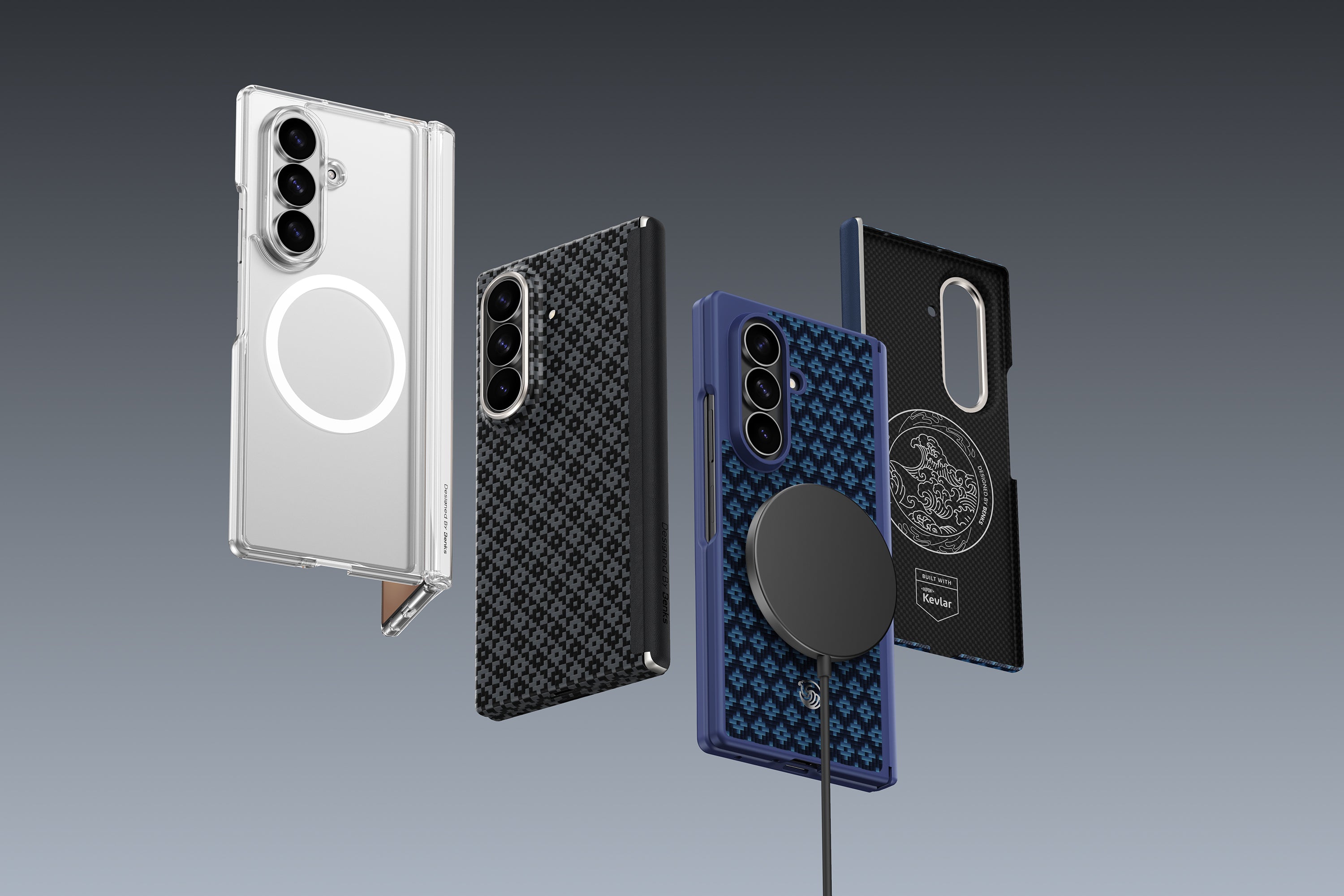
[Grand Combo] ArmorGrid Air Obsidian Black Case built with Kevlar® for Samsung Galaxy Z Fold 8 Ultra
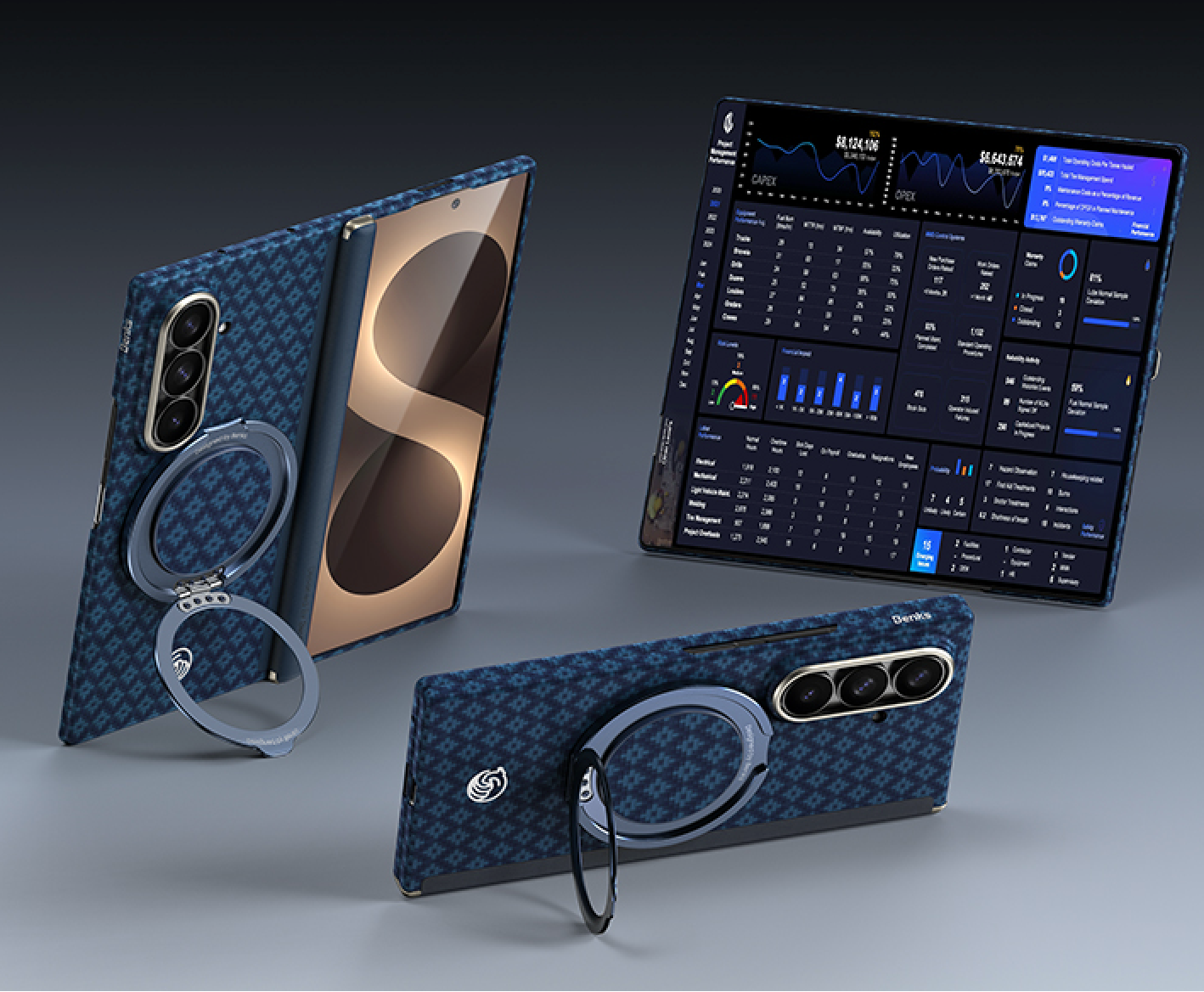
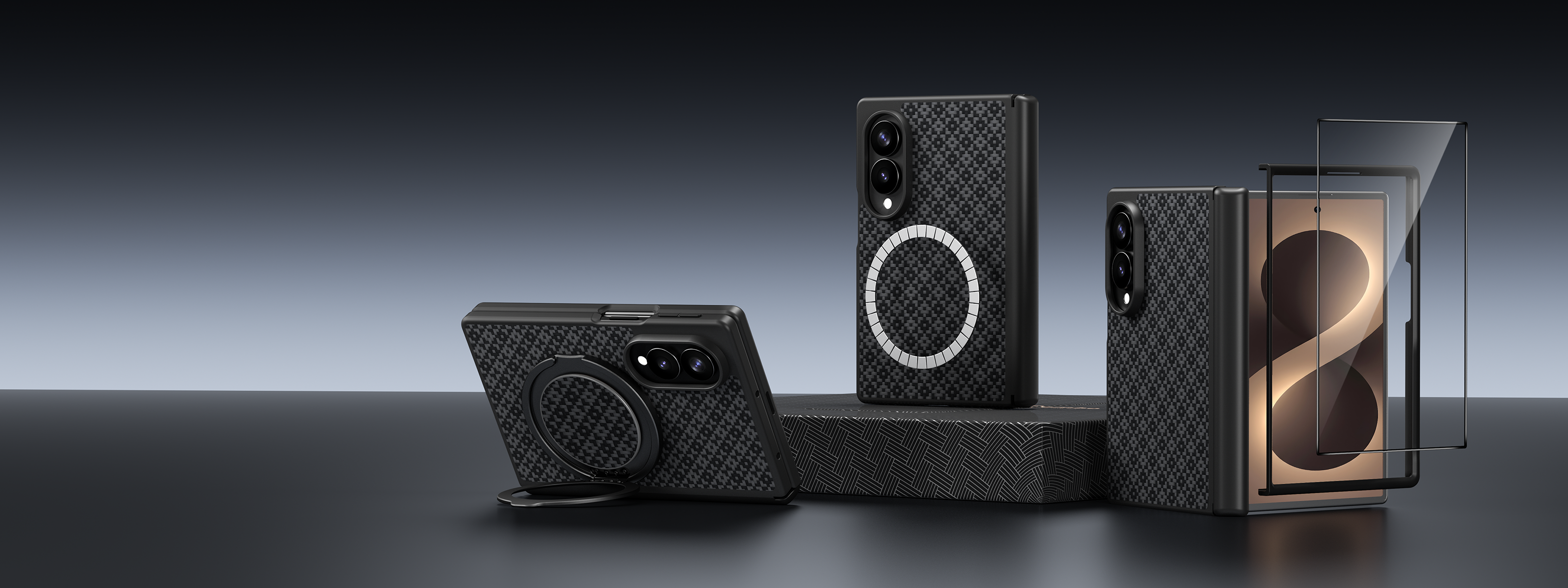
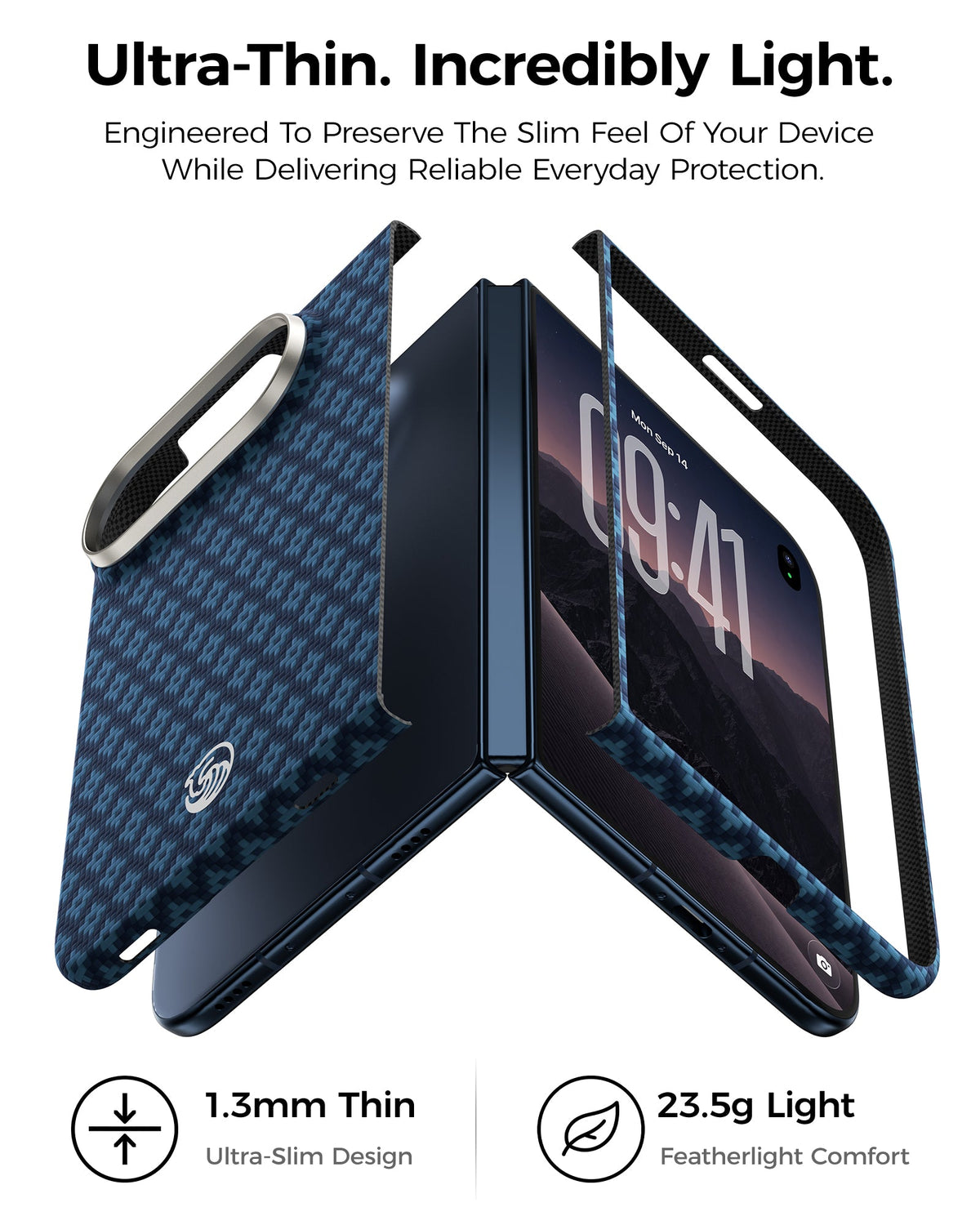
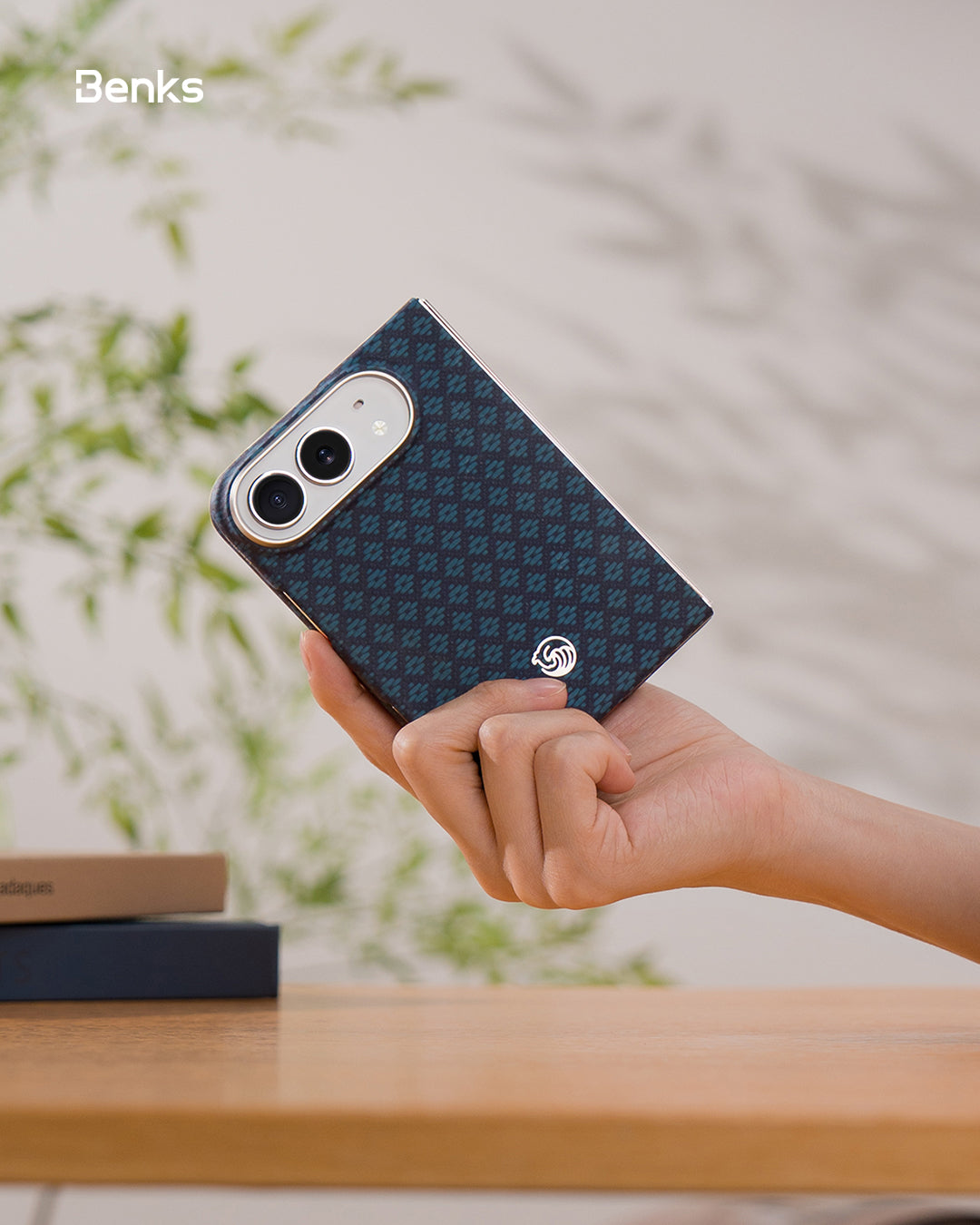
Benks' Grand Combo ArmorGrid Air case for the Galaxy Z Fold 8 addresses all four points: DuPont™ Kevlar® back panel maintains structural integrity around the camera cutout, the raised metal camera frame creates physical lens protection, and the full hinge coverage system is laser-cut to the Fold 8's specific hinge geometry without restricting fold range.
💡 What phone case materials actually last — a complete guide

Benks Galaxy Z Fold 8 case collection
The Future of Foldable Cameras
The camera trade-off in foldable phones is a temporary constraint, not a permanent one.
Computational photography — AI-driven scene reconstruction, multi-frame processing, and zoom simulation — is improving faster than sensor hardware. A 50MP main sensor with strong computational processing can produce usable 5x zoom through intelligent cropping in ways that weren't possible five years ago. Samsung's Galaxy AI features are increasingly applied to closing the gap between hardware limitations and final image quality.
Sensor miniaturization is the other variable. As high-resolution sensors get physically smaller, foldable manufacturers gain internal space to work with. The trade-off between display engineering and camera engineering in a foldable isn't fixed — it's a function of what the current manufacturing state-of-the-art allows.
The more interesting question is whether foldable users actually want flagship cameras, or whether they want the foldable to be excellent at what foldables uniquely do. The answer will define what the category looks like in five years.
Conclusion
The Galaxy Z Fold 8 Wide camera debate isn't really about cameras. It's about what a foldable phone is supposed to be.
If you're buying a foldable to have the most versatile camera system in a smartphone, the Fold 8 Ultra is the right device. If you're buying a foldable because you want a device that expands into a tablet and collapses into something genuinely pocketable — and you can accept "good enough" photography as part of that deal — the Wide's dual 50MP system is perfectly adequate.
Samsung isn't wrong to ship a foldable without a telephoto lens. It's a deliberate trade-off in service of a specific user. The question worth asking isn't "why did they remove the telephoto?" It's "which trade-off am I actually willing to make?"
What matters more to you — the camera system, or the foldable experience? That's still the question the category hasn't answered for the mainstream.
FAQ
Does the Galaxy Z Fold 8 have a good camera? The Galaxy Z Fold 8 Wide features dual 50MP cameras — a 50MP main (f/1.8) and 50MP ultrawide (f/1.9) — with 8K video support. It has no telephoto lens, so optical zoom isn't available. The Galaxy Z Fold 8 Ultra retains a triple-camera setup with a 200MP main and 10MP telephoto, matching the Fold 7's configuration with a 50MP ultrawide upgrade.
Why don't foldable phones have the best cameras? Foldable phones balance competing engineering priorities — hinge mechanism, battery placement, structural support for folding displays, and body thickness. These constraints limit the internal space available for camera hardware compared to a conventional flagship, where the camera can be the primary design consideration.
Is the Galaxy Z Fold 8 camera better than the Fold 7? For the standard Fold 8 (Ultra), yes — the ultrawide upgrades from 12MP to 50MP, and the telephoto gains a resolution increase. For the Fold 8 Wide, the comparison is mixed: the dual 50MP system offers improved ultrawide capability but drops the telephoto entirely, making it a downgrade for zoom photography.
Do foldable phones need camera protection? More than conventional phones, in some respects. The camera module on a foldable sits on the outer back panel — the surface facing outward in a pocket or bag when folded. Without a raised protective frame, the camera lenses make direct contact with surfaces more frequently than on a flat phone. A case with a raised camera lip is particularly important for foldables.
What is the best Galaxy Z Fold 8 case for camera protection? Look for cases with a raised camera frame that prevents lens contact, a rigid back panel that doesn't flex at the camera cutout, and hinge coverage that doesn't interfere with the camera area when folded. Aramid fiber (Kevlar®) cases are well-suited because they maintain structural geometry around the camera aperture without deforming.
Is hinge protection necessary for the Galaxy Z Fold 8? Yes for most users. The hinge is the most expensive component to repair on a foldable ($350–500 out of warranty) and the one surface no conventional back case covers. The Fold 8's new dual-rail hinge is thinner than the Fold 7's — which means tighter case tolerances and more important to get right from day one.


Leave a comment
This site is protected by hCaptcha and the hCaptcha Privacy Policy and Terms of Service apply.