
Does Galaxy Z Fold 8 Need a Case? The Truth About Protecting a Thin Foldable
Samsung spent years making the Galaxy Fold thinner. The Fold 8 Ultra at 4.1mm unfolded is the payoff — less than half the thickness of a conventional flagship, lighter than most Folds have ever been.
And then the question arrives: do you cover it up?
It's a real dilemma. You bought the phone partly because of how it feels. A thick TPU case immediately undoes what Samsung's engineers spent years achieving. But a $1,900 foldable with an exposed hinge and an inner display made of ultra-thin glass is also not something most people want to drop unprotected.
The answer isn't simply yes or no. It's about understanding what actually needs protecting — and what kind of case preserves what makes the Fold 8 worth having.

The Fold 8 Is More Durable — But Foldables Have Different Risks
The Galaxy Z Fold 8 is genuinely more durable than its predecessors. The dual-rail hinge distributes mechanical stress more evenly than previous Fold designs. The Flex Titanium display reduces crease formation significantly. Samsung rates the hinge for 200,000 open-and-close cycles. These are real improvements.
But foldable phones face different risks than conventional smartphones — and durability ratings don't capture all of them.
The hinge spine runs the full height of the phone and is exposed to pocket debris, keys, coins, and spine-down drops. No back-only case covers it. Every day the phone spends in a pocket without hinge protection is a day of low-level abrasive contact that accumulates over months of ownership.
The inner display is ultra-thin glass — more fragile than any flat phone screen, and by design. The Flex Titanium technology reduces the fold crease, but it doesn't make the UTG layer more impact-resistant. A face-down drop on the inner display, or contact with a hard particle when the phone is open, is a different outcome than the same drop on a conventional phone's Ceramic Shield.
The camera array sits on the outer back panel — the surface facing outward in a pocket. On the Fold 8 Ultra's 4.1mm body, the camera bump protrudes more relative to the thin back panel than on thicker phones, making lens contact with surfaces more frequent.
The cover display takes casual daily contact every time the folded phone goes in and out of a pocket, a bag, or a car cupholder.
None of this means the Fold 8 is fragile. It means it requires a different protection framework than a flat phone.
💡 Do foldable phones break easily? A realistic look at foldable durability
Why Many Fold 8 Owners Don't Want a Case
The hesitation is legitimate, and it's worth taking seriously.
The Fold 8 wide at 201 grams is Samsung's lightest Galaxy Fold ever. The Ultra at 4.1mm is the thinnest. These achievements are the result of years of engineering — Silicon-Carbon batteries that don't require extra physical volume, a dual-rail hinge that distributes load more efficiently, a thinner display stack.
A conventional 3mm TPU case adds bulk that reverses those gains. It adds weight to a device users chose partly for being lighter. It adds thickness to a phone they bought partly for being thin. And it changes the grip — the wide Fold 8, in particular, has a cover screen designed for comfortable one-handed use at 82mm width. A soft TPU case changes that feel.
These aren't vanity concerns. The tactile experience of a premium device is part of the value. A case that destroys it in exchange for protection from drops that may never happen is a reasonable thing to question.
Why Traditional Cases Aren't the Right Answer
The mistake most new Fold owners make isn't going caseless — it's reaching for the wrong kind of case.
| Case Type | Adds Thickness | Hinge Coverage | Long-Term Shape | Weight |
|---|---|---|---|---|
| Thick TPU | 2–3mm | Rarely | Deforms over time | Heavy |
| Hard plastic (PC) | 1–2mm | Rarely | Better | Moderate |
| Leather | 2–3mm | No | Wears and peels | Heavy |
| Aramid fiber (Kevlar®) | 0.5–1mm | Yes (with hinge guard) | Maintains shape | Lightest |
Thick TPU cases create specific problems on a foldable. The hinge requires precise clearance — a soft material that deforms under heat and pressure gradually loses its geometric accuracy around the spine. After six months, a TPU hinge guard that started snug may create pressure points or restrict fold angle. That's not a protection feature anymore; it's a source of mechanical stress.
Hard plastic cases are thinner but rarely include hinge coverage. Leather adds bulk and wears in ways that look worse than the phone aging naturally.
The material that solves the foldable-specific case problem is aramid fiber.
Why Kevlar® Works for a Thin Foldable

Aramid fiber — commercially known by DuPont's brand name Kevlar® — achieves structural rigidity at thicknesses that soft polymers cannot. A Kevlar® case wall at 1.0mm provides meaningful structural protection. The equivalent TPU case would need 2.5–3mm to offer the same rigidity.
For a foldable phone, this matters in a specific way: the hinge clearance. A rigid 1.0mm Kevlar® case can be precision-engineered around the exact hinge geometry of the Fold 8. It doesn't deform under heat or daily pressure. The hinge cutout that fits on day one still fits the same way after 18 months.
Kevlar® also doesn't yellow under UV exposure — a practical advantage for a material that will spend years in sunlight and indoor lighting.
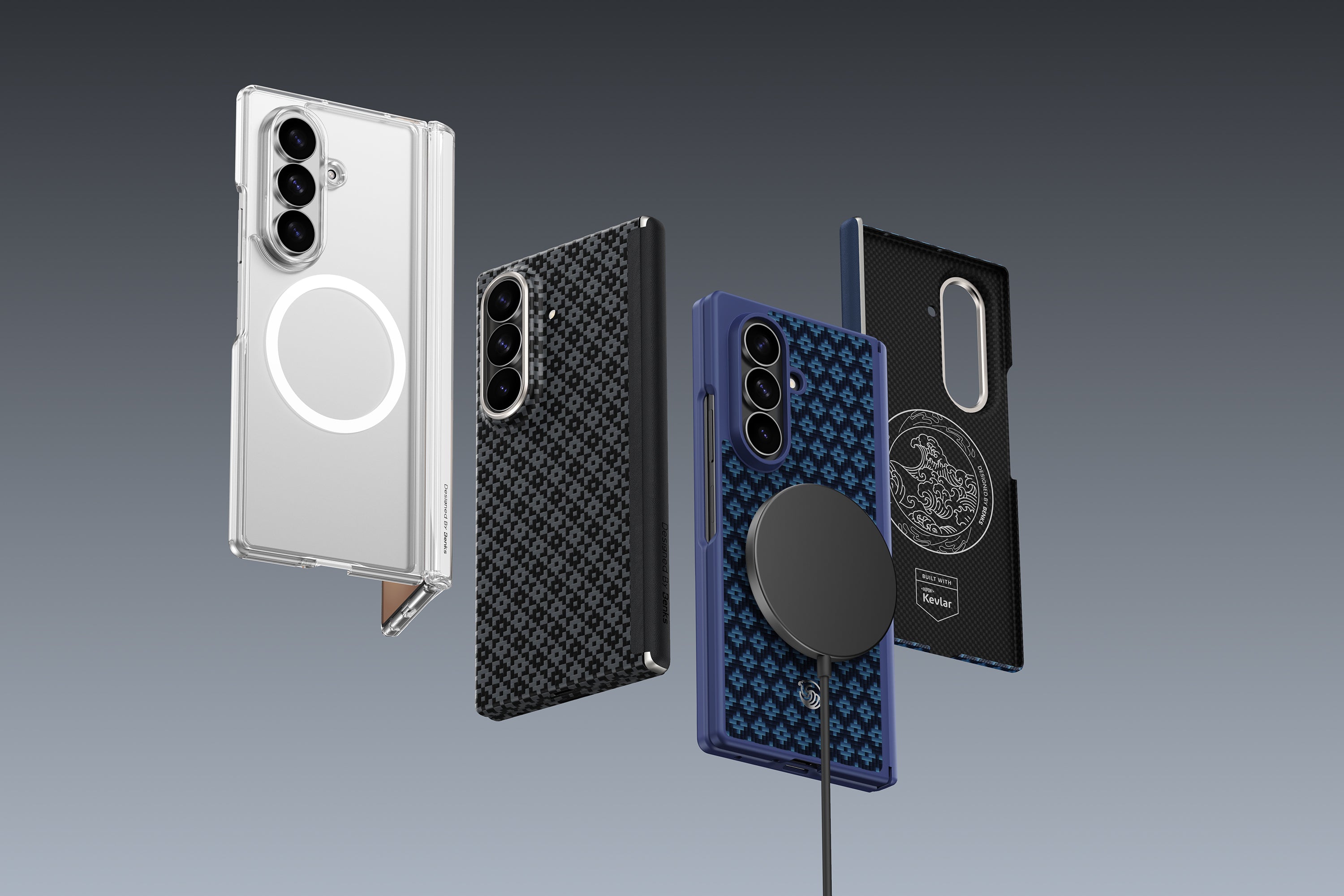
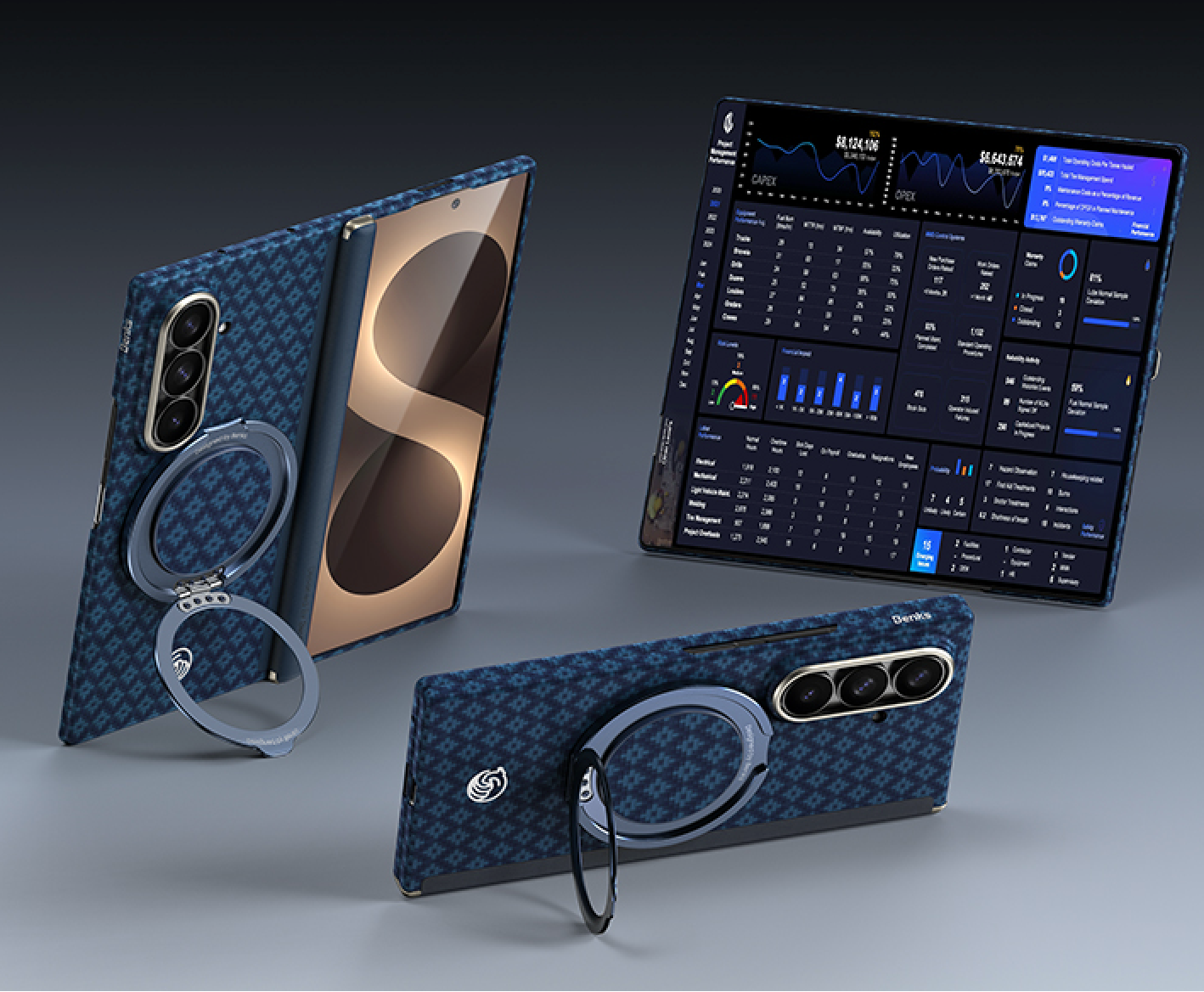
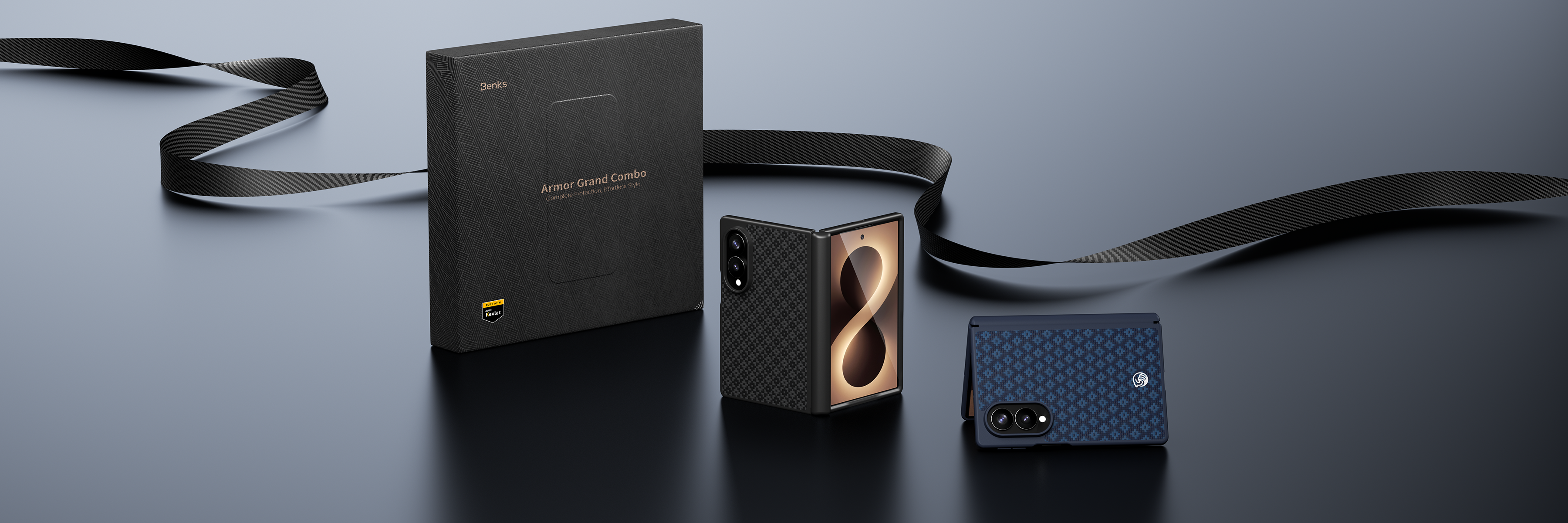
The Benks ArmorGrid Air Grand Combo applies this directly. It's a three-piece set for the Fold 8: a Kevlar® back case with a 1.0mm frame, a Kevlar® front frame (3g), and a GlassWarrior HD screen protector for the cover display. The magnetic hinge cover — with a PU leather exterior — attaches to the spine during pocket carry and removes during use. A raised aluminum lens frame protects the camera array. Total weight from 28g for the Fold 8 wide, 32g for the Ultra.
💡 What aramid fiber actually is — and why it matters for phone cases

🔗 ArmorGrid Air Grand Combo for Galaxy Z Fold 8
🔗 ArmorGrid Air Grand Combo for Galaxy Z Fold 8 Ultra
For users who want additional drop protection at corners, the ArmorGrid Pro fuses Kevlar® with TPU using in-mold injection — better corner impact absorption while maintaining the same hinge coverage and magnetic hinge guard.
Does the Fold 8 Need Hinge Protection?

Yes — for most users.
The hinge spine is the only surface on the Fold 8 that no conventional back case addresses. It faces the most sustained low-level exposure in daily carry: pocket friction, key contact, surface abrasion when the folded phone is set down spine-first.
The cost of getting this wrong is significant. Samsung's hinge repair on previous Fold generations has run $350–500 out of warranty. The dual-rail design on the Fold 8 is more refined, but it's still the most mechanically complex and most expensive component on the device.
The ArmorGrid Air's flexible TPU hinge guard addresses the spine without interfering with fold range. It protects the area during carry and daily handling without creating restriction or pressure during opening. This is the specific component that makes a foldable case different from a conventional phone case.
💡 Do foldable phones need hinge protection? Full engineering breakdown
Screen Protection: The Surface Most People Get Wrong

The cover display takes daily contact and benefits from a standard 9H tempered glass protector. The GlassWarrior AR Screen Protector adds an anti-reflective coating that reduces glare in outdoor conditions — practical for a cover screen used in all lighting conditions. The oleophobic layer resists fingerprints, which matters on a screen touched constantly.
The inner display is a different situation entirely. The Samsung-applied UTG film is a functional component, not packaging. Removing it voids the screen warranty. Never apply tempered glass to the inner display — the fold radius is 3–4mm, and rigid glass will crack at the crease within days. A flexible TPU film under 0.1mm is the only compatible addition, and for most users who keep the factory film intact, no additional inner screen protector is necessary.
🔗 GlassWarrior AR Screen Protectors for Galaxy Z Fold 8
💡 Galaxy Z Fold 8 screen protector guide — all three surfaces
The Right Protection Setup for Different Users
| User Type | Setup | Why |
|---|---|---|
| Minimalist | ArmorGrid Air (case only, no added screen protector) | Hinge and back protected; inner factory film intact |
| Daily commuter | ArmorGrid Air Grand Combo (case + front frame + GlassWarrior HD) | Full coverage; cover screen protected for pocket-heavy use |
| Heavy user / drop-prone | ArmorGrid Pro Grand Combo | Kevlar® + TPU corner absorption; same hinge coverage |
| Desk-primary user | ArmorGrid Air; skip cover screen protector | Lower daily abrasion exposure; minimal setup |

The Verdict: Should You Put a Case on the Galaxy Z Fold 8?
For most owners, yes — but the case matters as much as the decision to use one.
A thick TPU case doesn't preserve what makes the Fold 8 worth having. It adds back the bulk Samsung removed. It deforms around the hinge over time. It turns a premium device into something that feels like a budget phone wrapped in rubber.
The right case adds less than 1mm to the profile, covers the hinge without restricting it, keeps the device feeling like itself in the hand, and protects the camera lenses and cover display from the low-level daily wear that accumulates over two years of ownership.
Going completely caseless is a defensible choice for light users in controlled environments. For everyone else, the question isn't whether to use a case — it's whether the case you choose respects what the phone actually is.
🔗 Benks Galaxy Z Fold 8 case collection
FAQ
Does the Galaxy Z Fold 8 need a case? For most users, yes. The hinge spine ($350–500 to repair out of warranty), inner display ($400–600), and camera lenses are all vulnerable surfaces that a well-designed case protects without meaningful bulk. Light users in controlled environments can manage without one, but the repair cost math favors protection from day one.
Is the Galaxy Z Fold 8 durable without a case? The hinge is rated for 200,000 cycles and the Flex Titanium display reduces crease formation significantly. But durability ratings are tested under controlled conditions, not pocket carry with keys or spine-down drops. The phone is well-built; it's not indestructible.
Should I protect the Fold 8 hinge? Yes. The hinge spine is the one surface no back-only case covers. It faces daily pocket debris and abrasion. A case with a dedicated hinge guard — particularly one that doesn't interfere with fold range — addresses the most expensive component to repair.
What is the thinnest Fold 8 case available? The Benks ArmorGrid Air at 1.0mm frame thickness is among the slimmest cases for the Fold 8. The complete Grand Combo set weighs from 28g for the Fold 8 wide, 32g for the Ultra — adding negligible bulk to the phone's native profile.
Is Kevlar® better than TPU for a foldable case? For foldables specifically, yes. Kevlar® maintains its geometric precision around the hinge cutout over time; TPU deforms under heat and daily pressure. Kevlar® also achieves structural protection at thinner cross-sections, preserving the phone's slim feel.
Does the Fold 8 need a screen protector? The cover display benefits from a 9H tempered glass protector — it takes daily casual contact and scratches. The inner display must never have tempered glass applied to it; the factory UTG film must remain in place. A flexible TPU film under 0.1mm is the only compatible addition to the inner screen.
Can a case make the Fold 8 uncomfortable to use? Yes — the wrong case can. A thick TPU case adds meaningful bulk to the Fold 8's wider body and can deform around the hinge over time. A well-designed slim Kevlar® case adds less than 1mm and maintains the phone's original grip and fold feel.
What accessories should every Fold 8 owner buy first? A case with hinge coverage is the priority. A cover screen protector is the second. Beyond that, a phone stand for desk use makes the large inner display more practical for extended sessions. These three cover the protection and usability gaps that the phone alone doesn't address.
Published by Remy


Leave a comment
This site is protected by hCaptcha and the hCaptcha Privacy Policy and Terms of Service apply.