
게시글: Did Apple Buy iPhone Duo’s Crease Technology From Samsung? And How Should You Protect It?
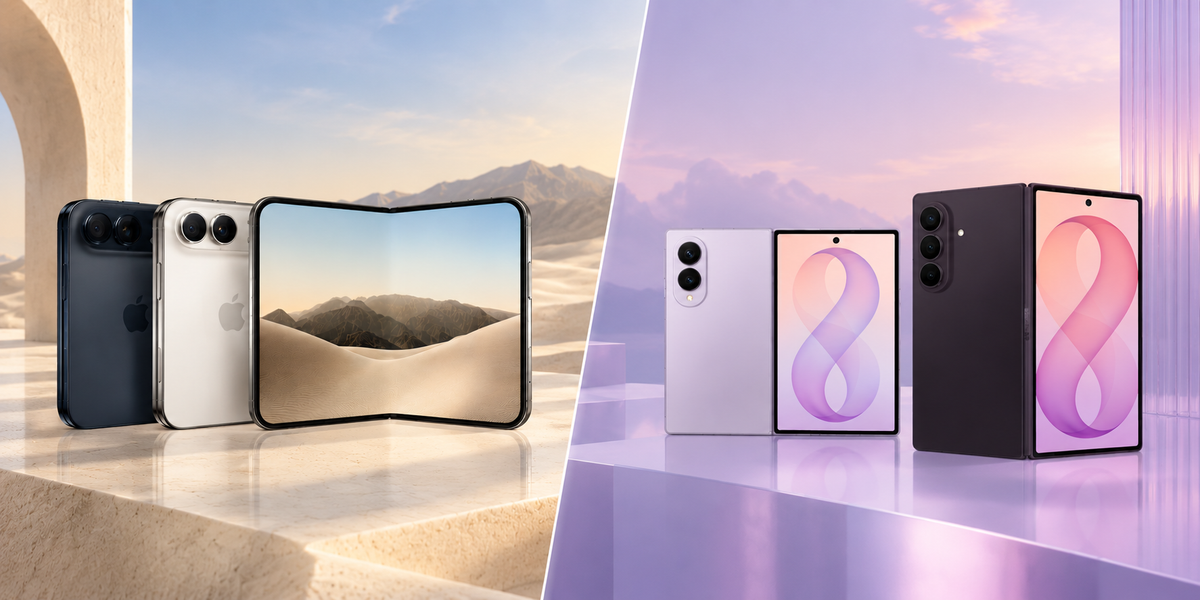
Did Apple Buy iPhone Duo’s Crease Technology From Samsung? And How Should You Protect It?
The iPhone Duo is finally here, and one of the biggest questions surrounding Apple’s first foldable is the crease. For years, the center crease has been one of the most recognizable compromises of foldable phones. Samsung and other manufacturers have steadily improved it, but making a flexible OLED display fold repeatedly without leaving a visible valley remains a difficult engineering problem.

So when Apple unveiled the iPhone Duo with a remarkably flat-looking inner display, an obvious question followed: Did Apple simply buy its low-crease foldable display technology from Samsung?
The answer is more complicated than a simple yes or no. Samsung Display plays an important role in foldable OLED manufacturing, but the iPhone Duo’s crease is not controlled by the OLED panel alone. Apple’s approach involves the display stack, adhesives, supporting materials, and the hinge working together as one system.
Is the iPhone Duo Foldable Display Made by Samsung?
Samsung Display has years of experience manufacturing flexible OLED panels, so its reported involvement with Apple’s first foldable is not surprising. But supplying the foldable OLED panel is not the same as designing the entire folding-display system.
A foldable smartphone screen includes multiple layers: the surface material, protective and structural layers, optically clear adhesives, the flexible OLED, supporting materials underneath the display, and the mechanical hinge. All of these components influence what happens when the phone folds.
For useful context on Samsung’s own latest approach to reducing the foldable crease, see Galaxy Z Fold 8 Ultra's Crease Is Gone — Or Is It? What Flex Titanium Actually Does.
Did Apple Buy Samsung’s “Crease-Free” Technology?

Samsung Galaxy Z Fold 8 crease diagram (from Samsung official site)
That idea became especially popular before the iPhone Duo launch. Samsung Display had already demonstrated increasingly flat foldable OLED technology, leading to speculation that Apple could simply adopt Samsung’s latest panel and solve the crease problem that way.
There is some truth behind the connection, but saying Apple simply bought Samsung’s crease technology oversimplifies what is happening. The final crease behavior depends on how the display panel, supporting layers, adhesives, and hinge are engineered together.
In other words, Samsung may manufacture a critical part of the display, while Apple determines how that display behaves inside the finished iPhone.
How Does Apple Make the iPhone Duo Crease Less Visible?
1. The Surface Helps Control Reflections
One reason foldable creases can look dramatic is light. On a glossy screen, reflections make even small changes in surface angle easier to see. Reducing glare can therefore make the transition across the folding area appear less distracting.
2. The Display Layers Need to Move as the Phone Folds
A multilayer foldable display cannot behave like a single rigid sheet. As the phone opens and closes, different layers travel slightly different distances. Allowing microscopic relative movement between layers can help distribute mechanical stress instead of concentrating it at one narrow fold line.
3. Structural Support Matters
A foldable display needs flexibility at the fold but stability everywhere else. Supporting materials underneath the OLED help control where and how the display bends, which can influence both long-term durability and how visible the crease appears when the phone is open.
4. The Hinge Is Part of the Crease System
A crease is not only a display problem. It is also a hinge problem. The hinge determines the bend geometry and how the center of the screen is supported through repeated folding cycles. That is why low-crease engineering is better understood as a complete system rather than a single panel technology.
So, Is the iPhone Duo’s Crease Technology From Samsung?
The most accurate answer is: partly, but not in the way the question usually implies.
Samsung Display’s foldable OLED manufacturing expertise can be an important part of the supply chain, but the finished iPhone Duo display system involves much more than the OLED panel. Apple’s material stack, adhesive system, structural support, and hinge determine how that panel behaves inside the finished device.
A Smaller Crease Doesn’t Make the iPhone Duo a Normal iPhone
The iPhone Duo may have one of Apple’s most sophisticated displays yet, but sophisticated does not mean indestructible. Foldables have durability challenges that are different from those of conventional smartphones.
For a broader look at those durability trade-offs, read Do Fold Phones Break Easily? Exploring the Durability of Foldable Phones.
The iPhone Duo has several distinct areas to think about: the exposed outer display, the flexible inner display, two body sections, and the mechanical hinge. Each requires a slightly different protection strategy.
How Should You Protect the iPhone Duo?
Protect the Outer Display Like a Normal iPhone
The outer screen is exposed whenever the iPhone Duo is closed. It goes into your pocket, touches tables, and encounters everyday scratches and impacts. For this screen, the familiar combination of a properly fitted case and tempered glass still makes sense.
Treat the Inner Display Differently
The folding inner display should not be treated like a conventional glass iPhone screen. Avoid installing rigid protection that is not specifically designed for a flexible display, avoid peeling factory-applied layers, and keep sharp objects away from the screen. When the device is not being used, closing it also keeps the flexible inner display protected inside the phone.
What About the Hinge? Does It Need Protection?
This question does not have one universal answer. Hinge protection has been a major part of the foldable-case market for years, particularly around Samsung Galaxy Z Fold devices.

For a deeper explanation of both sides of this trade-off, read Foldable Phone Hinge Protection: Do You Actually Need It?.
A dedicated hinge cover can reduce direct exposure to impacts, debris, and everyday contact. The trade-off is that it adds another structure to an already mechanically complicated device and can increase thickness and weight.
For users who frequently drop their phone, travel often, or use it in rougher environments, hinge protection can be worthwhile. For users who prioritize thinness and handling, leaving the hinge exposed can be a reasonable compromise.
Why Doesn’t Benks Cover the iPhone Duo Hinge?
Benks’ current iPhone Duo protection takes the slimmer approach. The design focuses on the outer display, front frame, and rear body while leaving the hinge itself exposed.

That should not be interpreted as a claim that hinges never need protection. Previous Benks solutions for Samsung foldables have taken a more coverage-focused approach. The iPhone Duo design represents a different balance between coverage and bulk.
This is a trade-off, not a claim that the hinge doesn’t need protection.
Why Lightweight Protection Matters More on a Foldable
Foldable phones already contain more physical structure than conventional phones: two body sections, a hinge, multiple display layers, and additional internal reinforcement. Adding a heavy case can quickly change the experience.
That makes protection-to-weight ratio particularly important. For a detailed comparison of Kevlar®, TPU, polycarbonate, silicone, and other common materials, see Phone Case Materials Guide: Kevlar, TPU & More (2026).

Kevlar® and other aramid fibers are especially interesting for foldables because of their high strength-to-weight ratio. A rigid woven shell can add useful exterior protection without requiring the same amount of material as some thicker conventional case constructions.
Thickness alone also does not determine how useful a case will be. Material, construction, edge coverage, fit, and impact type all matter. For more on that distinction, read Do Thin Phone Cases Really Protect Your Phone? Real Test Results and Honest Answer.
So What Protection Does an iPhone Duo Actually Need?
Start with the surfaces that encounter everyday damage most often. Protect the outer display from scratches and direct contact. Protect the front edges and rear body from ordinary bumps and drops. Treat the inner folding display carefully rather than trying to turn it into a conventional glass screen.
Then make a conscious decision about the hinge. If maximum coverage matters more than size, choose dedicated hinge protection. If thinness and handling matter more, understand that leaving the hinge exposed is the compromise you are making.
Final Thoughts: Samsung May Make the Display, but Apple Engineered the Fold
So, did Apple buy the iPhone Duo’s crease technology from Samsung? Not exactly. Samsung Display’s experience with foldable OLED manufacturing may be an important part of the supply chain, but the finished folding system involves much more than the OLED panel itself.
The same systems thinking applies to protection. The outer screen wants conventional protection, the inner screen demands more careful treatment, and the hinge creates a choice between additional coverage and additional bulk.
Apple spent years figuring out how to make an iPhone fold. The smartest way to protect it is to understand what actually needs protecting — and what compromises you are willing to make.
Frequently Asked Questions
Does Samsung make the iPhone Duo display?
Samsung Display is widely reported as an important supplier of foldable OLED technology, but the finished iPhone Duo folding system involves more than the OLED panel. Display layers, adhesives, structural support, and hinge engineering all influence the final result.
Did Apple buy its crease-free technology from Samsung?
It is more accurate to say Apple can source specialized display components from Samsung Display while engineering the complete folding system around them. A reduced crease is not created by one component alone.
Is the iPhone Duo completely crease-free?
No foldable display should be assumed to be physically crease-free simply because the fold line is difficult to see. Lighting, viewing angle, display structure, and long-term use can all affect how noticeable a crease appears.
Should I put tempered glass on the iPhone Duo inner screen?
Do not apply conventional rigid tempered glass to a flexible folding display. Use only protection specifically designed and approved for that inner display, and do not remove factory-applied protective layers without manufacturer guidance.
Does the iPhone Duo hinge need protection?
It depends on how you use the phone. Dedicated hinge protection can reduce direct impact and debris exposure, but it also adds bulk. Users who frequently drop their phone or use it in rough environments may value hinge coverage more than users prioritizing a slim setup.
Why doesn’t the Benks iPhone Duo case protect the hinge?
Benks’ current iPhone Duo approach prioritizes lightweight everyday coverage of the outer display, frame, and rear body rather than maximum hinge coverage. It is a protection-versus-bulk trade-off, not a claim that hinge protection has no value.
What is the best case material for a foldable phone?
There is no single best material for every user. Aramid fiber such as Kevlar® is useful when low weight and rigidity matter, while TPU and hybrid constructions can provide more cushioning at the cost of additional thickness. The right choice depends on whether you prioritize slimness, impact protection, grip, or maximum coverage.


댓글 남기기
이 사이트는 hCaptcha에 의해 보호되며, hCaptcha의 개인 정보 보호 정책 과 서비스 약관 이 적용됩니다.